
Grigori Rasputin
Grigori Rasputin was a Siberian peasant mystic whose influence over Russia's last empress helped discredit the Romanov monarchy before its fall.
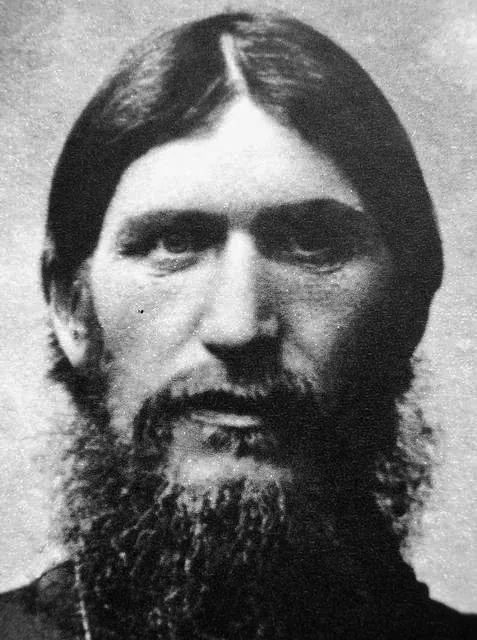
Grigori Yefimovich Rasputin was a Siberian peasant who became the most controversial figure at the court of Russia's last tsar, Nicholas II. Born around January 21, 1869, in the village of Pokrovskoye, he became a traveling mystic and by 1905 had won access to the imperial family in St. Petersburg. His hold on the family came from one fact: the heir to the throne, Tsarevich Alexei, had hemophilia, and Rasputin appeared able to ease the boy's bleeding when court doctors could not. Empress Alexandra came to believe Rasputin was sent by God. By the time a group of aristocrats murdered him in December 1916, his presence at court had helped discredit the monarchy. Less than three months later, the Romanov dynasty fell.
How Rasputin reached the Romanov court
Rasputin grew up as a peasant in western Siberia. Local records suggest he spent his youth drinking and getting into trouble. Around 1897, at the age of 28, he left his wife Praskovya and their children and made a pilgrimage to the St. Nicholas Monastery at Verkhoturye. He came back a changed man. He stopped drinking, stopped eating meat, and began praying with an intensity that attracted followers. Over the next several years he traveled across Russia as a strannik, a kind of holy wanderer, and built a reputation as a mystic.
That reputation brought him to St. Petersburg. He arrived at a time when Russian high society had a taste for mystics and miracle workers, and a network of churchmen and aristocrats introduced him to increasingly powerful people. On November 14, 1905, he met the tsar and tsarina for the first time. Nicholas wrote in his diary that day that they had "made the acquaintance of a man of God."
The connection that bound Rasputin to the family was Alexei. The tsarevich had hemophilia, a genetic blood disorder that meant even a bruise could cause dangerous internal bleeding. The family kept the illness secret from the Russian public, which made their dependence on Rasputin impossible to explain to outsiders. During Alexei's bleeding episodes, Rasputin appeared to help when the court doctors could not. Alexandra, who was German-born and deeply religious, became fully convinced of Rasputin's power and would not hear a word against him.
To the Russian aristocracy, Rasputin was an outrage. He was semi-literate, had poor hygiene, drank heavily, and made no effort to hide his affairs with women. Russian nobles prized bloodline and rank above everything, and having a coarse Siberian peasant at the empress's side was intolerable.
Rasputin's influence during World War I
Rasputin's actual political power has been exaggerated by many accounts written since his death. But his influence was real enough to damage the monarchy at the worst possible time.
In 1915, in the middle of World War I, Nicholas left Petrograd to personally command the Russian army at the front. He left Alexandra effectively running the capital, and she relied on Rasputin's advice. Alexandra hired and fired government ministers in rapid succession, several of them Rasputin's favorites. Meanwhile, Russia was losing the war, and the country was running short of food.
A narrative spread across Russia: a drunken peasant and a German-born empress were betraying the country while its soldiers died. Most of the specific accusations, orgies and treason, were inventions of Rasputin's political opponents. But during a war, what people believed mattered more than what was true, and the scandal destroyed what remained of the monarchy's credibility.
How did Rasputin die?
On the night of December 29–30, 1916, Prince Felix Yusupov lured Rasputin to his palace on the Moika River in Petrograd. Yusupov had organized the murder with Grand Duke Dmitri Pavlovich, a cousin of the tsar, and Vladimir Purishkevich, a right-wing member of the Duma. The conspirators believed that removing Rasputin would save the dynasty.
The famous account of Rasputin's death comes from Yusupov's memoirs. In that version, Rasputin ate cakes and drank wine laced with cyanide but showed no effect. Yusupov shot him, but Rasputin got back up. He was shot again, and again, and the conspirators finally threw him into the frozen river while he was still alive. The story made Rasputin sound nearly impossible to kill.
The autopsy tells a different story. It found no poison in Rasputin's stomach and no water in his lungs, which means he was already dead before his body went into the Malaya Nevka River. Forensic analysis shows he died from gunshots, the fatal one a bullet to the forehead fired at close range. The legend of the unkillable "mad monk" rests mainly on Yusupov's account, which most historians now consider heavily embellished.
The murder did not save the dynasty. Less than three months later, bread riots and army mutinies swept Petrograd in what became the February Revolution. Nicholas abdicated on March 15, 1917, ending over three hundred years of Romanov rule. In July 1918, the Bolsheviks executed Nicholas, Alexandra, Alexei, and the rest of the imperial family in a cellar in Yekaterinburg.
Did Rasputin actually heal Alexei?
Whether Rasputin had any real ability to help the tsarevich is still debated. One widely cited theory is that he helped by keeping the court doctors away. Doctors at the time commonly prescribed aspirin for pain. Aspirin thins the blood, which makes bleeding worse in someone with hemophilia. By insisting the doctors leave Alexei alone, Rasputin may have unknowingly removed the thing making the boy sicker.
Another explanation is simpler. Rasputin was a calm, reassuring presence in a household made frantic by the boy's illness. Stress can worsen bleeding episodes, and Alexandra's panic was well documented. A steady voice telling everyone to step back and let the child rest may have done real good.
No one has proved that Rasputin had any medical skill. His influence over the Romanovs came from Alexandra's belief that he could save her son. That belief was enough to place a Siberian peasant inside the Russian court and to give the monarchy's critics a scandal that helped bring it down.