
Siege of Baghdad (1258)
The 1258 Mongol siege of Baghdad destroyed the Abbasid Caliphate and ended the city's reign as the Islamic world's capital.
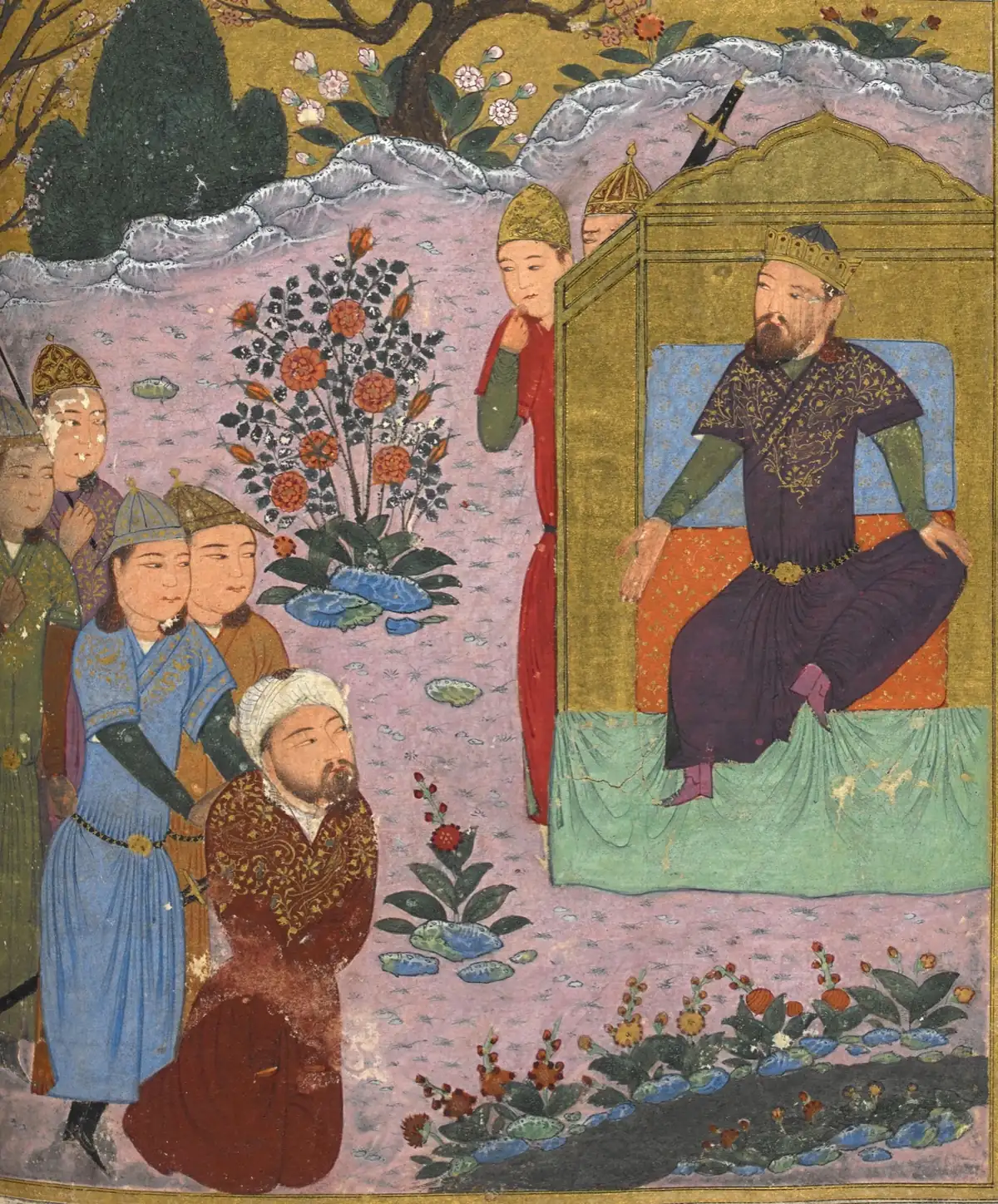
In February 1258, a Mongol army led by Hulegu Khan captured and destroyed Baghdad, the capital of the Abbasid Caliphate and one of the largest cities on Earth. The siege lasted less than two weeks. The Mongols killed the caliph, burned the city's mosques, palaces, and libraries, and slaughtered tens of thousands of people. The fall of Baghdad ended the rule of the Abbasid dynasty, which had served as the spiritual authority of Sunni Islam since the eighth century. Across the Muslim world, the destruction of Baghdad is remembered as the end of a centuries-long era of achievement in science, medicine, and philosophy. The city never recovered its former importance.
How Hulegu's army reached Baghdad
In 1251, the Mongol great khan Mongke ordered his brother Hulegu to march west and bring the remaining Muslim states under Mongol control. Mongke's goals were specific: destroy the Order of Assassins, force the Abbasid caliph to submit, and extend Mongol rule across Persia and into Syria. He gave Hulegu one of the largest armies the Mongol Empire ever assembled, drawing soldiers from across Mongol territory and adding a thousand Chinese siege engineers to the force. Georgian and Armenian Christian contingents joined the campaign along the way.
Hulegu was a grandson of Genghis Khan and a brother of Kublai Khan, who would later rule the Mongol Empire from China. His mother, Sorghaghtani Beki, was a Nestorian Christian princess of the Keraite tribe.
Hulegu moved deliberately. He crossed the Oxus River into Persia in early 1256. He spent that year destroying the fortress of Alamut, the mountain headquarters of the Order of Assassins. The Assassins were a Shia militant group that had carried out political killings across the Islamic world for more than 150 years. With the Assassins finished, Hulegu turned south toward Baghdad.
He sent envoys to the Abbasid caliph, al-Musta'sim, demanding submission. Al-Musta'sim was the 37th Abbasid caliph. Medieval chroniclers described him as indecisive and more interested in his own pursuits than in governing. He rejected Hulegu's demands, answered with empty threats, and then did almost nothing to prepare. He did not reinforce the walls, did not call for help from other Muslim rulers, and did not mobilize Baghdad's garrison to full strength.
The sack of Baghdad
Hulegu's siege engineers reached Baghdad's walls in late January 1258 and breached them within days. On February 10, al-Musta'sim surrendered and walked out of the city with 300 officials to present himself to Hulegu. Ten days later, the Mongols executed them all.
For roughly a week, Mongol soldiers moved through Baghdad destroying what they found. They burned mosques, palaces, hospitals, and colleges. The House of Wisdom, a center of learning founded by the early Abbasid caliphs where scholars like al-Khwarizmi had translated Greek and Indian texts into Arabic and advanced the fields of mathematics, astronomy, and medicine, was lost in the destruction. According to the chroniclers, Mongol soldiers dumped so many manuscripts into the Tigris that the river turned black with ink. The story is almost certainly exaggerated, but it says something true about the scale of what disappeared: Baghdad had been the intellectual capital of the Islamic world for five hundred years.
Al-Musta'sim, the last Abbasid caliph of Baghdad, was killed on February 20, 1258. In the traditional account, Mongol custom forbade shedding royal blood onto the earth. They rolled him in a carpet and had horses trample him to death.
Medieval sources give death tolls ranging from 200,000 to two million. Hulegu himself reported about 200,000 killed. Historians today doubt all of these figures. Medieval chroniclers routinely inflated casualty counts, and deaths from plague and famine in the aftermath were often folded into the totals. Baghdad may have had several hundred thousand residents at the time. At its peak centuries earlier, the city's population may have reached a million. Whatever the exact toll, the killing was immense and the city was gutted.
What happened after the fall of Baghdad?
The destruction of Baghdad did not give the Mongols the entire Middle East. Hulegu founded the Ilkhanate, a Mongol state centered in Persia, and his descendants ruled there for nearly a century. But in September 1260, at the Battle of Ain Jalut in present-day Israel, the Mamluk sultanate of Egypt defeated a Mongol force and stopped the Mongol advance into the rest of the Arab world.
Baghdad itself entered a long decline. The Ilkhanate rulers rebuilt parts of the city, and some libraries reopened within a few years. But the conqueror Timur sacked Baghdad again in 1393 and 1401, and it spent centuries afterward as a provincial town under Ottoman rule.
The Abbasid Caliphate survived only as a title. The Mamluk sultans of Egypt installed a line of Abbasid caliphs in Cairo, but these caliphs held no real power.
Islamic learning did not die in 1258. Scholars continued working in Cairo, in Persia under Mongol and later rulers, and eventually under the Ottoman and Mughal empires. But Baghdad's five centuries as the center of Islamic civilization were over.