
Sunni-Shia Split
The Sunni-Shia split began in 632 as a dispute over who should lead Islam after Muhammad's death and became the religion's deepest division.
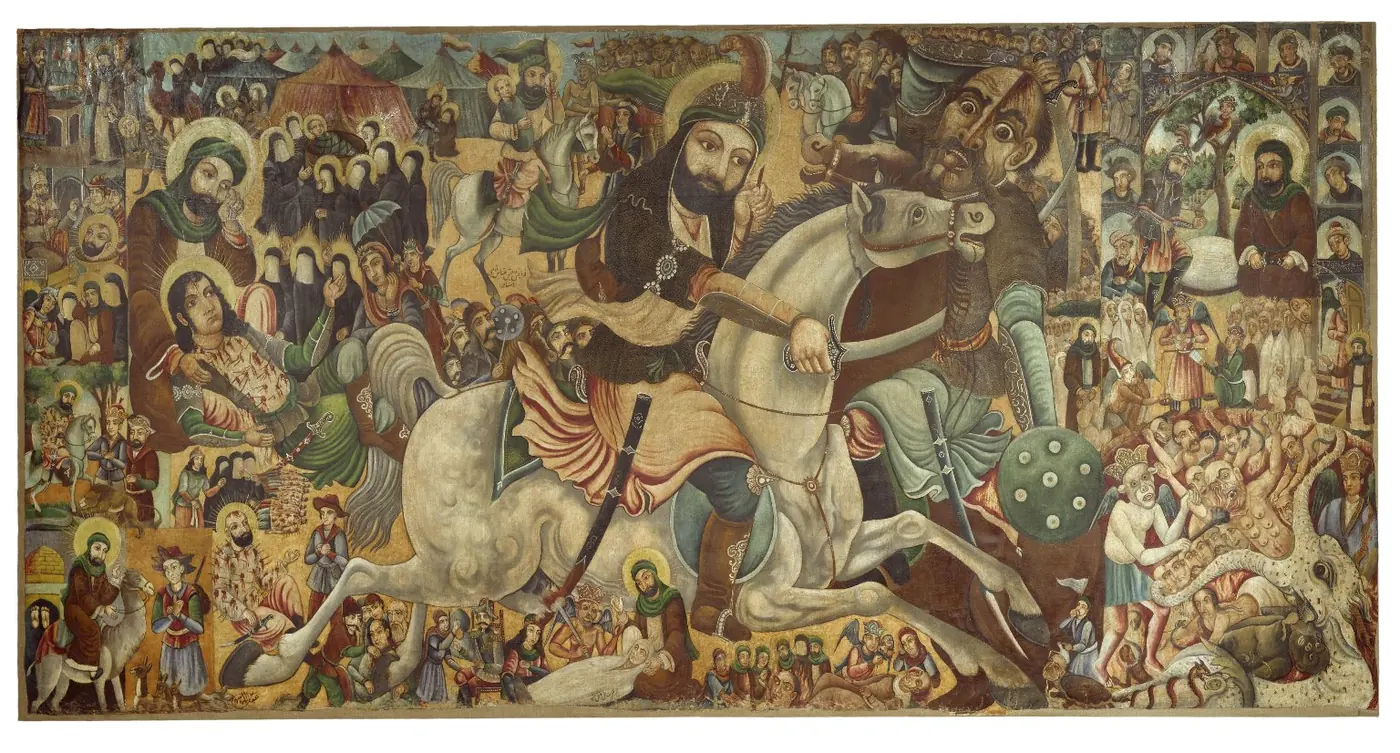
The Sunni-Shia split is the oldest division in Islam. It began in 632 as a political dispute over who should lead the Muslim community after the Prophet Muhammad died without clearly naming a successor. One group believed the community should choose its leader from among the most capable companions. Another believed leadership belonged by right to Muhammad's family, starting with Ali, who was both Muhammad's cousin and the husband of his daughter Fatima. That disagreement produced Islam's two main branches: Sunni, from "sunna," meaning the Prophet's example, and Shia, short for "shiat Ali," the party of Ali. What started as a question about succession became, over fourteen centuries, a divide in religious law, authority, and identity that still shapes the Middle East.
How the succession crisis split Islam
Muhammad died in Medina in June 632. While Ali was preparing the body for burial, the leading men of the city met in a covered yard called the Saqifa and chose Abu Bakr, Muhammad's oldest companion and the father of his wife Aisha, as the first caliph. The title meant successor.
Ali's supporters believed Muhammad had already chosen Ali. Months before his death, at a gathering called Ghadir Khumm, Muhammad took Ali's hand before a crowd and called him "mawla." The word can mean friend or master. Sunni and Shia scholars have debated which meaning Muhammad intended ever since.
Abu Bakr was the first of four caliphs that Sunnis call the "rightly guided." Ali waited more than two decades before becoming the fourth caliph in 656. His rule was contested from the start. In January 661, a Kharijite assassin named Ibn Muljam struck Ali with a poisoned sword during morning prayer at the mosque in Kufa. Ali died two days later.
The Battle of Karbala
After Ali's death, the caliphate passed to Muawiya, the governor of Syria who had fought Ali for power. Muawiya moved the capital to Damascus and then named his own son, Yazid, as his successor, turning the caliphate into a family dynasty.
Ali's son Hussein, who was also Muhammad's grandson, refused to recognize Yazid as caliph. Hussein set out for Kufa in Iraq, where supporters had promised him an army. The support never came. Yazid's governor reached Kufa first and scattered Hussein's allies. On October 10, 680, Yazid's army surrounded Hussein and about 72 followers at Karbala, near the Euphrates River. The soldiers cut Hussein's group off from water and killed Hussein along with most of his companions and family.
Karbala holds a central place in Shia Islam unlike any other event. It represents a stand for what is right against illegitimate power, and it gave Shia identity a character centered on mourning and sacrifice. Every year, Shia communities around the world mark the anniversary during the commemoration of Ashura through prayers, processions, and public mourning. The Arba'een pilgrimage to Hussein's shrine in Karbala, Iraq, draws about twenty million visitors each year, making it the largest annual gathering of people on Earth.
What is the difference between Sunni and Shia?
Sunni and Shia Muslims follow the same Quran, observe the five pillars of Islam, and agree on most everyday worship. The core difference is about religious authority.
Sunnis believe the Muslim community chooses its leaders. They follow the example set by the first caliphs and have no single religious authority that speaks for all Sunnis. Shia Muslims believe leadership belongs to the descendants of Muhammad through Ali, whom they call Imams. The dominant branch of Shia Islam, Twelver Shia, built a formal clerical hierarchy led by ayatollahs who hold real interpretive power over religious law. Twelver Shia Muslims also believe in the Hidden Imam, the twelfth Imam in the line that began with Ali, who they believe disappeared in the ninth century and will return at the end of time.
Over centuries, these differences produced separate schools of religious law, separate collections of hadith (the recorded sayings of Muhammad), and different traditions of worship. But in daily life, the differences between an ordinary Sunni and an ordinary Shia Muslim are small. For a fuller account of how the split unfolded, see The Sunni-Shia split on the Orbis blog.
The Sunni-Shia divide today
About nine in ten of the world's more than two billion Muslims are Sunni. Shia Muslims account for the remaining 10 to 15 percent, somewhere between 200 and 300 million people. Shia majorities live in Iran (over 90 percent), Iraq (60 to 70 percent), Bahrain, and Azerbaijan. Large Shia minorities live in Lebanon, Yemen, Pakistan, and Saudi Arabia's Eastern Province, where most of the kingdom's oil is produced.
For most of Islamic history, the two communities lived alongside each other without sustained violence. The sharp sectarian conflict visible in the Middle East today is a modern development, shaped more by politics than by theology.
Two events reshaped the divide. Iran's 1979 revolution, led by Ayatollah Khomeini, created a Shia theocracy with ambitions to lead Muslims across the region. The 2003 American invasion of Iraq removed Saddam Hussein and handed political power to Iraq's Shia majority. Together, these events turned the Sunni-Shia split into the framework for a rivalry between Shia Iran and Sunni Saudi Arabia that has fueled proxy conflicts in Syria, Yemen, and Lebanon. The religious divide is real, but the contest underneath it is about territory, oil, and influence.