Sovereign Wealth Funds
A sovereign wealth fund is a government-owned investment pool, usually built on oil revenue, that buys assets abroad.
A sovereign wealth fund is money owned by a government, put into stocks, bonds, real estate, and other assets, mostly outside the country's own borders. Most sovereign wealth funds are built on revenue from oil, gas, or minerals, resources that will eventually run out. A few, like Singapore's and China's, come from long-running trade surpluses instead. The idea is to invest what the country is earning now so there is still income when the resource is gone.
The first sovereign wealth fund appeared in 1953, when Kuwait's ruler, Sheikh Abdullah Al-Salem Al-Sabah, created the Kuwait Investment Board and based it in London. The logic was that Kuwait's oil would not last forever, and the returns should keep coming after the oil was gone. Kuwait was still a British protectorate and would not become independent until 1961. By the end of 2025, sovereign wealth funds around the world held more than $15 trillion, and six funds held more than a trillion dollars each.
How Norway built the world's largest sovereign wealth fund
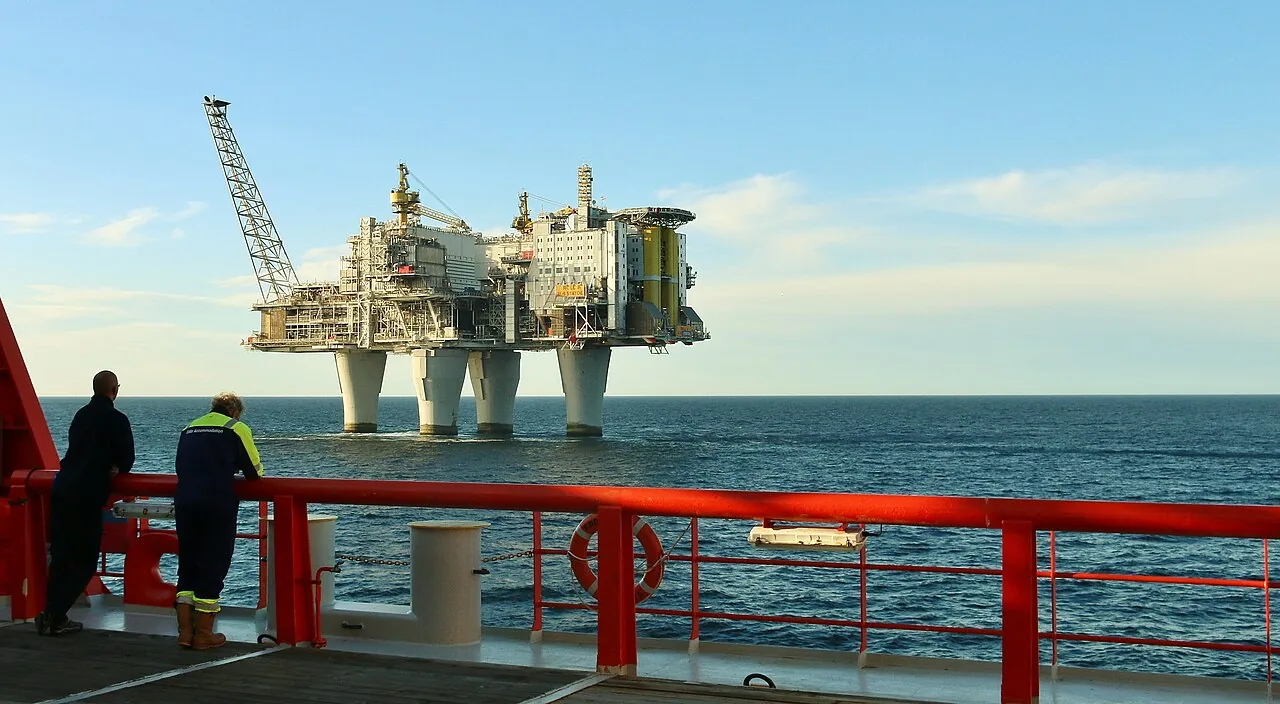
Norway found oil in the North Sea in 1969. Rather than spend the revenue as it arrived, the Norwegian government created the Government Pension Fund Global and set rules designed to keep the money from being spent too quickly. All of Norway's petroleum revenue flows into the fund. The Norwegian government can draw on the fund's expected real return each year, but it cannot touch the capital. That spending cap was set at 4 percent in 2001 and lowered to 3 percent in 2017, after an expert commission argued the original figure was too generous for a world of lower returns.
Today the fund is worth more than $2 trillion. In 2025 alone it earned about $247 billion, a 15 percent return driven mostly by technology and banking stocks. Norway has about 5.6 million people, yet through the fund it holds about 1.5 percent of all shares in the world's listed companies. Everything in the fund is invested outside Norway. This is deliberate: if the government spent oil revenue at home, the flood of cash would drive up Norway's exchange rate and make Norwegian exports less competitive, part of what economists call the resource curse.
The fund has an ethics council that screens out companies based on published criteria, and it votes its shares at annual meetings around the world. Norway's fund is the model other countries study when setting up their own, though few have matched its discipline.
What sovereign wealth funds buy
A sovereign wealth fund is not the same as a country's central bank reserves. Central bank reserves serve to protect a currency and are held in safe, easily sold assets like government bonds. A sovereign wealth fund is meant to earn a return over decades, so it buys shares, real estate, infrastructure, and private companies.
The Gulf funds show what that looks like at scale. Saudi Arabia's Public Investment Fund, with total assets of about $1.2 trillion at the end of 2025, owns stakes in professional football clubs, data centers for artificial intelligence, and film studios. Abu Dhabi runs several major funds, including ADIA and Mubadala. Qatar's sovereign wealth fund, the Qatar Investment Authority, has investments across Europe and Asia. These funds are not only savings vehicles. Saudi Arabia and its neighbors use them to build new industries at home and to buy positions in economies they want to influence.
Singapore's GIC and Temasek work in a similar way, mixing financial returns with national development goals. China set up the China Investment Corporation in 2007 to put its large foreign currency holdings to better use than the American government bonds they had been sitting in. CIC now manages more than $1.5 trillion.
The growth of state-owned funds buying assets in other countries made Western governments uneasy. Washington and Brussels tightened their rules for screening foreign investments. In 2008, sovereign wealth funds adopted the Santiago Principles, a set of voluntary rules covering how the funds are governed and how much they disclose. The principles were designed to convince host countries that these investments were driven by returns, not by politics. That reassurance has limits. An investment can be both commercially profitable and useful to the government that makes it.
When sovereign wealth funds fail
A sovereign wealth fund is in a government's hands, and it is only as disciplined as that government. Venezuela created a stabilization fund to save its oil revenue. Under Hugo Chavez, the Venezuelan government emptied the fund to cover budget shortfalls. By the time Venezuela's economy collapsed, the fund held almost nothing.
Malaysia's 1MDB turned into one of the biggest fraud cases in financial history. Malaysia's prime minister, Najib Razak, set up the fund in 2009. Over the next six years, financier Jho Low funneled more than $4.5 billion out of it through shell companies. The stolen money paid for a $250 million yacht, paintings by Monet and Van Gogh, and the Hollywood film The Wolf of Wall Street. A Malaysian court convicted Najib and sentenced him to twelve years in prison.
Norway's fund has survived because the Norwegian government wrote a spending rule before the big money arrived and then followed it for twenty-five years. A sovereign wealth fund can make a country wealthier than its resources alone would allow, but only if the government behind it has the discipline to leave the money alone.