
Resource Curse
The resource curse is the pattern in which countries rich in oil or minerals tend to grow slower, govern worse, and fight more.
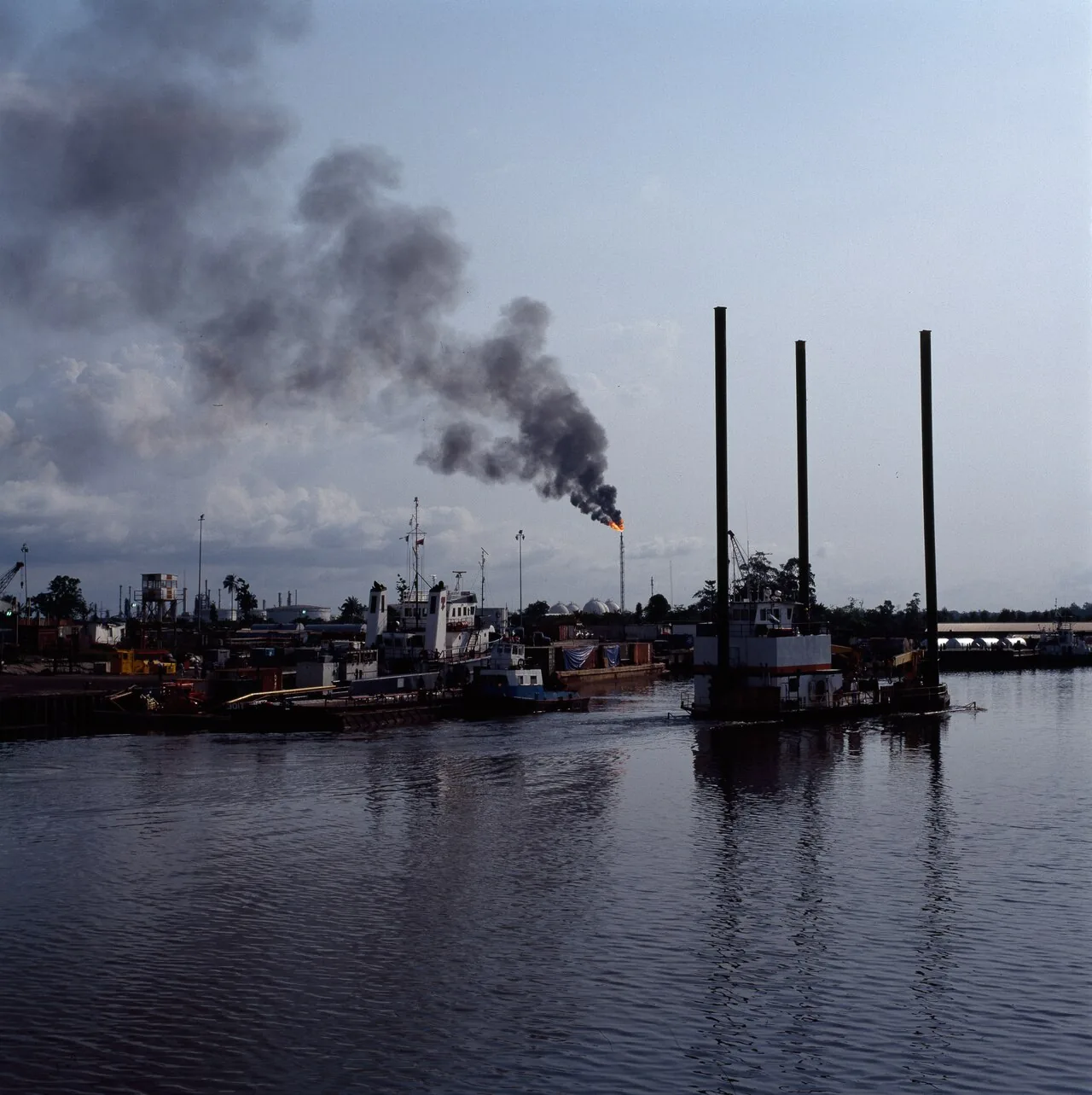
The resource curse is the pattern in which countries that discover large deposits of oil or minerals often experience slower growth, weaker governance, and more internal conflict than countries without those resources. British economist Richard Auty gave the pattern its name in a 1993 book, and a 1995 study by Jeffrey Sachs and Andrew Warner confirmed that resource-rich countries had consistently lower economic growth over the previous two decades. The pattern works through two distinct mechanisms. The first, called Dutch disease, damages a country's other industries. The second damages its government. Both can happen at the same time, and they reinforce each other.
How the Netherlands gave the problem its name
In 1959, engineers found the Groningen gas field in the northern Netherlands, one of the largest natural gas deposits in the world. The Netherlands began exporting gas, and foreign currency flowed in. The Dutch guilder rose in value, and everything else the Netherlands exported became more expensive abroad. Dutch manufacturing shrank. In 1977, The Economist magazine described the pattern and named it "Dutch disease."
The mechanism is straightforward. When a country exports a valuable resource, the foreign currency it earns pushes up the exchange rate. That makes the country's manufactured goods and farm products less competitive on world markets, and those industries contract. The resource industry also pulls skilled workers away from other sectors. When the resource eventually runs out or its price drops, the industries and skills that could have taken its place are gone.
Why oil money weakens governments
The second mechanism is political. Resource income goes to the people who hold power over the wells and the shipping ports. No broad workforce has to produce it. A government that lives on oil royalties has no reason to collect taxes, and without collecting taxes, it has no reason to negotiate with its people over how money is raised or spent. Throughout modern history, citizens who pay taxes have demanded a political say, and governments that need tax revenue have had to listen. Oil removes that bargain.
In oil states, the money pays for cheap fuel, government jobs handed out as favors, and a well-funded security apparatus. Winning control of the state becomes the highest-stakes competition in the country, and every election or coup reflects that. Government revenue swings wildly with world commodity prices, so budgets are generous during booms and cut sharply during busts.
Nigeria is a clear example. Shell discovered oil at Oloibiri in the Niger Delta in 1956, and significant exports began in the mid-1960s. The country had just emerged from a civil war (1967-1970) when production surged. By 1974, oil accounted for more than 90 percent of what Nigeria earned from exports, and the country's politics reorganized around who ran the oil ministry. Venezuela followed a similar path: by 2013, 96 percent of its foreign currency came from oil. When the price collapsed in 2014, falling from over $100 a barrel to under $30 by early 2016, Venezuela's economy shrank by roughly three-quarters over the next seven years.
Why did Norway avoid the resource curse?
Norway discovered oil in the North Sea in 1969, thirteen years after Nigeria found its first deposits. Norway already had functioning courts, a working tax administration, and a parliament with a long tradition of holding itself to rules. Before oil revenue arrived in large amounts, Norway decided who would control the resource and how the money would be spent.
In 1990, Norway's parliament created what is now the Government Pension Fund Global, a sovereign wealth fund that invests oil revenue entirely outside Norway. The government allows itself to spend only about 3 percent of the fund's value each year, roughly the expected long-term return, so the principal keeps growing. By 2026, the fund held more than $2 trillion and owned about 1.5 percent of all shares in publicly listed companies on earth.
Norway's success illustrates what later research confirmed. The early studies in the 1990s found that resource exporters grew more slowly across the board. More careful work since then has shown that the outcome is shaped by the institutions a country had before the resource was discovered. The resource itself does not determine the outcome. It makes a country's existing strengths or weaknesses more extreme.
The resource curse and new minerals
The Soviet Union broke apart after years of low oil prices ate into the government's revenue. Gulf states have pushed reform programs forward when oil prices show signs of a long decline. Any outside actor who can shift the price of a resource, by increasing output or by placing sanctions on a competitor, has a direct lever on another government's revenue. That makes countries built on resource exports vulnerable in a particular way: their governments run on income set by global markets they do not control.
The same two mechanisms are now being tested with a new set of resources. The shift away from fossil fuels is raising demand for lithium, cobalt, copper, and rare earth metals. Nations across sub-Saharan Africa, Latin America, and Central Asia that hold large deposits of these minerals are expanding their mineral exports. Whether they follow Norway's path or Nigeria's will depend on the strength of the institutions they have now, not on the resources themselves.