
Sparta
Sparta was a Greek city-state that organized its society around producing soldiers, sustained by the mass enslavement of its neighbors.
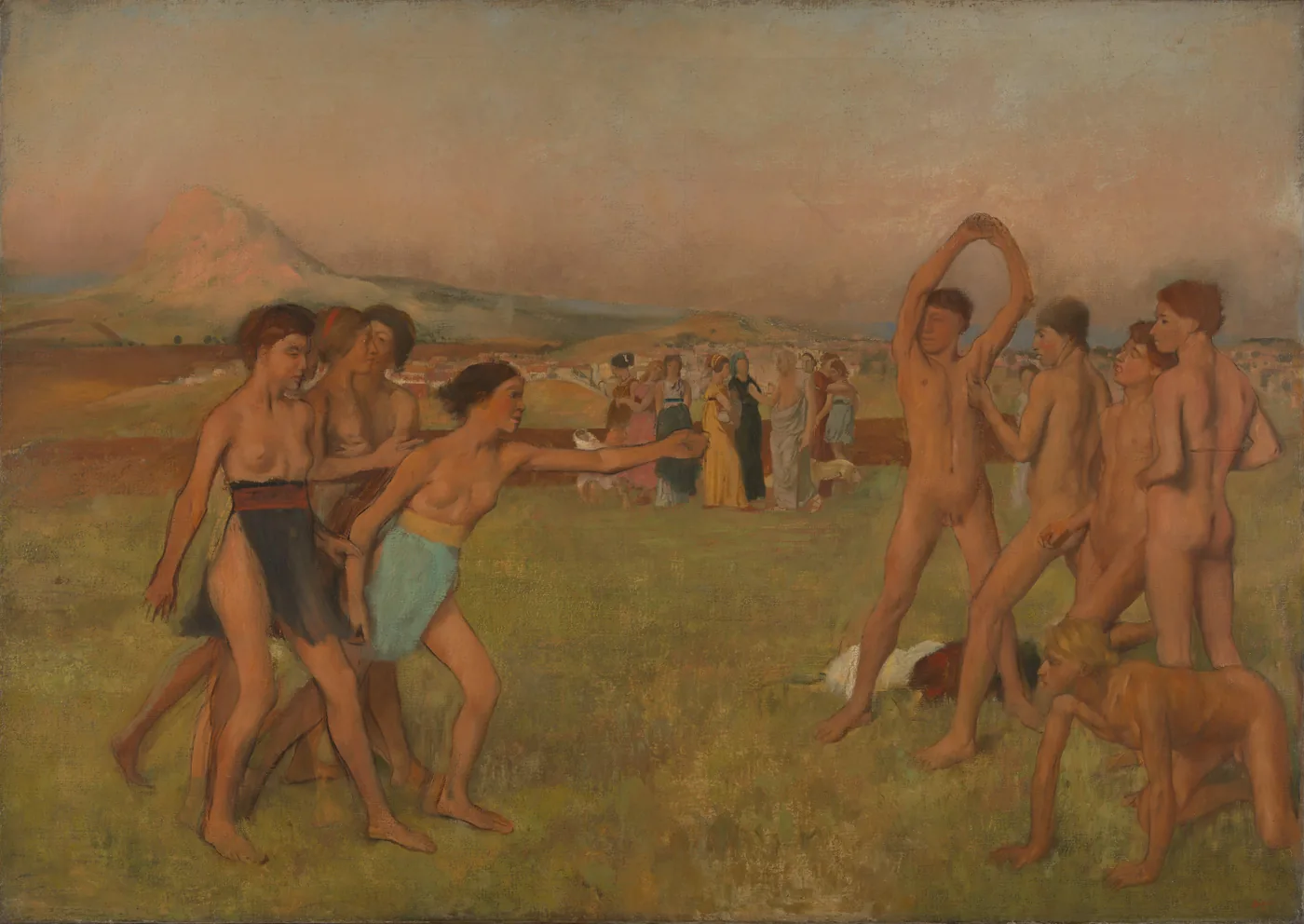
Sparta was a Greek city-state in the southern Peloponnese that organized its entire society around one purpose: producing soldiers. A full citizen, called a Spartiate, trained for war from childhood, ate at a communal mess hall for life, and lived in barracks until the age of thirty. The system produced what was probably the most feared infantry in the ancient Greek world. In 480 BC, Leonidas, one of Sparta's two kings, led 300 Spartans in a last stand at Thermopylae that delayed the Persian invasion and gave the rest of Greece time to organize. In 404 BC, Sparta won the Peloponnesian War, a 27-year struggle with Athens, and briefly became the dominant power in Greece. But the system depended entirely on mass slavery. When Sparta lost most of its slaves after a single battlefield defeat in 371 BC, it collapsed and never recovered.
How Sparta trained its citizens for war
At age seven, the Spartan state removed boys from their homes and placed them in the agoge, Sparta's public training system. Boys received minimal food, one cloak per year, and regular beatings. Trainers encouraged them to steal food to survive. If caught, they were beaten for carelessness. Stealing skillfully was considered training for war.
Plutarch wrote that Spartan elders inspected newborn babies and abandoned sickly ones on Mount Taygetus. Modern archaeologists have excavated the site and found no infant remains. The bodies recovered were all adults, most likely executed criminals or prisoners of war. Historians still debate whether Sparta practiced state-directed infanticide, but the physical evidence does not support Plutarch's account.
Men lived in military barracks until they turned thirty. They ate every meal at a communal mess hall, a practice that continued for the rest of their lives. Each member had to contribute a fixed share of food from his land allotment. A man who could not pay lost his citizenship. Sparta treated private wealth, comfort, and individuality as threats to the group. The English word "spartan," meaning stripped of anything beyond the essential, comes from this way of life.
Spartan women had more freedom than women anywhere else in Greece. They could hold and inherit land, train physically alongside men, and speak freely. By the fourth century BC, Spartan women held a large share of the city's land, in part because so many men had died in war. The reasoning was practical: Sparta believed that physically strong mothers would produce strong soldiers.
How the helots sustained Sparta
Sparta's full-time soldiering required someone else to do the farming. In the eighth and seventh centuries BC, Sparta conquered neighboring Messenia and reduced the Messenians to a class of state-owned serfs called helots, bound to the land. Helots did all the agricultural labor so that Spartiates could devote themselves to training and war. They outnumbered Spartiates by roughly seven to one.
Sparta controlled the helots through organized terror. Each year, the Spartan government issued a formal declaration of war against the helots. This was a legal act: it meant that killing a helot carried no religious pollution. A group of young Spartiates called the krypteia patrolled the countryside at night and killed any helot who appeared strong or defiant. The system kept the helots afraid, but it also kept Sparta afraid. The threat of a helot revolt shaped nearly every major decision the city made. Sparta was reluctant to send its army far from home because it could not risk the helots rising while its soldiers were away.
What happened to Sparta?
Sparta's decline was built into its own rules. Spartiate status required owning a land allotment and paying the contribution to the communal mess. Battlefield deaths shrank the citizen body. A devastating earthquake around 464 BC killed many Spartiates and triggered a major helot revolt that took nearly a decade to suppress. The steady concentration of land in fewer hands reduced the number of qualified Spartiates further. The Greeks called this problem oliganthropia, a shortage of men. Sparta had roughly 8,000 Spartiates in 480 BC. By the 370s BC, that number had fallen to about 1,000.
Epaminondas, a Theban general, broke the Spartan army at the Battle of Leuctra in 371 BC. About 400 of the remaining Spartiates, including King Cleombrotus, died in a single afternoon. It was the first time in generations that a full Spartan army had lost a pitched battle, and the losses were ones Sparta could no longer replace. Epaminondas then marched south into the Peloponnese and freed Messenia. The Messenian helots who had farmed Sparta's land for three centuries were gone. Without their labor, the economic foundation of Sparta's military system collapsed.
Sparta survived as a minor city for nearly two more centuries but never regained its power. By 192 BC, after the assassination of its last independent ruler, Nabis, Sparta was absorbed into the Achaean League. The ancient laws attributed to the legendary lawgiver Lycurgus were abolished. Sparta's military system had made it the dominant land power in Greece for generations, but its own rules shrank the citizen body until too few Spartiates remained to sustain it.