
Why did the Persian Empire fail to conquer Greece?
The largest empire on earth invaded Greece twice and failed twice. The real reasons were a silver mine, a supply problem, and narrow water.
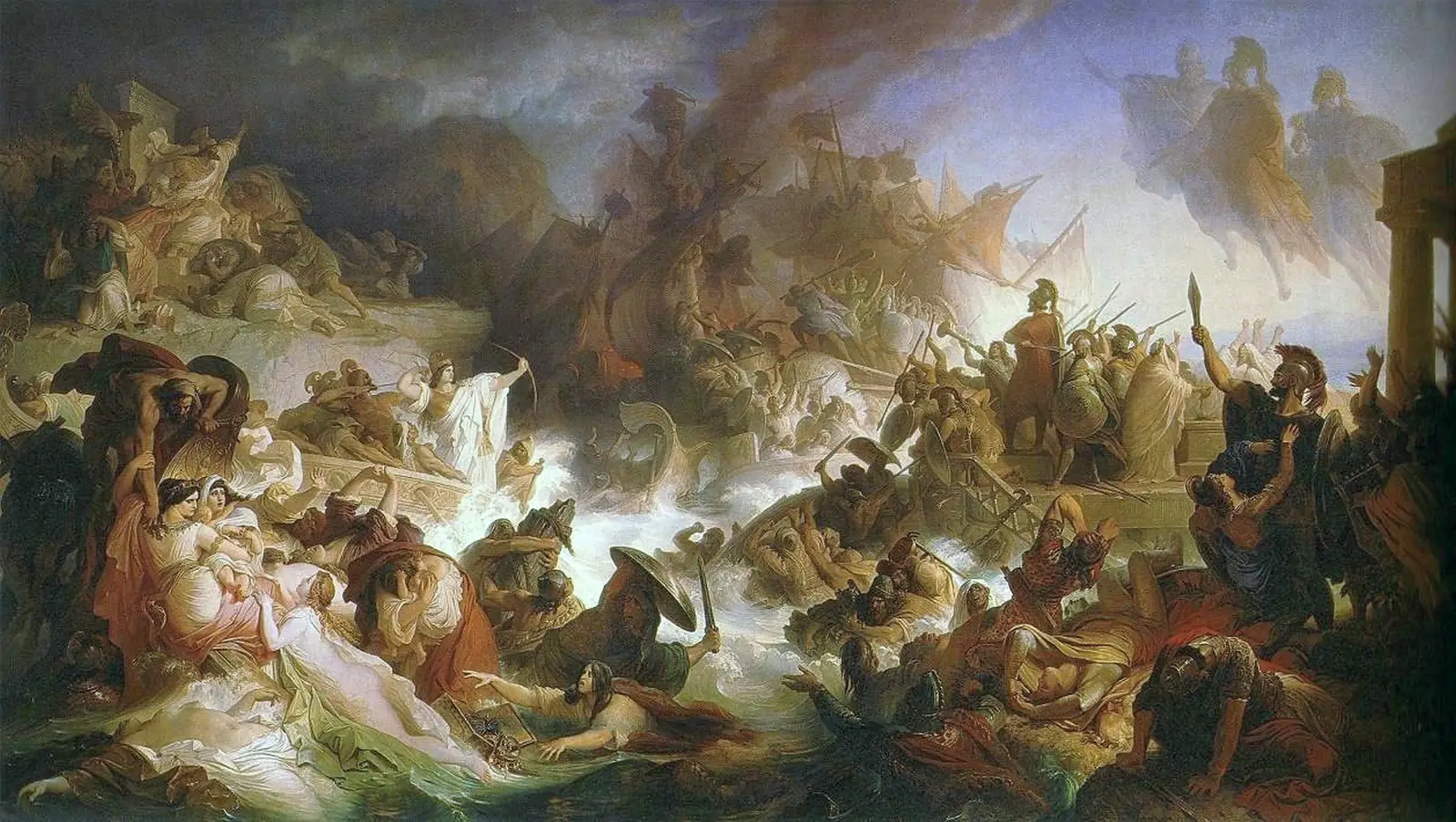
In 480 BCE, the Persian Empire was the largest state the world had ever seen. It stretched from the Indus River in modern Pakistan to Egypt and the coast of Turkey, and its king, Xerxes, could raise soldiers, ships, and money from dozens of subject peoples. Greece lay just beyond the empire's western edge, and it was not even a country. It was a few hundred small city-states, poor, mountainous, and busy fighting each other.
Persia invaded this patchwork twice in ten years, under two different kings, and failed both times. The usual explanation is heroism: 300 Spartans dying at Thermopylae so that freedom could defeat tyranny. The real explanation is more interesting, and heroism plays only a small part in it.
Why Persia attacked Greece in the first place
The war began as a punishment, not a conquest. In 499 BCE, the Greek cities of Ionia, on the Aegean coast of modern Turkey, revolted against Persian rule. Athens sent twenty ships to help the rebels, and Athenian troops joined in burning Sardis, a Persian regional capital. Persia crushed the revolt by 493 BCE, but King Darius did not forget the outsiders who had interfered. Herodotus tells the story that Darius ordered a servant to say to him three times at every dinner: "Master, remember the Athenians."
In 490 BCE, Darius sent a fleet across the Aegean to punish the two cities that had aided the revolt. His soldiers destroyed Eretria, then landed at Marathon, 26 miles from Athens. There the Athenian army, commanded by the general Miltiades, charged the Persian line at a run, let its thinned center bend backward, and closed its strengthened wings around the Persian flanks. Herodotus counted 192 Athenian dead against 6,400 Persians. The famous messenger's run from Marathon to Athens is a 19th-century invention: in Herodotus, the runner Pheidippides covers 150 miles from Athens to Sparta before the battle, begging for help that arrived too late.
Marathon embarrassed Darius, so he began planning a full invasion of Greece. He died in 486 BCE before he could launch it, and the project passed to his son Xerxes.
The silver strike that built the Greek fleet
In 483 BCE, miners in the state-owned pits at Laurium, south of Athens, hit an unusually rich vein of silver. The windfall belonged to the city, and the city's first plan was simple: divide the money among the citizens, about ten drachmas each, roughly ten days' wages.
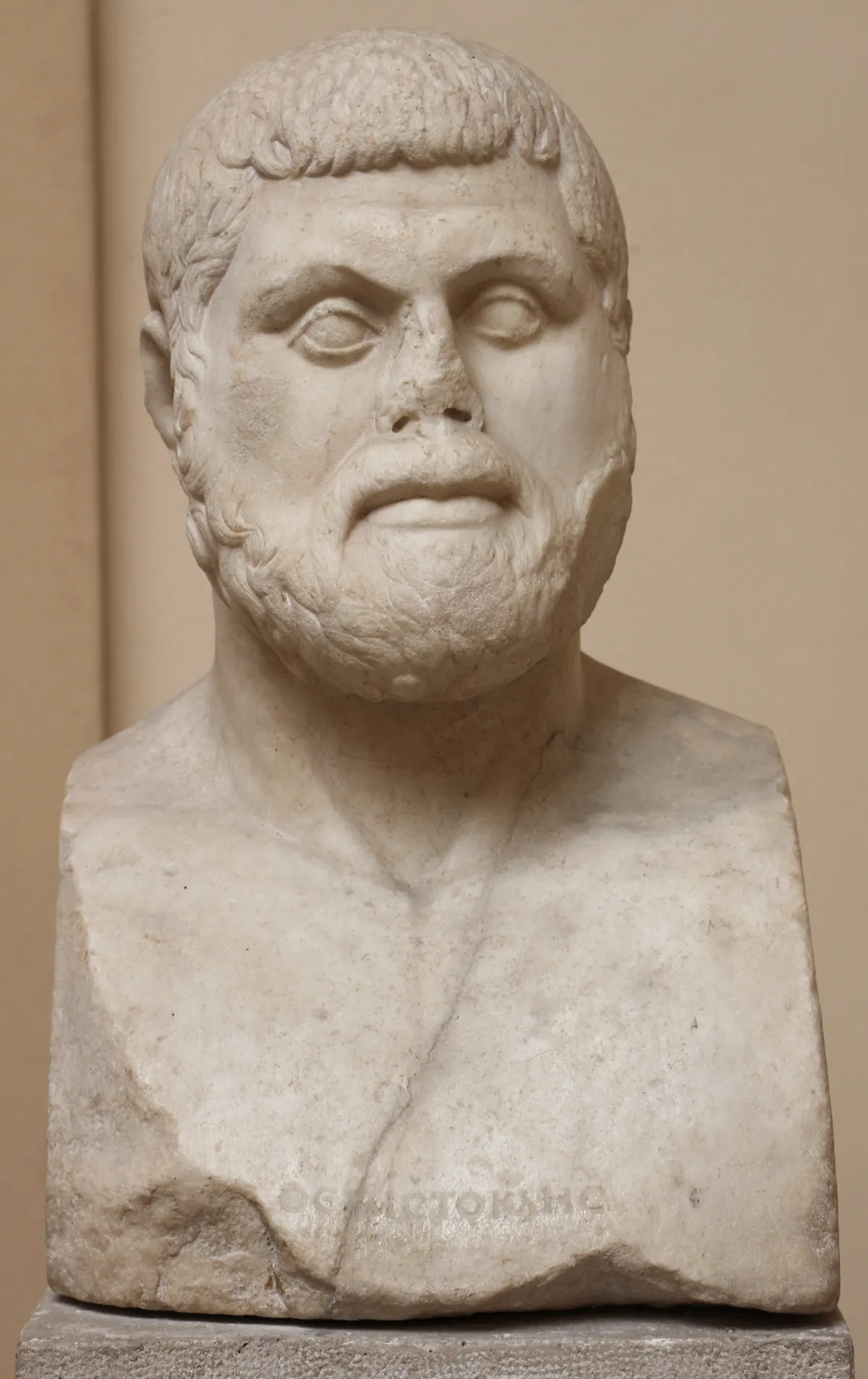
A politician named Themistocles talked the assembly out of it. Themistocles came from no famous family and had clawed his way up Athenian politics on ambition alone; Plutarch says that after Marathon, the young Themistocles told friends the victory trophy of Miltiades would not let him sleep. His argument in 483 was carefully modest. He did not invoke Persia, which felt far away. He pointed instead at Aegina, a nearby island Athens was already fighting, and asked for warships. The assembly agreed to skip the payout and build 200 triremes, oared warships that each needed a crew of 170 rowers.
It was the best military investment in ancient history. When Xerxes marched three years later, Athens had the largest navy in Greece, and 34,000 ordinary Athenians, too poor to afford hoplite armor, pulled its oars. Without the silver strike, and without the one politician who saw what to do with it, the Greek fleet that fought at Salamis would never have existed.
An army too big to feed
Xerxes crossed into Europe in 480 BCE with a force Herodotus put at over five million people. Modern historians, after working out how much food and water ancient Greece could physically provide, estimate 100,000 to 250,000 fighting men, plus a fleet of 600 to 700 warships. That is still one of the largest invasion forces of the ancient world.
The engineering matched the scale. Xerxes' men lashed more than 600 ships side by side to form two pontoon bridges across the Hellespont, the strait between Asia and Europe. When a storm wrecked the first pair, Xerxes had the engineers beheaded and ordered the sea itself punished: 300 lashes, fetters thrown into the water, and hot irons for branding. The second pair of bridges held, and the army took seven days and nights to cross.
The size that made the army unstoppable on land also created its biggest weakness. Greece is a poor, dry, mountainous country, and no amount of foraging could feed a force that large. The food came by sea, in grain ships shadowing the army down the coast, which meant the army could only advance where the fleet could follow. Xerxes' land campaign was hostage to a naval battle he did not yet know he would have to fight.
Thermopylae and Salamis: how the Greeks fought where numbers did not matter
The first attempt to stop Xerxes failed. At Thermopylae, a coastal pass so narrow that Persian numbers meant nothing, about 7,000 Greeks, not 300, held the road south for a week. When a local Greek named Ephialtes showed the Persians a mountain path around the position, the Spartan king Leonidas sent most of the army away and stayed behind with a rear guard: his 300 Spartans and about 700 soldiers from the small city of Thespiae. They were killed, the pass was opened, and Xerxes marched on Athens and burned it. Thermopylae was a Persian victory.
The battle that mattered came two months later, in the strait between Athens and the island of Salamis. Themistocles wanted the Persians to attack in the narrows, where their 700 ships could not deploy against the Greeks' 380, so he sent his children's tutor, a slave named Sicinnus, to Xerxes with a message: the Greek alliance was collapsing, and the fleet was about to scatter. Xerxes believed it and sent his fleet in. In water too narrow for their numbers to matter, the Greeks sank around 300 Persian ships and lost about 40 of their own, while Xerxes watched from a throne set up on the hillside.
Salamis did not destroy the Persian army. It destroyed the army's ability to stay. With the fleet crippled, the grain ships were no longer safe, and neither were the Hellespont bridges. Xerxes went home with most of his men. The force he left behind under his general Mardonius was beaten the next summer at Plataea, and the invasion of Greece was over.
Persia lost the battles and still got what it wanted
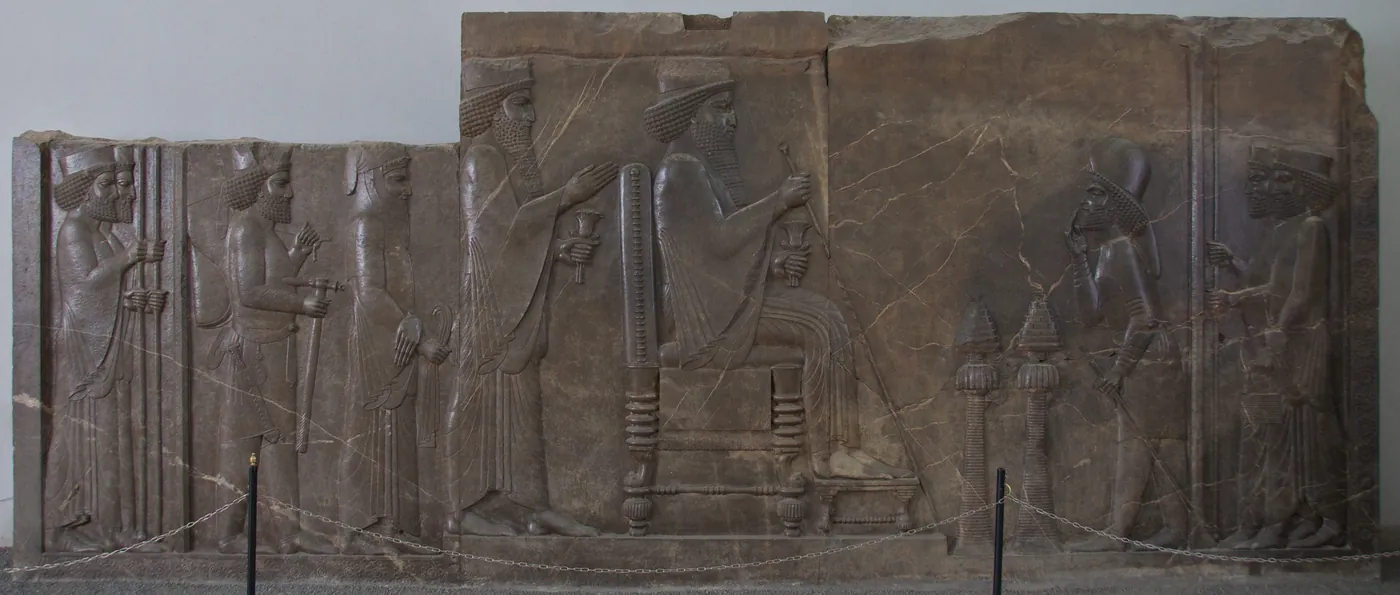
The heroic version leaves out how the wars looked from the other side. For the Greeks, they were the defining event of their civilization. For Persia, they were a failed operation on a distant frontier. Not one Persian royal inscription mentions Marathon, Thermopylae, or Salamis. Xerxes went back to building his palace complex at Persepolis, and his own monuments remember him as a great king and servant of the god Ahura Mazda, not as the man who lost Greece. The empire he ran stayed the dominant power of the Middle East for another 150 years.
Persia also learned a cheaper method. When Athens and Sparta fought each other in the Peloponnesian War, Persia paid for the Spartan fleet that eventually destroyed Athenian power in 404 BCE. In 387 BCE, the Persian king Artaxerxes II dictated a general settlement to the exhausted Greek cities, the King's Peace, which handed the Greek cities of Ionia back to Persia. Persia now had everything Darius had wanted a century earlier: control of Ionia, and a Greece too divided to interfere. Gold succeeded where 200,000 soldiers had failed.
Themistocles' own fate makes the same point. Athens ostracized the architect of Salamis in 471 BCE, then condemned him to death on a treason charge. He fled east and offered his services to the Persian king, who made him governor of the city of Magnesia. The man who sank the Persian fleet spent his last years as a Persian official and died in Magnesia around 459 BCE.
Why great powers still lose small wars
Persia's failure in Greece set a pattern that great powers have been rediscovering ever since. The invasion was optional for the empire and existential for the defenders: Xerxes was punishing a border insult, while the Athenians were fighting for their homes with a fleet they rowed themselves. The bigger the invading force, the heavier the supply line it dragged behind it. And in narrow water, the side that chooses the battlefield beats the side that brings more ships.
The United States learned the same lesson in Vietnam and again in Afghanistan. The Soviet Union learned it in Afghanistan too. Russia planned a short punitive war in Ukraine in 2022 and was still fighting years later. In every case, the greater power could leave whenever it chose, and eventually it did, because wars tend to be won by the side that cannot go home.
Persia, at least, could afford the loss. Its empire outlived Salamis by a century and a half, and when it finally fell in 330 BCE, the conqueror was not the city-states that had beaten Xerxes. It was Alexander of Macedon, a king from the northern edge of the Greek world, marching an army over the roads the Persians had built.
Test what you learned
6 questions on this article. About two minutes, no signup.