
Stasi
The Stasi was East Germany's secret police from 1950 to 1990, with about 91,000 staff and 189,000 informers.
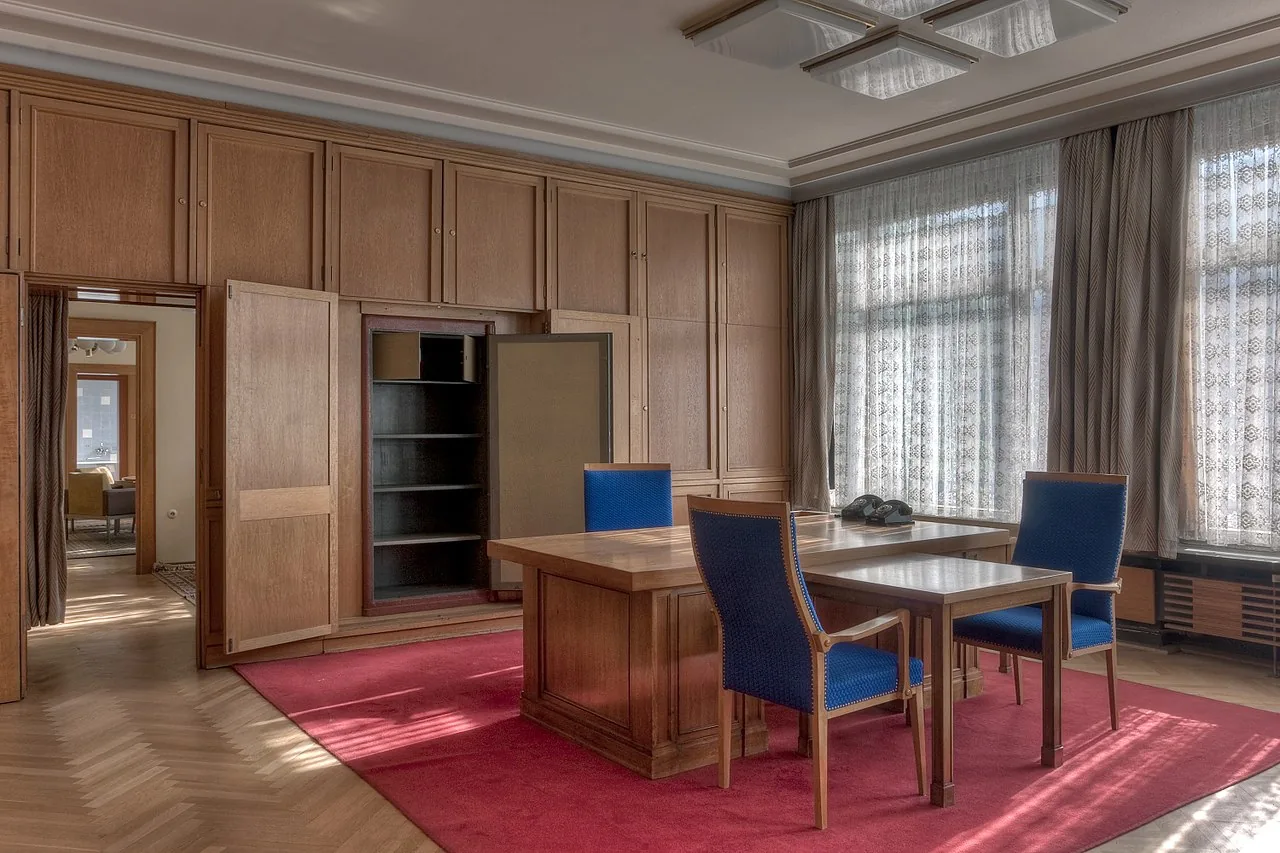
The Stasi, officially the Ministry for State Security (Ministerium für Staatssicherheit), was East Germany's secret police from 1950 to 1990. When East Germany fell in 1989, the Stasi had about 91,000 people on its payroll and another 189,000 civilians secretly reporting to it as informers. In a country of about 16 million, that meant roughly one in every 60 East Germans either worked for or spied for the Stasi. Neither the KGB nor the Nazi Gestapo ever came close to that ratio. The files the Stasi left behind fill more than 111 kilometers of shelving and hold information on roughly 5.6 million individuals. No government security service has ever been so thoroughly exposed to public view, because after reunification Germany chose to open the entire archive.
How the Stasi controlled East Germany
The Stasi spent most of its energy not on foreign espionage but on monitoring its own population. Officers opened letters at special postal sorting stations, listened to phone calls, and photographed meetings at churches, one of the few places people could gather outside state supervision. But the core of the system was human. Informers were recruited from a target's own circle: a colleague, a drinking friend, a pastor, a coach, sometimes a spouse. The Stasi chose people close to the target on purpose. When anyone in your daily life might be reporting on you, ordinary trust breaks down.
Erich Mielke ran the Stasi for 32 years, from 1957 to 1989. He grew up in Berlin's working-class Wedding district, the son of a wagon-maker. He joined the Communist Party at 18. In 1931, at 23, he took part in the killing of two Berlin police captains and fled to the Soviet Union to avoid arrest. He returned to East Germany after the war, rose through the security services, and built the Stasi into one of the country's largest employers. In November 1989, four days after the Berlin Wall opened, Mielke appeared before East Germany's parliament for the first time in his 32-year tenure. When legislators heckled him for calling them "comrades," he stumbled and said, "But I love all, all people." The audience laughed.
In the 1970s, the Stasi largely stopped arresting dissidents and adopted a method called Zersetzung, which translates to "decomposition." It meant taking apart someone's life piece by piece, without any arrest or criminal charge. Officers entered a target's apartment and moved furniture slightly. They spread rumors that the target was unfaithful or was secretly an informer. They arranged for university rejections and professional failures. They warned off the target's friends, one by one. Targets watched their careers, friendships, and marriages fall apart for no reason they could identify, with nothing they could point to as evidence. Some came to believe they were losing their sanity, which was exactly the goal. Zersetzung let East Germany present itself as a country that did not jail political dissidents, while quietly destroying them.
The Stasi also kept what it called "smell jars," cloth swatches pressed against interrogation chairs to collect a suspect's scent, then sealed in labeled glass containers. If trained dogs later needed to match a person to a leaflet or a protest banner, the jars were ready. Some of them are preserved in the Stasi Museum in Berlin today.
Markus Wolf and the spy who brought down a chancellor
The Stasi's foreign intelligence arm, the Hauptverwaltung Aufklärung (HVA), was one of the most effective spy agencies of the Cold War. Its chief, Markus Wolf, ran it for 34 years. Western intelligence agencies did not even have a photograph of Wolf until 1978, when Sweden's security service managed to photograph him during a visit to Stockholm. Western spy agencies called him "the man without a face."
Wolf's agents penetrated NATO headquarters, West German industry, and the government in Bonn. His most successful operation was placing Günter Guillaume, an East German agent who had entered West Germany posing as a refugee, inside the office of Chancellor Willy Brandt. Guillaume joined Brandt's Social Democratic Party, rose through its ranks, and by 1972 was serving as the chancellor's personal aide. When West German counterintelligence exposed him in April 1974, Brandt resigned. A single well-placed agent brought down the leader of Western Europe's largest democracy.
East Germany also used the Stasi to run a trade in political prisoners. Between 1964 and 1989, West Germany paid for the release of about 33,700 East German political prisoners, at a total cost of roughly 3.5 billion Deutsche Marks. The Stasi managed the sales on the eastern side.
What happened to the Stasi files?
On January 15, 1990, two months after the Berlin Wall fell, several thousand people broke into the Stasi's headquarters on Normannenstrasse in East Berlin. Inside, they found officers who had been tearing up files by hand for weeks on Mielke's orders. The protesters stopped the destruction, but about 15,000 bags of shredded paper had already piled up. Researchers are still reassembling those fragments today.
In November 1991, Germany passed the Stasi Records Act, which allowed any person to request and view the Stasi file kept on them. More than two million people have requested access since then. Some learned that a best friend had been reporting on them for years. Others discovered that a spouse had been an informer. Careers ended and marriages dissolved because of reports written decades earlier.
The files, now held by Germany's Federal Archives, remain open. The Stasi is the best-documented security service in history because Germany chose to let its citizens see their files.
Why the Stasi could not save East Germany
Up to the final months of 1989, Stasi officers sent detailed warnings to the party leadership that public discontent was growing across East Germany. The party leadership read the reports and did nothing that changed the outcome. The regime fell to street protests in cities that the Stasi had thoroughly infiltrated.
About 280,000 people, counting both staff and informers, had watched a country of 16 million. Modern states can collect far broader data with far fewer people, using software that links databases they already hold. What Palantir does is one example of how that works today. But the Stasi's history shows that a government can know almost everything its citizens think and still fall, because collecting information about people is not the same as giving them a reason to stay.