
KGB
The KGB was the Soviet Union's main security agency from 1954 to 1991, serving as both foreign spy service and domestic secret police.
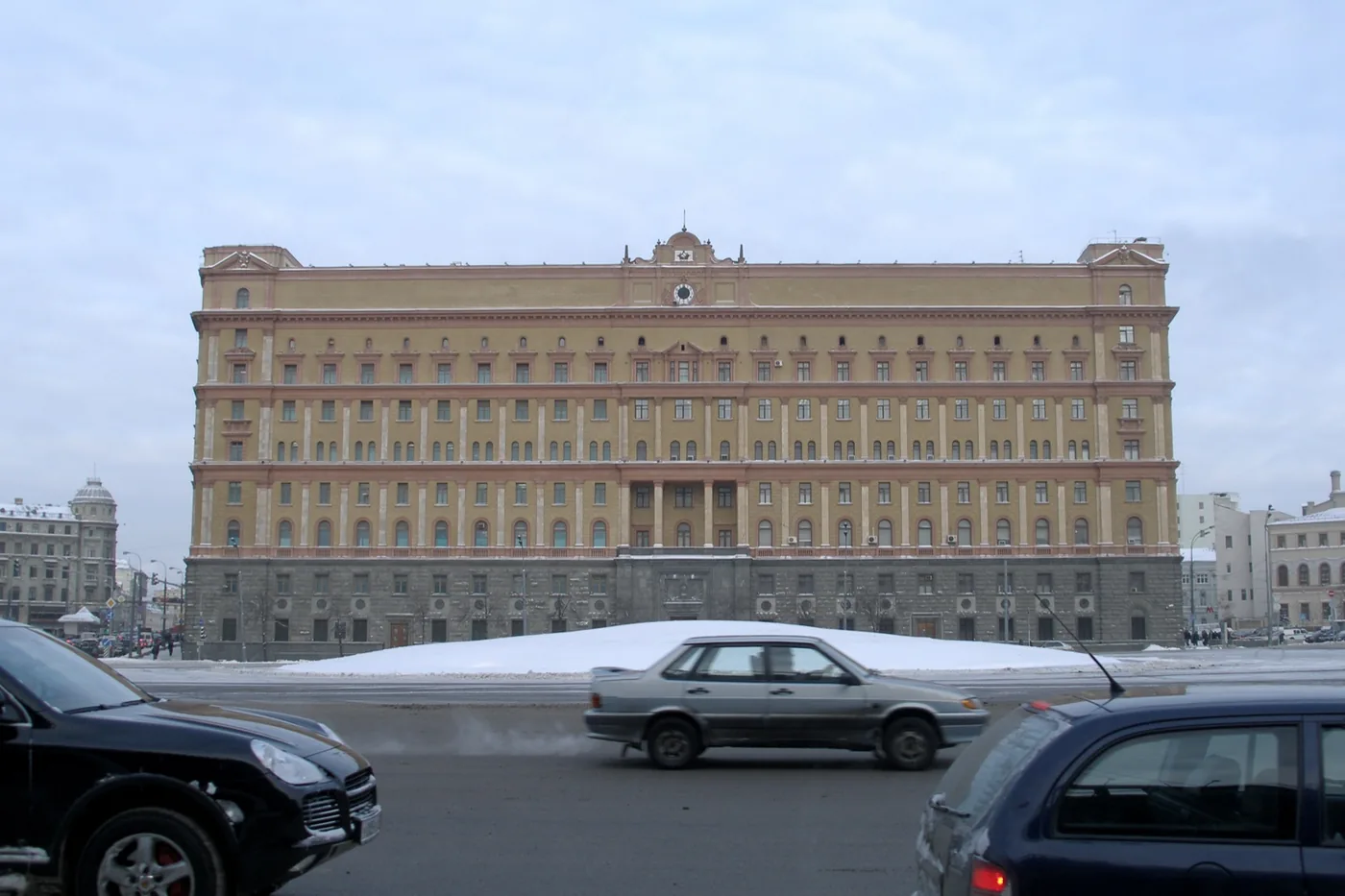
The KGB (Komitet Gosudarstvennoy Bezopasnosti, or Committee for State Security) was the Soviet Union's main security agency from 1954 to 1991. It served as both a foreign intelligence service and a domestic secret police, a combination unusual among major powers. At its peak the KGB employed an estimated 480,000 people and ran a much larger network of informants across Soviet society. Besides gathering intelligence and policing dissent, it guarded Soviet borders, protected the country's leaders, and had a role in securing the nuclear arsenal. Its longest-serving chairman, Yuri Andropov, led the KGB for fifteen years and later became the Soviet Union's leader. Its best-known former officer, Vladimir Putin, later became president of Russia.
How the Soviet secret police became the KGB
The KGB was the last in a line of Soviet secret police agencies that began six weeks after the Bolsheviks seized power in 1917. On December 20 of that year, Lenin created the Cheka, the All-Russian Extraordinary Commission for Combating Counter-Revolution and Sabotage. He put it under Felix Dzerzhinsky, a revolutionary from a Polish noble family who had once planned to become a Catholic priest. Dzerzhinsky became a socialist instead and spent eleven of the twenty years before the revolution in tsarist prisons or exile. Under Dzerzhinsky, the Cheka carried out the Red Terror, a campaign of mass executions against suspected enemies of the new state.
The secret police changed names several times over the following decades. It became the OGPU in the 1920s and then the NKVD. Under Stalin, the NKVD ran the Great Purge from 1936 to 1938, arresting and executing hundreds of thousands of people. It also built the Gulag, the system of forced-labor camps that held millions. After Stalin died in 1953, the new Soviet leadership arrested and executed his secret-police chief, Lavrenty Beria. In 1954, they reorganized the agency as the KGB, placing it under the Communist Party's direct control.
What the KGB did abroad and at home
Abroad, the KGB was one of the world's most capable intelligence services, rivaling the CIA. Foreign espionage fell to its First Chief Directorate. KGB officers and their predecessors recruited some of the Cold War's most damaging spies, including the Cambridge Five, a ring of British officials first recruited in the 1930s who passed secrets to Moscow for decades. Kim Philby, the most successful of the five, rose near the top of Britain's MI6 before defecting to Moscow in 1963. The KGB also ran deep-cover agents called "illegals," officers who lived abroad under false identities for years. It also carried out what it called "active measures," a broad program of disinformation, forged documents, and front organizations meant to shift opinion in Western countries.
At home, the KGB watched the Soviet population. It opened mail, tapped telephones, and placed informers in workplaces and apartment buildings. Its Fifth Directorate targeted what the agency called "ideological subversion," meaning any ideas that challenged Communist Party rule. Dissidents were followed, interrogated, and sometimes confined in psychiatric hospitals. The physicist Andrei Sakharov, who had helped build the Soviet hydrogen bomb, became the country's most prominent human-rights activist and won the Nobel Peace Prize in 1975. The Soviet government refused to let him travel to collect it. In 1980, Soviet authorities exiled him to the city of Gorky, where he lived under KGB surveillance for nearly seven years.
How the KGB fell apart in 1991
In August 1991, KGB chairman Vladimir Kryuchkov helped lead a coup against Soviet leader Mikhail Gorbachev. The plotters opposed Gorbachev's political reforms. They detained him at his vacation home in Crimea and declared a state of emergency. The coup failed within three days. Crowds in Moscow resisted, and the military refused to fire on civilians. In the aftermath, a crowd forced the removal of the statue of Dzerzhinsky that stood outside the KGB's Lubyanka headquarters. By the end of 1991, both the KGB and the Soviet Union had ceased to exist. For more on the broader collapse, see Why did the Soviet Union collapse?.
Does the KGB still exist?
The KGB does not exist anymore. It was formally dissolved in December 1991 and split into successor agencies. The SVR (Foreign Intelligence Service) took over foreign espionage, continuing the work of the old First Chief Directorate. The FSB (Federal Security Service) took over domestic security, counterintelligence, and counterterrorism. Other functions, including border guards, went to separate agencies.
The FSB is headquartered in the same Lubyanka building the KGB once used. Vladimir Putin, a KGB veteran who had worked in foreign intelligence in Dresden, East Germany, from 1985 to 1990, became director of the FSB in 1998 and president of Russia in 2000. He has governed Russia for over a quarter-century, and his government draws heavily on veterans of the security services. In 2006, Alexander Litvinenko, a former FSB officer who had defected to Britain, was poisoned with polonium-210 in London and died three weeks later. A British public inquiry concluded in 2016 that Russian president Vladimir Putin probably approved the operation. The KGB is gone, but the agencies that replaced it remain central to how Russia is governed.