
Tax Havens and Offshore Finance
Tax havens are jurisdictions that charge non-residents little or no tax and keep company ownership secret.
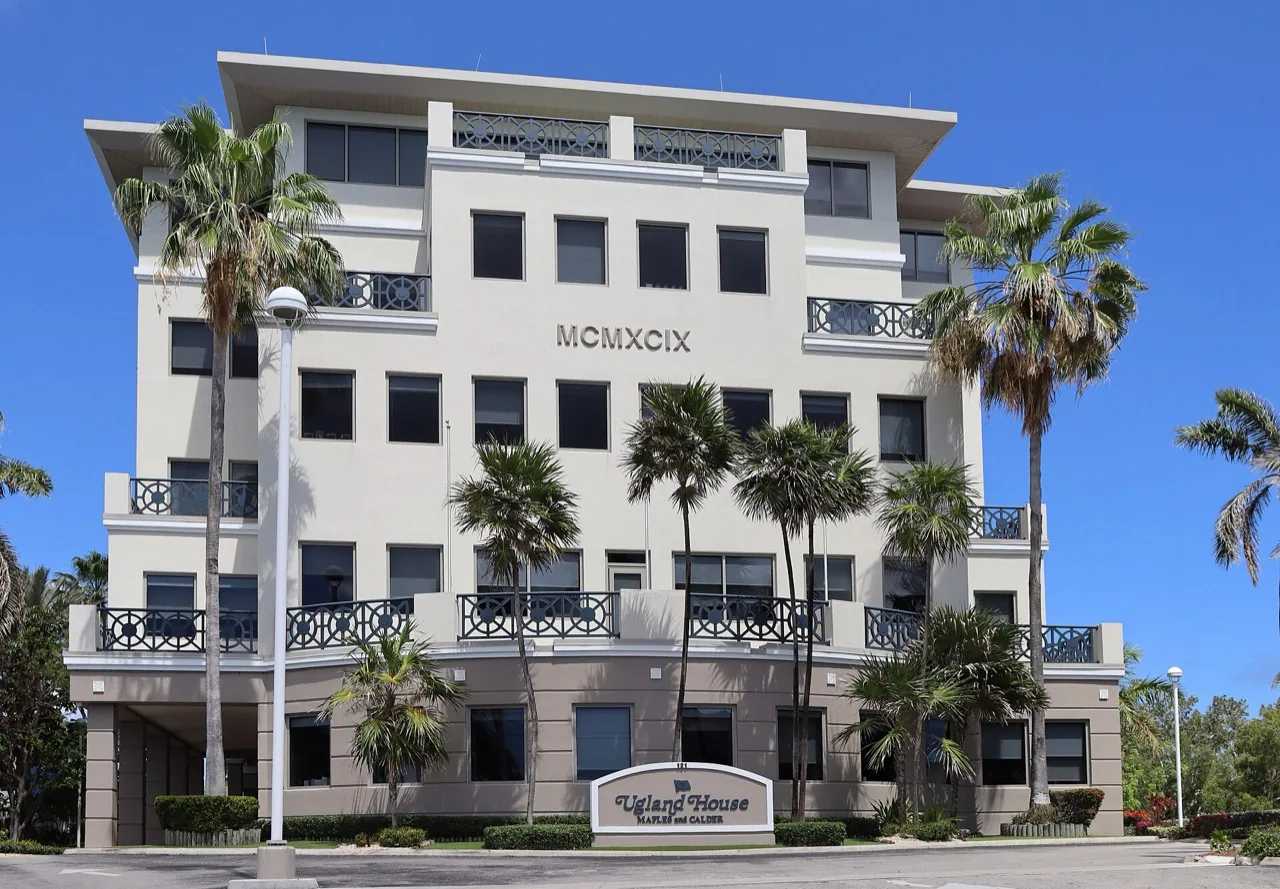
A tax haven is a place that charges non-residents little or no tax, makes it easy to set up a company, and keeps ownership records secret. The best-known address in offshore finance is Ugland House, a five-story office building in George Town, Grand Cayman, where more than 18,000 companies are registered. Almost none of those companies have anyone working inside. The building holds a law firm and a filing system. In 2008, Barack Obama pointed to Ugland House and called it either the world's biggest building or the world's biggest tax scam.
Tax havens serve two purposes. Rich individuals use them to hide personal wealth, which is generally illegal. Large companies use them to route profits out of high-tax countries into low-tax ones, which is generally legal and involves far more money. The French economist Gabriel Zucman has estimated that roughly one dollar in twelve of global household financial wealth is held offshore. Corporate profit shifting is larger still: multinationals moved about $1 trillion to low-tax jurisdictions in 2022, according to the EU Tax Observatory.
How companies move profits to tax havens
A multinational does not need to move its factories or customers to reduce its tax bill. It only moves paperwork. Three methods are common.
The first is licensing. A company transfers ownership of its trademarks and intellectual property to a subsidiary in a country with minimal taxes. Operating units in higher-tax countries then pay licensing fees for the right to use them, sending the profit to the low-tax subsidiary.
The second is intercompany lending. An affiliate based where taxes are low lends money to an affiliate where taxes are high. The borrowing unit writes off the interest payments, reducing its taxable income. The interest income arrives in a place where it is barely taxed.
The third is transfer pricing. A company adjusts the prices on transactions between its own subsidiaries so that most of the margin appears in the low-tax jurisdiction. A factory sells a product to a related company at cost, and that company resells it to the final buyer at market price.
In every case, the physical business stays put. The only thing that crosses a border is the paperwork.
Which countries are tax havens?
The best-known offshore centers are small islands and territories: the Cayman Islands, the British Virgin Islands, Bermuda, and Jersey. All four are British Crown Dependencies or Overseas Territories. That connection is not a coincidence. As the British Empire contracted after World War II, many of these territories kept their ties to London while writing financial laws designed to attract foreign capital. The City of London connected them to global capital markets.
The bigger profit-shifting operations, though, run through wealthy countries. Ireland, Luxembourg, the Netherlands, Hong Kong, Singapore, and Switzerland between them account for most of the corporate profits that move offshore. Ireland and the Netherlands each received more than $140 billion in shifted profits in 2022, according to the EU Tax Observatory.
The United States itself ranks among the world's leading secrecy jurisdictions. Delaware and Nevada sell anonymous shell companies. South Dakota sells trusts that can hold assets for generations without disclosing the owner. In 2025, the Tax Justice Network placed the United States first on its Financial Secrecy Index when weighted by the volume of money flowing through it. The U.S. government requires Americans to report foreign bank accounts, but it has not joined the Common Reporting Standard, the system through which more than 110 countries automatically share bank account data. The U.S. collects information on Americans banking abroad but sends far less in return.
What did the Panama Papers reveal?
Between 2013 and 2021, four major document leaks exposed how offshore finance works in practice. The Offshore Leaks came first, in 2013. The Panama Papers followed in 2016, when journalists published 11.5 million files from the Panamanian law firm Mossack Fonseca. The documents showed how politicians, business figures, and wealthy individuals around the world used shell companies to conceal money. Iceland's prime minister, Sigmundur Gunnlaugsson, resigned within days after the papers revealed that he and his wife had owned a secret offshore company. In 2017 the Paradise Papers added another round of disclosures, and in 2021 the Pandora Papers provided a fourth.
Every leak dominated the news for weeks. But the policy response never matched the public outrage. Corporate profit shifting in 2022 was roughly the same share of multinational earnings as before the Panama Papers.
How tax havens complicate sanctions
After Russia invaded Ukraine in February 2022, Western governments moved to freeze Russian assets. Putting an oligarch on a sanctions list took an afternoon. Finding the money took months. Ownership ran through chains of shell companies across three or four countries, each layer fronted by a different nominee director. Superyachts could be spotted and seized, because a 100-meter boat in a marina is hard to hide. Bank accounts, real estate held through trusts, and shares registered to anonymous companies were not.
The same system that allows corporate profit shifting also allows sanctioned officials, weapons traffickers, and criminal organizations to own assets without those assets being traceable to them. Tax havens were built for corporate tax planning. They turned out to be equally useful for hiding who owns what.
Governments have started to respond. In 2017 and 2018, about 100 countries began automatically sharing bank account data under the Common Reporting Standard. In 2021, about 140 governments agreed to a global minimum corporate tax rate of 15 percent, aimed at the largest multinationals, and the first rules took effect in 2024. But the minimum tax has already been weakened by exemptions, the United States has not adopted it, and the basic system that makes ownership hard to trace remains in place.