Is de-dollarization really happening in 2026?
The dollar's reserve share keeps sliding and central banks are hoarding gold. But real de-dollarization looks nothing like the headlines promise.
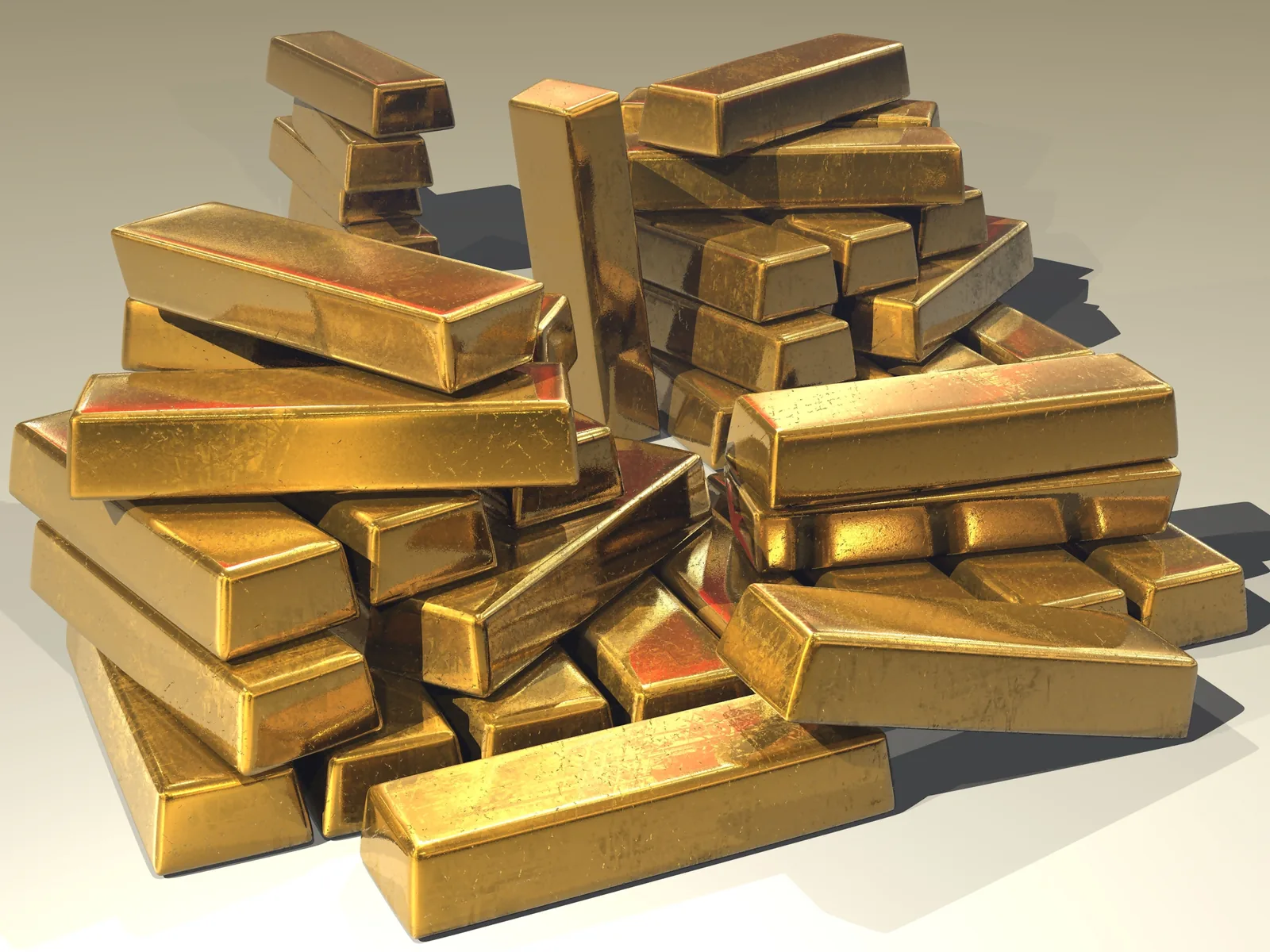
On January 28, 2026, gold touched an all-time high of about $5,589 an ounce. It has roughly doubled in three years. Behind that price is a buyer most people never think about: the world's central banks, the same institutions that are supposed to hold dollars. They bought more than a thousand tonnes of gold in 2022, again in 2023, and again in 2024, the fastest pace of official gold buying since the 1950s. Somewhere in there, gold quietly passed the euro to become the second-largest reserve asset on the planet, behind only the dollar. That is what de-dollarization actually looks like in 2026. Not a rush into some rival currency, but a rush into a metal.
Ask whether the world is moving away from the dollar and you tend to get two confident answers. One camp points to the dollar's steadily shrinking share of global reserves and says the end is near. The other points out that almost every trade, loan, and barrel of oil on Earth is still priced in dollars, and says nothing has changed. Both are looking at real numbers. The truth is stranger than either.
The number everyone points to
The case for de-dollarization rests on one chart. In 2000, the dollar made up about 71 percent of the world's official currency reserves. By 2015 it was around 64 percent. At the end of 2024 it was about 58 percent, according to the IMF. A thirteen-point slide over a quarter century is not nothing, and the trend line points down.
Look closer, though, and the story bends. A large part of the 2025 dip came not from anyone selling dollars but from the dollar weakening, which mechanically raised the value of everything else in the pile; by early 2026 the share had ticked back up. And here is the part that breaks the simple narrative: the share the dollar lost did not go to a challenger. The euro has sat flat near 20 percent for two decades. China's renminbi, for all the noise around it, is still only about 2 percent of global reserves. The dollar is not losing a race to a rival. It is leaking to everyone and no one, to a scatter of smaller currencies and, above all, to gold.
Where the dollar isn't budging
Reserves are the one place the dollar is genuinely slipping. Everywhere else, it is holding or gaining.
In April 2025, the dollar was on one side of 89 percent of all foreign-exchange trades, according to the Bank for International Settlements, up slightly from three years earlier. Roughly half of world trade is invoiced in dollars, including a great deal of trade that never touches the United States. About 60 percent of international debt is issued in dollars. This is the layer that actually matters, and it barely moves.
It barely moves because of a network effect that is almost impossible to break gradually. Oil, copper, and wheat are priced in dollars. Contracts are written in dollars because the benchmarks are in dollars. Banks hold dollars because the contracts demand them. Switching any single piece is pointless unless every piece switches at once. A European importer who convinced Saudi Arabia to sell him oil in euros would still need dollars to buy copper, to borrow, and to settle with a dozen other trading partners. So he keeps his dollars. Multiply that by every firm on the planet and you get a currency that is used because it is used.
US Treasury Secretary John Connally described the arrangement to a room of frustrated European finance ministers in 1971, months after the Nixon shock, and the line has aged well:
The dollar is our currency, but it's your problem.
The gold rush
So if the world is uneasy about the dollar but cannot switch to another currency, what does it do? It buys gold.
Central banks have bought more than 800 tonnes of gold every year since 2022, three of those years topping a thousand, roughly double the pace of the previous decade. Poland led the pack in 2025, adding more than a hundred tonnes; China, Turkey, Kazakhstan, and India have been steady buyers for years. In the World Gold Council's 2026 survey, a record 45 percent of central banks said they planned to add more gold, and nearly three-quarters expected to hold fewer dollars within five years.
The strange part is what gold is not. It pays no interest. It funds no trade. No one prices a cargo of oil or settles an import bill in it. By every textbook measure it is a worse reserve asset than a US Treasury bond, which at least pays you to hold it. Central banks are buying it anyway, and they are doing it for one reason above all others.
The weaponization paradox
In February 2022, days after Russia invaded Ukraine, the United States and European Union froze roughly $300 billion of the Russian central bank's reserves. It was the first time the world had watched sovereign reserves, money a country believed it owned, immobilized at the flick of a political switch.
Every central bank not firmly inside the Western camp drew the same lesson. Dollar reserves are safe until your government falls out of favor in Washington, and then they are hostages. Gold sitting in your own vault cannot be switched off by a Treasury designation. The sanction that punished Russia also advertised, to everyone watching, exactly why they should cut their exposure. The weapon works, and every time it is fired it teaches the target's neighbors to buy insurance.
Four years on, the frozen billions are still frozen. Europe spent 2025 arguing over whether to seize the principal to fund Ukraine, and kept flinching; in December it chose to lend Kyiv money raised through its own borrowing rather than cross that line. The lesson of the freeze has not faded anywhere.
Washington's answer to the drift has not been reassurance. On November 30, 2024, President-elect Trump posted that any BRICS country creating or backing a currency to rival the dollar would face 100 percent tariffs and could "say goodbye" to the American market. In July 2025 he threatened an extra 10 percent on any nation aligning with the bloc. He was promising to punish a currency that does not exist.
The currency that isn't coming
Which brings us to BRICS, the group at the center of nearly every de-dollarization headline. It has grown fast: Egypt, Ethiopia, Iran, and the United Arab Emirates joined at the start of 2024, Indonesia in 2025. On paper it now speaks for close to half the world's population.
And it has produced no currency. At the 2024 summit in Kazan, the members agreed only to study cross-border payments; Putin said the existing setup was "enough." The 2025 declaration in Rio did not even use the word de-dollarization. A shared BRICS currency would need a shared central bank, shared budget rules, and mutual trust between India and China, none of which exists.
The real movement is quieter and lives in the plumbing. China has built its own payment system, CIPS, which grew more than 40 percent in 2024 and now reaches around 190 countries, part of the same drive for financial independence as its Belt and Road lending. More than 90 percent of Russia-China trade is now settled in rubles and yuan, up from almost nothing before 2022. This is genuine de-dollarization, one transaction at a time.

But even here the limits are stark. CIPS still relies on the Western SWIFT network to carry most of its messages. And the renminbi's share of global payments has actually fallen, from a peak of 4.7 percent in late 2023 to around 3 percent in 2026. The yuan cannot become a true reserve currency while China keeps a tight grip on money moving in and out of the country, which is the Triffin dilemma in its sharpest form, and Beijing will not loosen that grip, because doing so would expose its financial system to the kind of crisis that wrecked its neighbors in 1997. The challenger the world is told to fear is going backwards on the one measure that counts.
So is de-dollarization really happening?
Yes, and not in the way the headlines promise. The dollar is not being dethroned. No rival is close, and the network that holds it in place is, if anything, tighter than it was a decade ago. What is eroding is something narrower and more important: the old assumption that the dollar is the only safe place to park a nation's savings.
That assumption is being replaced not by another currency but by a hedge. Gold, a little yuan, a handful of smaller currencies, a home-grown payment rail kept as a backup. Central banks are not looking for a replacement. They are buying insurance against the one they have, because the country that issues the dollar now carries a debt above $36 trillion, borrows more every year, and has shown it will turn the currency into a weapon when it suits.
So the honest answer to whether the world is moving away from the dollar is this: slowly, partially, and mostly by accident. The dollar's rivals still cannot replace it. But for the first time in a lifetime, a large part of the world is behaving as though it would like an exit, and is quietly building one it hopes never to use.
Test what you learned
6 questions on this article. About two minutes, no signup.
Orbis has a full course on this
Bretton Woods and the Petrodollar. 18 lessons, each ending with a quiz like this one.