
Women's Suffrage
Women's suffrage was the movement to win women the right to vote, from New Zealand in 1893 to most democracies by the mid-twentieth century.
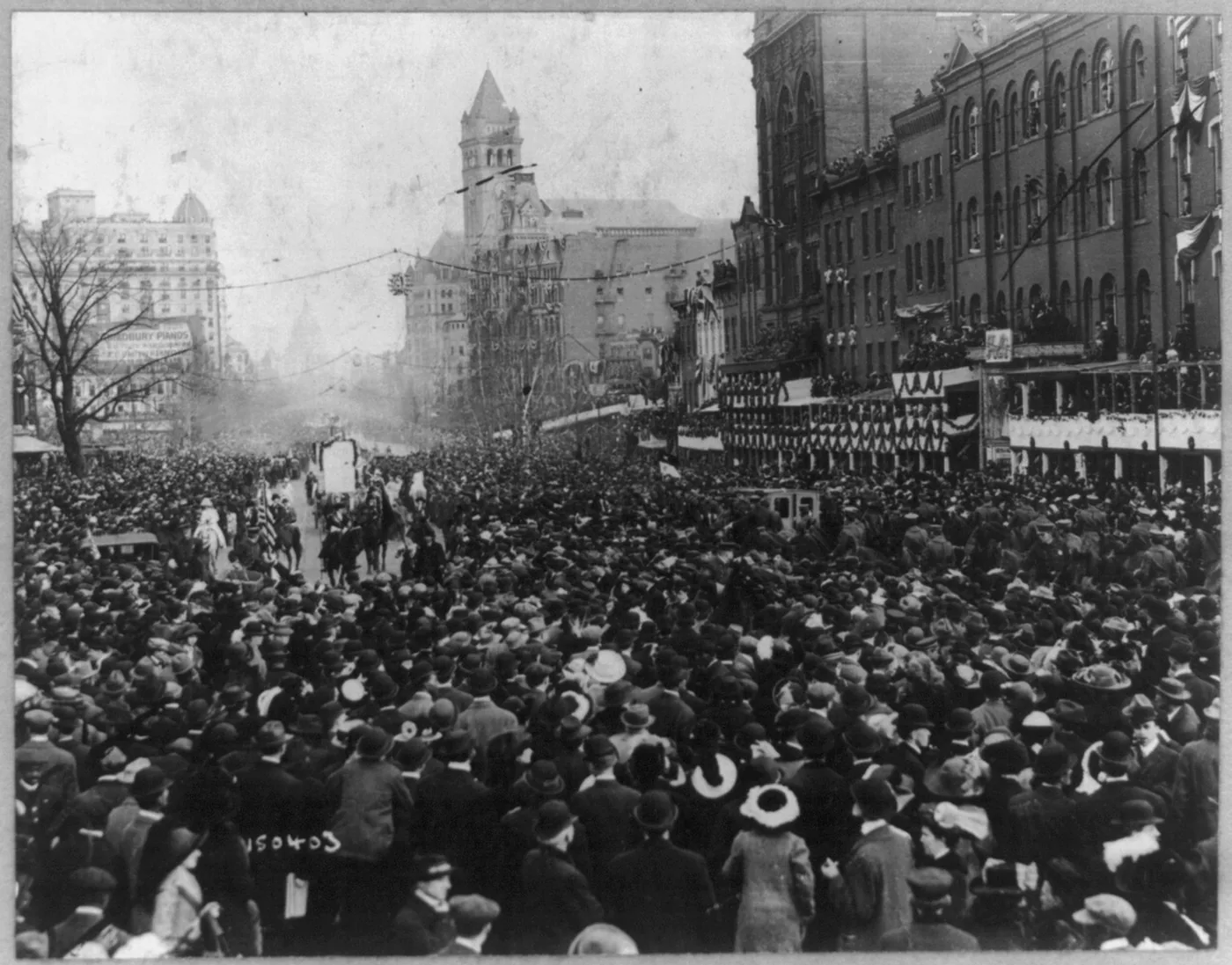
Women's suffrage was the movement to win women the right to vote. Through most of the 1800s, the question of who deserved the franchise was really a question about men. It expanded from landowners to tenants to laborers, but including women was treated as eccentric even by reformers. In 1893, New Zealand became the first nation with an elected government to let women vote in national elections. Britain followed in 1918, the United States in 1920, and France not until 1944. Switzerland, one of the last Western democracies to act, did not hold its referendum until 1971. The shift from fringe position to accepted principle took about seventy years.
How the British suffrage movement split
The British movement produced the clearest example of two strategies running side by side. Millicent Fawcett campaigned for the vote for fifty years, starting in the 1860s, and from 1897 led the suffragists through the National Union of Women's Suffrage Societies. They worked through petitions, lobbying, and private members' bills. Fawcett, born in 1847 in Suffolk, came from a family of reformers. Her older sister, Elizabeth Garrett Anderson, was the first woman to qualify as a doctor in Britain. Fawcett believed that patient constitutional pressure would eventually persuade Parliament.
Emmeline Pankhurst reached a different conclusion. Born in Manchester in 1858, she had attended her first suffrage meeting at the age of fourteen. After her husband Richard, a lawyer and suffrage supporter, died in 1898, she raised four children on her own and took work as a registrar recording births and deaths. In 1903 she founded the Women's Social and Political Union and adopted the slogan "deeds, not words." Her daughters Christabel and Sylvia became leading figures in the organization.
Pankhurst's followers, known as the suffragettes, turned to heckling ministers, smashing windows, setting fire to empty buildings, and going on hunger strikes in prison. The British government responded first with force-feeding. Then, in 1913, Parliament passed the Prisoners (Temporary Discharge for Ill-Health) Act, nicknamed the Cat and Mouse Act, which released weakened prisoners and rearrested them once they recovered.
On June 4, 1913, Emily Davison ran onto the track at the Epsom Derby and was struck by King George V's horse. She suffered a fractured skull, never regained consciousness, and died four days later. Whether she intended to die is still debated. She was carrying a return train ticket and a pass for a suffragette festival that evening.
Whether militancy helped or hurt is still argued. The suffragettes forced the country to pay attention, but they also gave opponents a reason to dismiss the movement as dangerous.
How the United States passed the Nineteenth Amendment
The American campaign dated to 1848, when Elizabeth Cady Stanton and Lucretia Mott held the Seneca Falls Convention in New York and issued a Declaration of Sentiments demanding equal rights, including the vote.
By the early twentieth century, two strategies competed. Carrie Chapman Catt led the National American Woman Suffrage Association and in 1916 unveiled her "Winning Plan," a coordinated push for the vote at both the state and federal level. Her strategy was to win enough state victories to build momentum for a constitutional amendment.
Alice Paul took a more confrontational approach. In January 1917, she and the National Woman's Party began picketing the White House. The picketers stood in silence holding banners asking President Woodrow Wilson how long women must wait for liberty. When the United States entered World War I that April, the protests continued, and police began arresting the women. Paul was sentenced to seven months in prison, went on a hunger strike, and was force-fed. The publicity shifted public opinion.
The Nineteenth Amendment passed Congress in June 1919 and was ratified on August 18, 1920, when Tennessee became the thirty-sixth state to approve it.
Did World War I win women the vote?
The war helped, but the common claim that women received the vote as a reward for wartime work is too simple. Governments had put millions of women to work in munitions factories, transport, and offices during the war, even while claiming women lacked the capacity for citizenship. But the British law passed in 1918 told a more complicated story. It covered only women aged thirty and older who met a property qualification, or whose husbands did. Many of the younger factory workers whose wartime labor had been cited as justification were left out. Britain did not let women vote on the same terms as men until 1928.
The better explanation is that the war destroyed the old argument. Governments that had put women to work for four years in every part of the economy could not credibly claim they were unfit to vote. And leaders rebuilding shattered economies after the war chose to grant the vote rather than risk a renewed confrontation with suffrage campaigners.
When did women get the right to vote?
New Zealand was first in 1893, after a petition organized by Kate Sheppard gathered nearly 32,000 signatures. New Zealand did not let women stand for Parliament until 1919. Finland gave women both the vote and the right to run for office in 1906, and the following year elected nineteen women to its parliament, the first women to hold elected national office anywhere.
After that, the pace quickened. Russia extended the vote to women in 1917. Britain and Germany followed in 1918, and the United States ratified the Nineteenth Amendment in 1920. France acted in 1944, and Italy and Japan in 1945. Switzerland was one of the last Western democracies, holding its referendum in 1971. Its final holdout canton, Appenzell Innerrhoden, did not comply until a federal court ordered it to in 1990. Saudi Arabia did not let women vote, even in local elections, until 2015.
Winning the right on paper did not always mean being able to use it. In the American South, Black women were legally entitled to vote after 1920. But voting fees, reading tests designed to fail them, and physical intimidation kept them away for forty-five years. Congress passed the Voting Rights Act in 1965 to end these practices. The Jim Crow system that maintained this exclusion applied to Black men and women alike.
The suffrage movement changed what the word democracy means. A system that excludes half its adult population from voting would not be called a democracy today. A century and a half ago, it was standard practice in every country on earth.