
What would a Chinese invasion of Taiwan look like?
China has the world's largest navy and has told its military to be ready by 2027. But 100 miles of open water, a prepared defender, and the US Pacific Fleet stand in the way.
The Taiwan Strait is about 100 miles wide at its narrowest point. The water is shallow, the currents are strong, and from October to March the winter monsoon makes large-scale naval operations dangerous. On the far side, Taiwan has roughly 14 beaches where a landing force could come ashore. The Taiwanese military has spent decades fortifying every one of them.
China's People's Liberation Army has the largest navy in the world, about 370 warships. In 2021, Admiral Philip Davidson, then the commander of US forces in the Indo-Pacific, told the Senate that China could be ready to move on Taiwan by 2027. CIA director William Burns repeated the assessment in 2023. Xi Jinping, who came to power in 2012, has made reunification with Taiwan the central promise of his leadership. "The Taiwan question cannot be passed on from generation to generation," he said in 2013. He has since removed presidential term limits, cleared rivals from the Party, and consolidated more personal power than any Chinese leader since Mao Zedong. There is no successor in sight, and the timeline he has set is his own.
But building a military large enough to try is not the same as being able to succeed. Taking a defended island across 100 miles of open water, against a country armed with modern anti-ship missiles and backed by the United States, would be the hardest amphibious operation since the Normandy landings in 1944.
How it might start
Most analysts think a full amphibious invasion would not be the first move. A blockade is more likely.
China could declare a "customs inspection zone" around Taiwan, choosing language that avoids the word "blockade," which under international law is an act of war. The PLA Navy could enforce it with submarines and surface ships while China cut Taiwan's 14 submarine internet cables and jammed GPS signals. The goal would be to isolate the island economically without firing a shot.
Taiwan imports about 98 percent of its energy and produces only about a third of its own food. It holds fuel reserves for roughly 90 to 150 days, depending on rationing. A sustained blockade would shut down chip factories, darken cities, and force a choice: negotiate on Beijing's terms or wait for the United States to break the blockade.
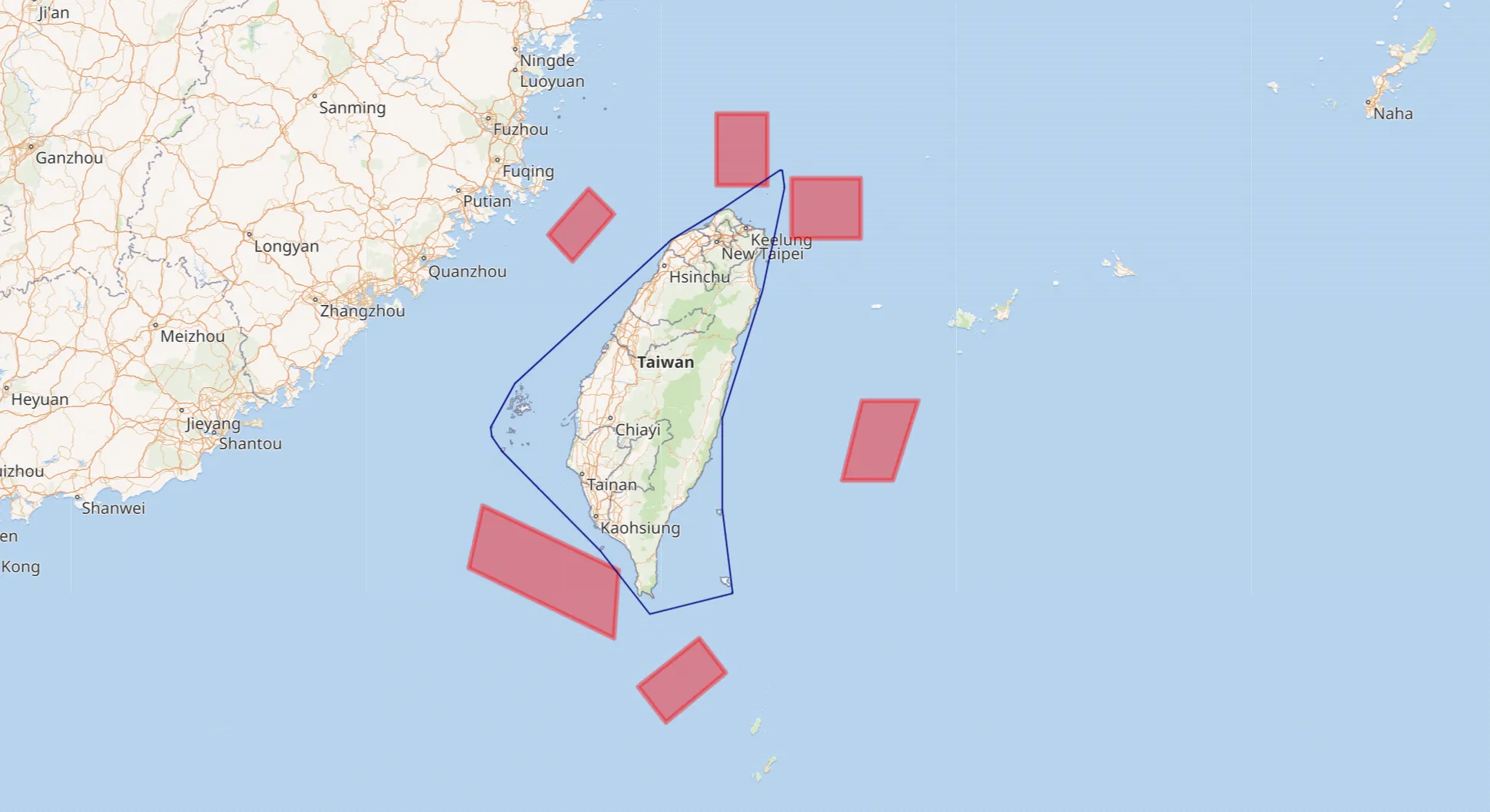
After House Speaker Nancy Pelosi visited Taiwan in August 2022, China fired ballistic missiles over the island for the first time and conducted military exercises in six zones surrounding it. The exercises looked, on a map, like a rehearsal for exactly this kind of blockade. China ran similar drills in 2023 and 2024, each time deploying faster and with less advance warning.
What an invasion would require
If a blockade failed to force Taiwan's surrender, an invasion would begin with a missile barrage on a scale not seen since the Second World War.
The PLA Rocket Force has more than a thousand short-range ballistic missiles aimed at Taiwan from bases along China's southeastern coast. The opening salvo would target air bases, radar stations, ports, and command centers, trying to destroy Taiwan's air force on the ground and its navy at anchor. Cyber attacks on power grids and communications would come at the same time.
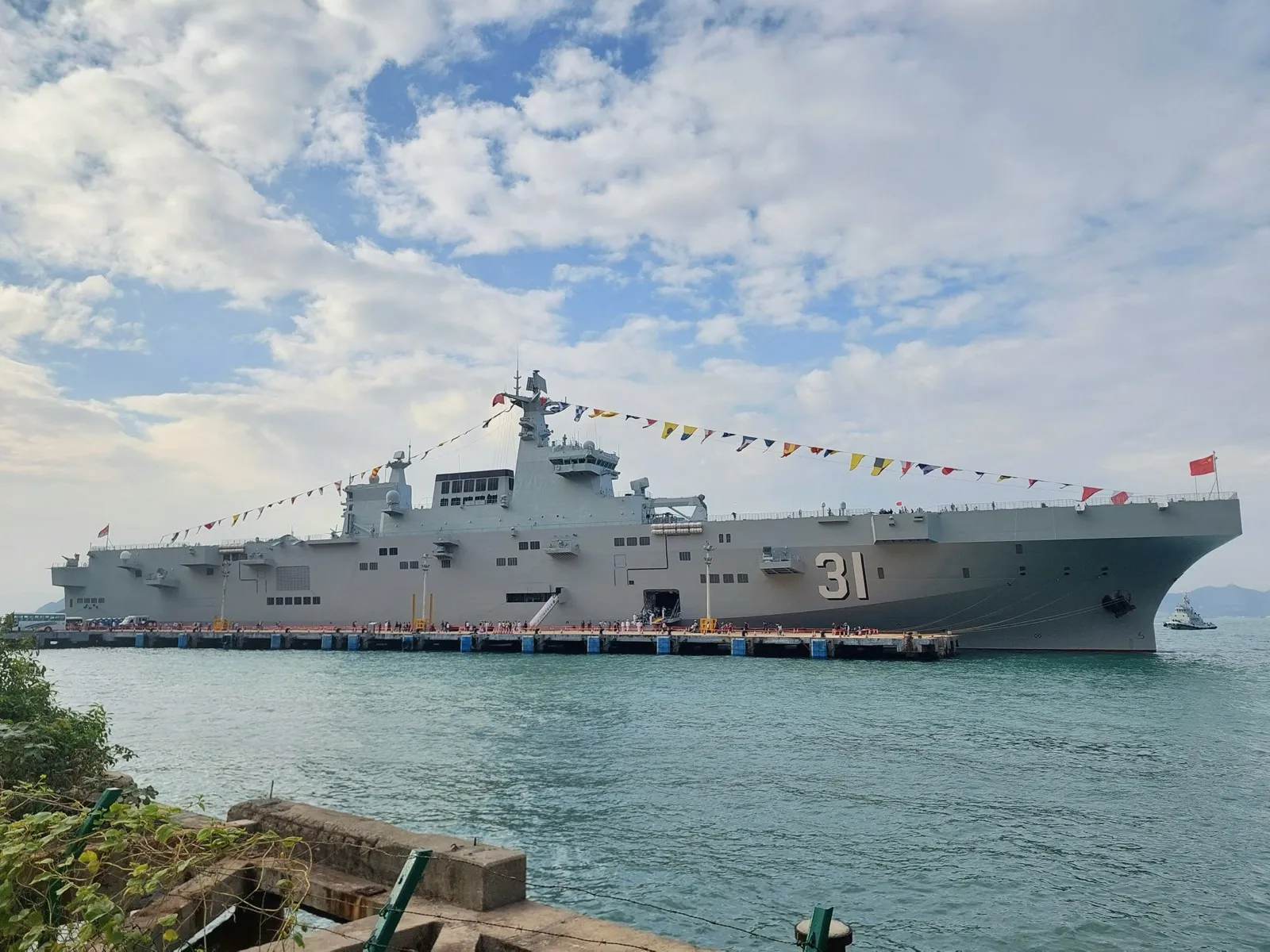
Then the troop transports would head across the strait. China's amphibious fleet includes about a dozen large warships and scores of smaller landing craft, enough to carry roughly 25,000 to 30,000 troops in a first wave. China has also been building civilian ferries to military specifications to add capacity, but the total is still limited. The crossing would take eight to twelve hours, and the transport ships would be within range of Taiwan's anti-ship missiles the entire way.
For comparison: the D-Day landings in June 1944 crossed roughly 100 miles of water from southern England to Normandy, about the same distance as the Taiwan Strait. The Allies put about 156,000 troops ashore on the first day and had total control of the air and sea. The German defenders had no functioning navy and limited air cover. Even so, about 4,400 Allied soldiers died on June 6 alone. China's first wave would be a fraction of that size, crossing water where the defender has modern anti-ship missiles and a prepared air force.
What Taiwan can fight back with
Taiwan's active military has about 170,000 soldiers. Its reserves number roughly 2.3 million, though training and readiness have been uneven for years. In 2024, Taiwan extended mandatory conscription from four months to one year, the most significant reform in decades.
The island's strongest defense is its terrain. Taiwan's west coast, where any landing would take place, is densely urban. Every suitable beach is backed by a city. An invading force would move from sand into streets within hours. China's advantages in missiles and airpower count for less in urban warfare, where the fighting is block by block and defenders know the ground.
Admiral Lee Hsi-min, a former chief of Taiwan's general staff, has pushed what he calls the porcupine strategy. Instead of buying expensive jets and large warships that China could destroy on the first day, Taiwan should invest in thousands of small, mobile weapons that are hard to find and cheap to replace: shoulder-fired missiles, sea mines, armed drones, and mobile coastal defense batteries. The idea is not to defeat the PLA in open battle but to make the landing and occupation so costly that Beijing decides the price is too high. Taiwan has ordered roughly 400 Harpoon anti-ship missiles from the United States, with deliveries underway.
Why it may not happen
In January 2023, the Center for Strategic and International Studies, a Washington think tank, published the most detailed public wargame of a Taiwan invasion. It ran the scenario 24 times under different starting conditions. In most runs, China failed to establish a beachhead. But the cost was enormous on every side. The United States lost two aircraft carriers and up to 20 major surface ships in the first three weeks of fighting. Taiwan's navy and air force were largely destroyed. Japan's bases were hit by Chinese missiles. Even in the scenarios where China failed to take the island, the losses were severe for everyone involved.
The economic damage would be just as bad. Taiwan's chip factories produce about 90 percent of the world's most advanced semiconductors. A war would shut them down immediately, whether by bombing, blockade, or TSMC's own emergency procedures. Bloomberg Economics estimated the first-year global cost at about $10 trillion, roughly 10 percent of the world's GDP and several times the economic damage caused by COVID-19.
China's own economy would suffer badly. Its exports move through shipping lanes that would become a war zone. The sanctions that followed would be far heavier than those imposed on Russia after its invasion of Ukraine. Xi Jinping would be staking his political survival on a military operation with no modern precedent and no guarantee of success. If the invasion failed, the consequences inside China could threaten the Party itself.
The United States has kept its security commitment to Taiwan deliberately vague for decades, a policy called strategic ambiguity. But every recent president has moved closer to saying plainly that the US would defend the island. Japan, Australia, and the Philippines have deepened their own security ties in the western Pacific. An invasion of Taiwan would almost certainly mean a direct war with the United States, and no Chinese leader has shown any willingness to risk that.
China is building the military capacity to take Taiwan. The PLA's navy, missile forces, and amphibious fleet grow larger every year, and Xi Jinping has staked his legacy on reunification. But capability is not the same as a decision to act. The cost of an invasion, in lives, in money, and in the global chip supply, remains so high that most analysts expect the more likely future to be continued military pressure and economic coercion rather than an all-out assault. The danger is not that China will invade next year. The danger is that a crisis or a miscalculation, on either side of the strait, could make the decision look less costly than it actually is.