
Are Aircraft Carriers Already Obsolete?
A US supercarrier costs $13 billion. The Chinese missile built to sink it costs under $11 million, and two recent wars suggest the math has changed.
In April 2022, Ukraine sank the Moskva, the flagship of Russia's Black Sea Fleet, with two Neptune anti-ship missiles fired from the coast. The ship was worth roughly $750 million. Each missile costs about $1 million. Two years later, Houthi militants in Yemen started firing anti-ship missiles and cheap drones at commercial ships in the Red Sea. The US Navy sent carrier strike groups to stop them. Over 2024, American destroyers fired more than 200 interceptor missiles at incoming Houthi weapons. Each SM-2 interceptor costs about $2.1 million. Some of the drones they were shooting down cost less than $20,000.
Neither conflict involved a direct strike on an aircraft carrier. But both showed, in real combat, something military planners have been arguing about for two decades: the economics of attacking a ship and the economics of defending one have flipped.
How the carrier became the most important weapon in the world
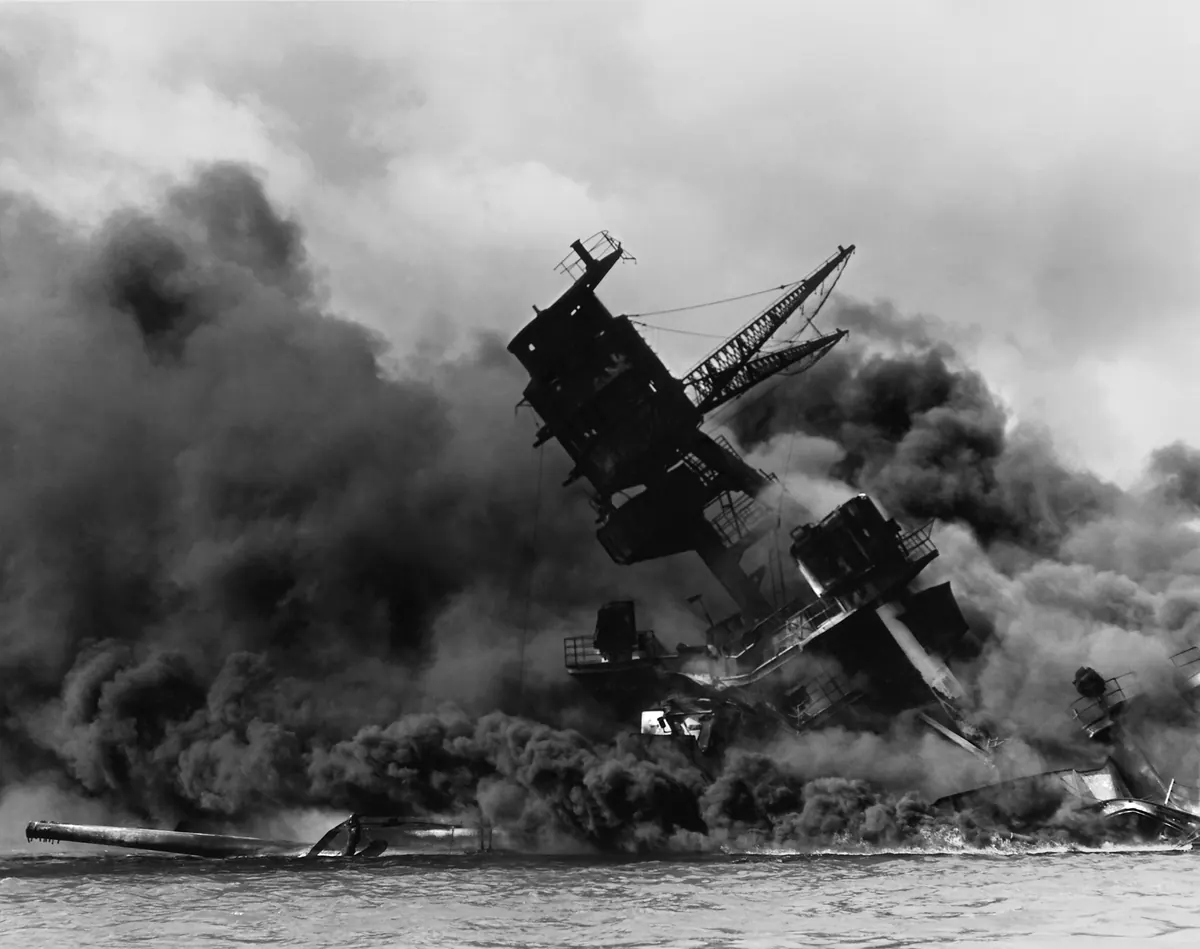
The aircraft carrier replaced the battleship, and the transition happened fast. On the morning of December 7, 1941, Japanese planes launched from six aircraft carriers struck Pearl Harbor and destroyed or damaged eight American battleships in two hours. The attackers flew from carriers 230 miles away. No battleship gun in the world could shoot that far. Within a decade the battleship was finished as a front-line weapon.
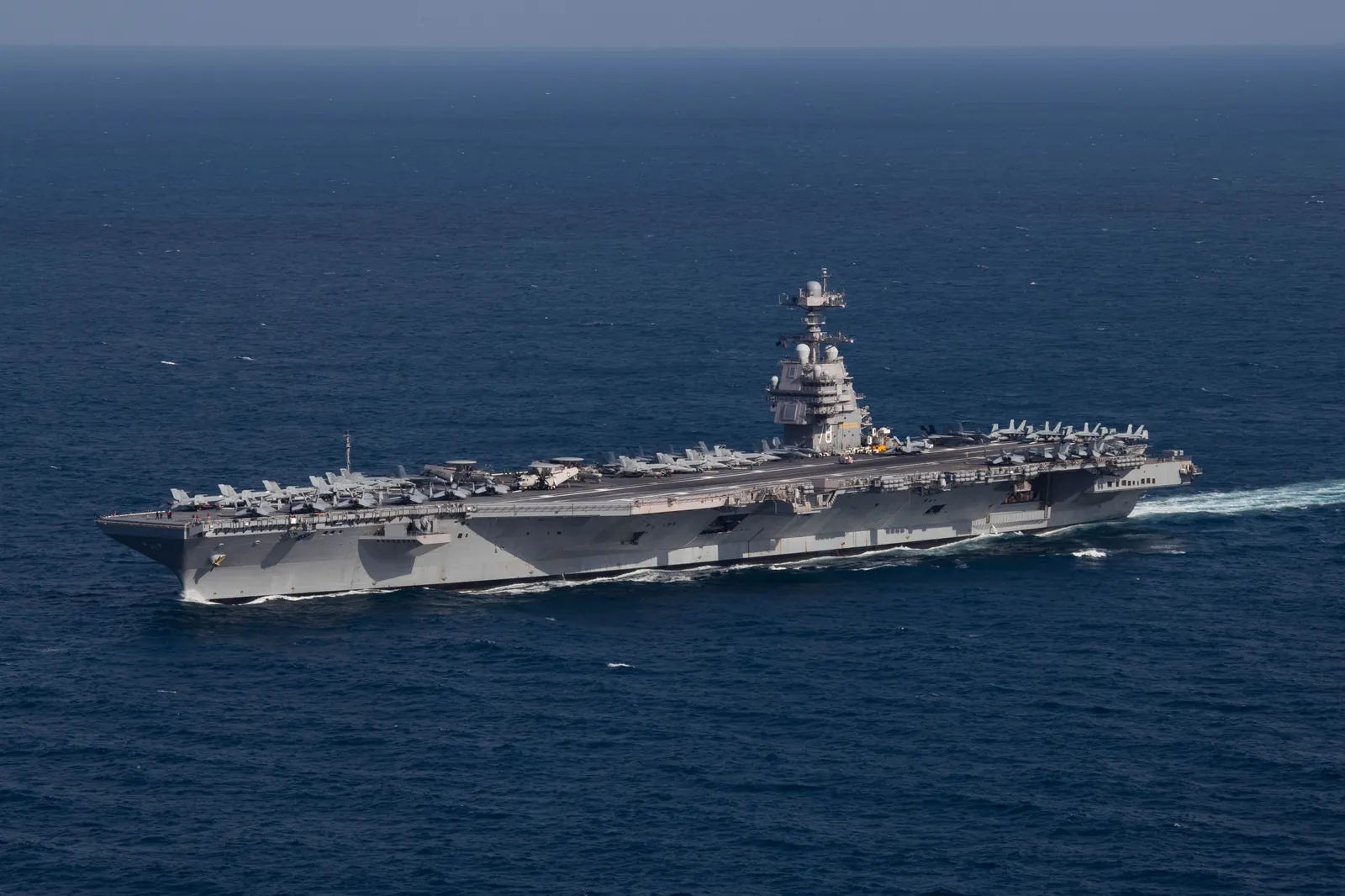
The carrier took its place because it solved the range problem. A single carrier air wing could strike targets 500 miles away and sustain operations for weeks. After 1945, the United States built its entire naval strategy around carrier strike groups. Today the US Navy operates 11 nuclear-powered supercarriers, more than the rest of the world combined. The newest, the USS Gerald R. Ford, cost $13.3 billion to build, carries a crew of about 4,500, and is the most expensive warship ever constructed.
The math problem the carrier cannot solve
The problem the carrier faces in 2026 is the same problem the battleship faced in 1941: a cheaper, longer-ranged weapon can now reach it before it can respond.
China's DF-21D, which the Pentagon calls a "carrier killer," is a ballistic missile designed to hit a moving ship at sea. It has a range of about 2,150 kilometers, flies at speeds approaching Mach 10, and carries a warhead heavy enough to cripple or sink a supercarrier. China also fields the DF-26, with a range of roughly 4,000 kilometers, meaning it can threaten carriers deep in the western Pacific from launchers on the Chinese mainland. Neither missile has been used in combat, and hitting a moving ship from that distance is genuinely difficult. But even the possibility forces the carrier to stay further from the fight, which limits what its aircraft can reach.
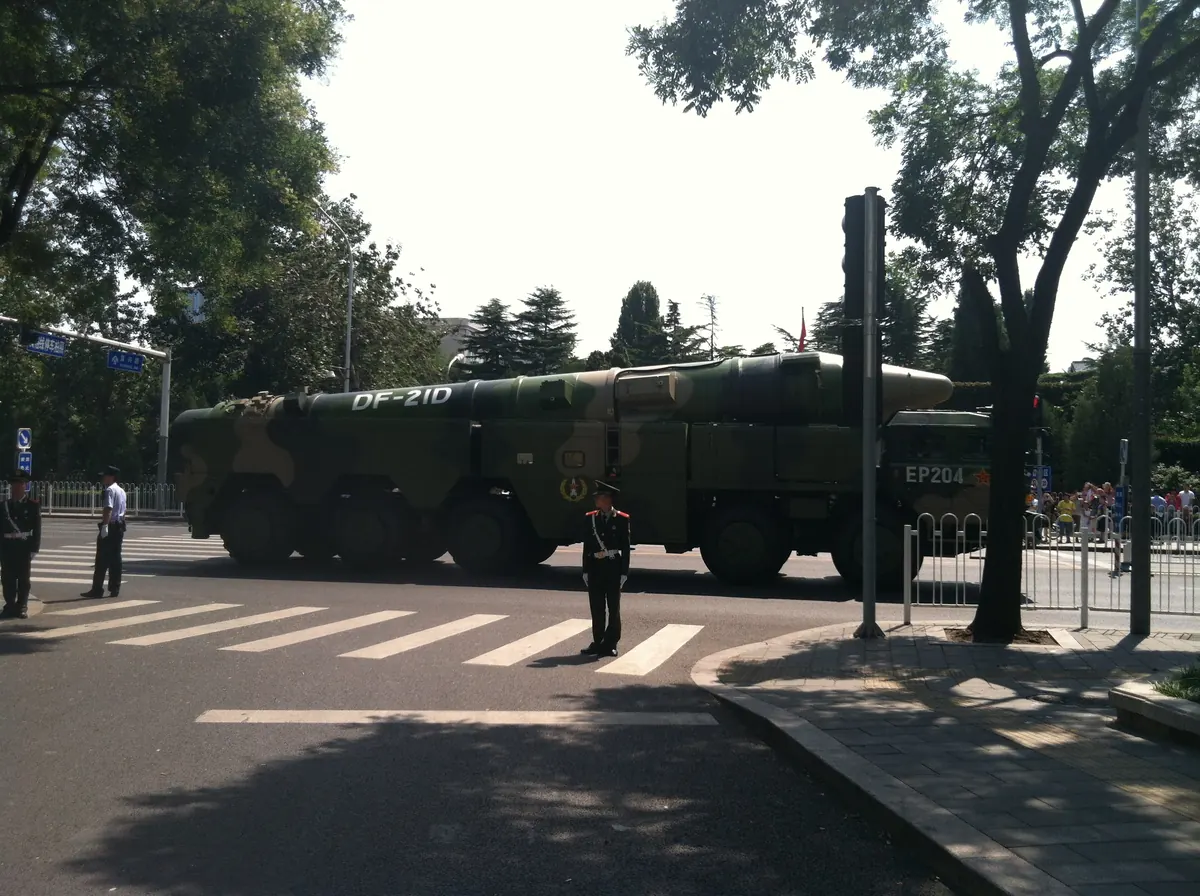
A DF-21D costs an estimated $5 to $11 million. A country does not need to sink the carrier to win. It just needs to make the carrier too risky to send.
This is not only a Chinese problem. Anti-ship cruise missiles have gotten faster, cheaper, and more widely available. Russia, Iran, and even the Houthis field missiles that can threaten major surface ships. In the Falklands War in 1982, Argentina sank the British destroyer HMS Sheffield with a single French-made Exocet missile. That was more than forty years ago, and the missiles have improved enormously since.
What Ukraine and the Houthis proved
The sinking of the Moskva was not a freak accident. Over the following two years, Ukraine, a country with no navy, systematically drove the Russian Black Sea Fleet out of the western Black Sea using a combination of shore-launched missiles and unmanned surface drones: remote-controlled explosive boats that cost a fraction of the ships they hit. Ukraine damaged or destroyed more than a dozen Russian warships without a single ship of its own.
The Houthi campaign in the Red Sea showed something different. The Houthis never sank an American warship. But they forced the US Navy to burn through expensive interceptor missiles at an unsustainable rate and rerouted global shipping around the Cape of Good Hope. A carrier strike group's escort ships carry a fixed number of missiles. Once those are gone, the ships have to withdraw to reload, a process that takes days. An adversary with enough cheap missiles can empty those magazines and then strike the carrier while its escorts are disarmed.
China has studied both conflicts closely. Its military journals discuss the "magazine depth" problem openly: American escort ships carry dozens of interceptors, but China can produce thousands of missiles. The strategy is not to outfight the carrier in a single engagement. It is to exhaust its defenses over time.
Why navies keep building them anyway
If the carrier is so vulnerable, why does the United States keep building them? And why are China, India, and the UK building new ones too?
Because carriers are not obsolete for every mission, only for the one they were originally built for. A supercarrier facing a peer military with modern anti-ship missiles has a problem that may not be solvable at acceptable cost. But most of what carriers do is not peer warfare. They enforce blockades, support ground operations, evacuate civilians, and project political presence. A carrier parked off someone's coast sends a signal no missile battery can replicate.
There is also institutional momentum. The US Navy has been organized around the carrier for eighty years. The career structure, the procurement pipeline, the shipyards: everything is built to produce and maintain supercarriers. Changing course means rebuilding the Navy from the inside, a project that would take decades.
China's carrier program has a different logic. Beijing is building carriers not because it thinks they are the future of naval warfare, but because they are what a great power is expected to have. China's carriers are smaller than America's and carry fewer aircraft. They are useful in the South China Sea, but Beijing is investing far more heavily in the missiles designed to keep American carriers away.
What this means for the next war
The pattern is familiar. The last great battleships ever built, Japan's Yamato and Musashi, were both sunk by waves of carrier aircraft. The battleship was made obsolete by a weapon that could strike from beyond the range of its guns. The carrier is now threatened by missiles that can strike from beyond the range of its aircraft. And this time, the attacking weapon is not just longer-ranged but drastically cheaper than the platform it threatens.
The question is whether a $13 billion ship with 4,500 sailors aboard can survive in a war against China, and whether risking it is worth what it brings to the fight. A carrier operating within range of China's missile batteries would need to stay so far from the coast that its aircraft could barely reach their targets. It would burn through its escorts' missile supply defending against saturation attacks. And the United States has not lost a capital ship since 1945. Losing a supercarrier with thousands aboard would be a political crisis as much as a military one.
No single platform replaces the carrier. The future probably belongs to distributed networks of smaller, cheaper, and often unmanned platforms that are harder to find and less catastrophic to lose. The carrier is not dead. But the era in which it could sail with confidence anywhere on Earth may already be over.
Test what you learned
5 quick questions on this article. No signup, just you against the text.