The Strait of Malacca: China's oil lifeline it cannot defend
A quarter of world trade and most of China's oil sail through a channel under two miles wide. Beijing has spent twenty years trying to escape it.
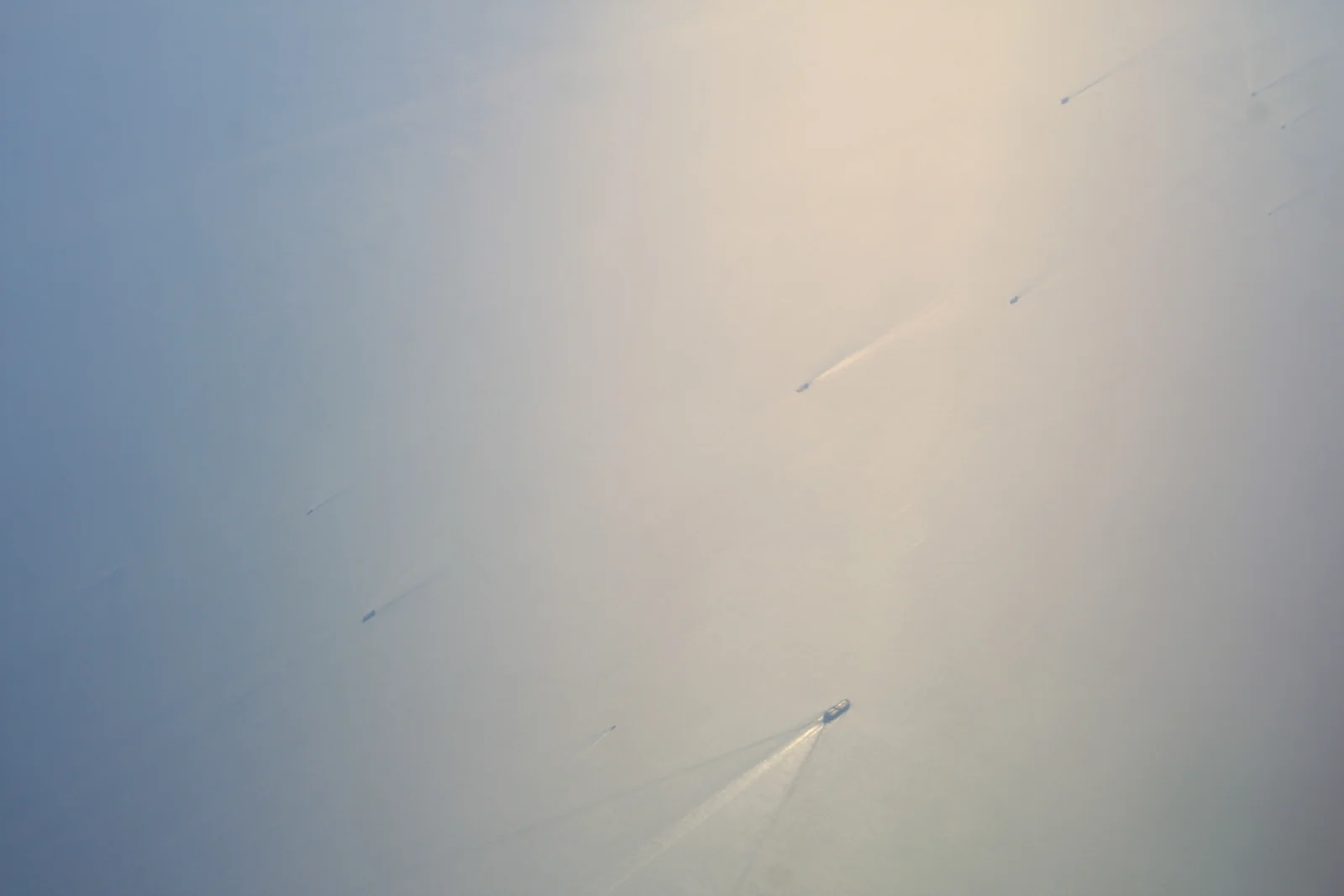
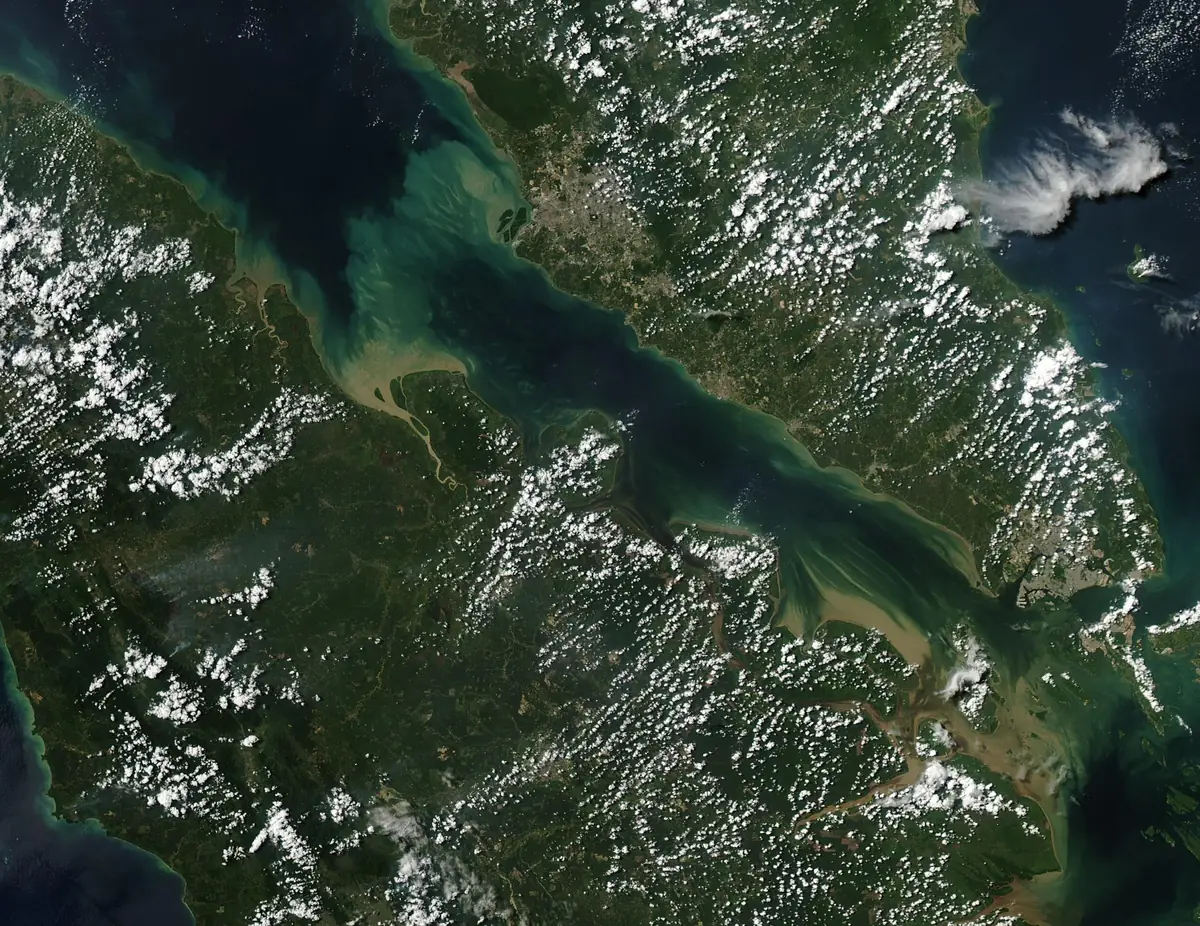
Look at a map of the world's trade and you keep landing on the same thin line of water. It runs about 900 kilometers between the Malay Peninsula and the Indonesian island of Sumatra, and near Singapore it narrows to under two miles across. Roughly a hundred thousand ships pass through it every year, carrying about a quarter of all the goods traded on the planet. For most countries a busy strait is just commerce. For China it is a weakness. In the first half of 2025, more than 23 million barrels of oil a day moved through the Strait of Malacca, and most of it was bound for the one great power that cannot keep the channel open by itself.
Why the strait is China's problem, not everyone's
Plenty of countries rely on Malacca. Japan and South Korea draw much of their energy through it. But China's dependence is sharper, and it comes down to one number strategists have repeated for twenty years: about 80 percent of China's imported crude passes through the strait. The exact figure sits somewhere between 73 and 83 percent depending on who is counting. Either way, the economy that most wants to challenge American power runs on fuel that sails, every day, through water an American fleet could close in an afternoon.
And China cannot keep that water open. Malacca lies thousands of kilometers from its coast, ringed by Indonesia, Malaysia, and Singapore, which hosts a large US naval presence. In a real confrontation, the United States could shut the strait long before China's navy could reach it. The fuel supply of the world's second-largest economy runs through water it has no way to defend.
The dilemma gets a name
In November 2003, at a closed Communist Party economic conference, China's leader Hu Jintao gave the problem a name that stuck: the Malacca dilemma. He warned that a hostile power could one day choke off the strait and cut China's energy supply. The state-run China Youth Daily put it more bluntly the following June:
It is no exaggeration to say that whoever controls the Strait of Malacca will also have a stranglehold on the energy route of China.
The dilemma is hard because it has no clean solution. You cannot move the strait. You cannot conquer it without a war against several neighbors and the US Navy. You cannot stockpile your way out of a dependency that reloads every morning. All you can do is spend, on pipelines, ports, reserves, and warships, to chip away at the risk. China spent a fortune. Twenty years later, almost none of it has worked.
Every exit turned out to be a dead end
Look at the routes Beijing actually built or backed, and each one falls short.
Myanmar. China laid oil and gas pipelines across Myanmar to the Bay of Bengal, landing crude at Kyaukpyu and pumping it north into Yunnan, skipping the strait. But the oil line carries only about 440,000 barrels a day, a rounding error against the millions China imports. And since the 2021 coup it runs through an active civil war. In December 2024 an insurgent army overran the regional military headquarters right on the corridor. A bypass through a war zone is a new problem, not a solution to the old one.
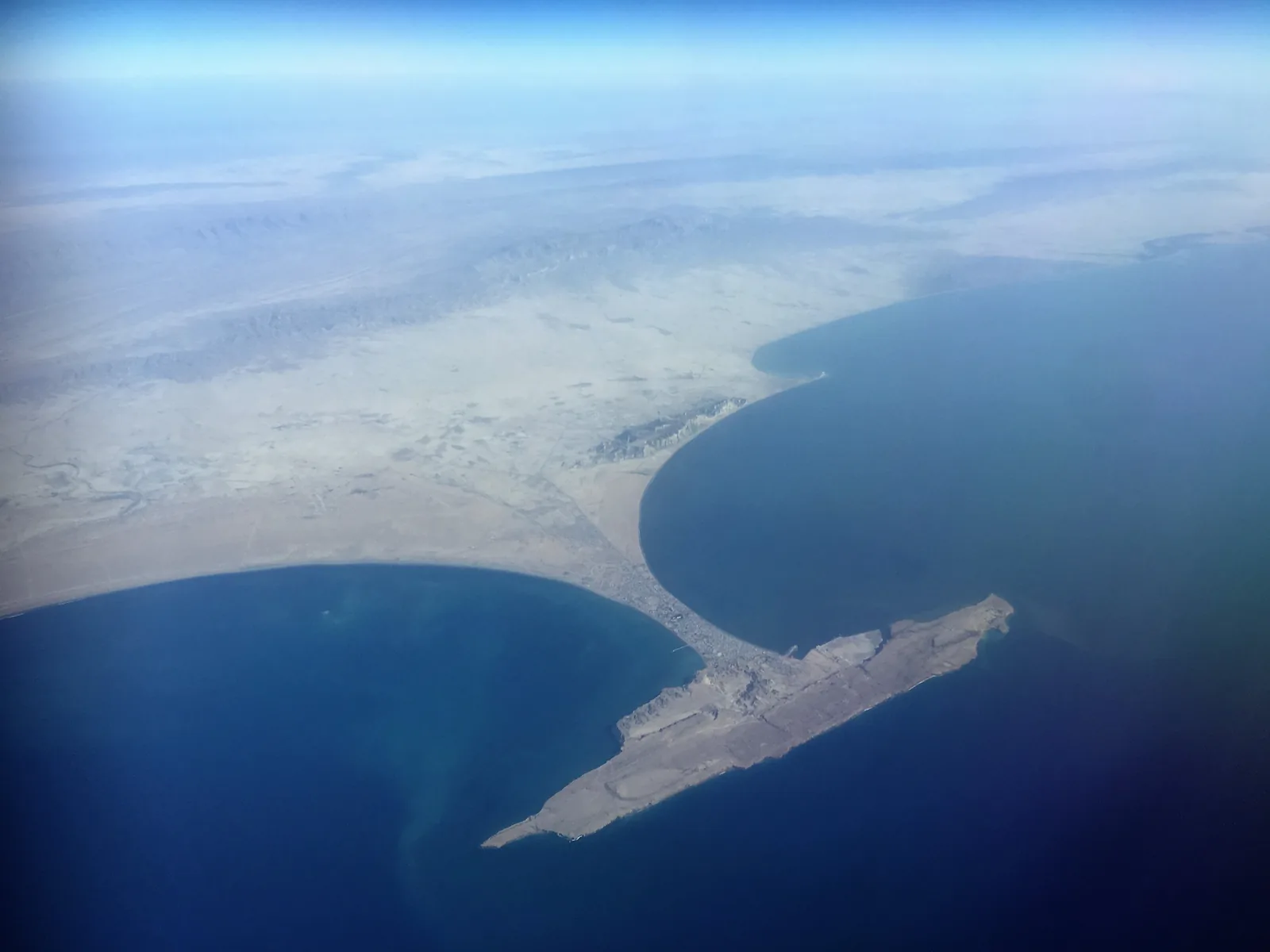
Pakistan. A pipeline from the Chinese-built port of Gwadar, over the mountains into western China, was supposed to be the big answer. It doesn't exist. The route would have to climb 4,000 meters over the Karakoram through a Baloch insurgency that keeps killing Chinese workers, and by 2023 it had been quietly shelved. Gwadar is a working port and a potent symbol, but it moves no oil around Malacca.
Russia. Overland pipelines from Russia do carry real volumes and do avoid the sea. But the China branch of the ESPO crude line moves only about 600,000 barrels a day, and every barrel of it trades a distant American chokepoint for heavy dependence on Russia. It swaps one vulnerability for another.
The canal that was never dug
For more than a century, the tidiest answer on paper has been a canal. Cut one across the narrow neck of southern Thailand, the Kra Isthmus, and ships could pass between the Indian Ocean and the South China Sea without touching the strait. The idea has been floated since the 1600s and studied by kings, colonial engineers, and Chinese planners. It has never been built. The cost, the geology, and Thai fears of splitting the country in two and inviting in foreign navies killed it every time.
Its modern version is not a canal but a land bridge: a roughly $30 billion plan for two deep-water ports, one on each coast of southern Thailand, joined by 90 kilometers of motorway and rail. Ships would unload on one side, have their cargo hauled across, and reload on the other. Bangkok is pushing it again in 2026. The transport minister has promised bidding this year and a first phase open by 2030, selling it as a shortcut that cuts up to four days off the Malacca route.
Even if Thailand builds it, the land bridge does little for China's real problem. Unloading and reloading a supertanker is slow and expensive, and no oil company will pay to do it twice when sailing straight through Malacca is cheaper. In 2026 analysts at the East Asia Forum called bypassing the strait this way "a bridge too far." The project meant to cure the Malacca dilemma barely touches the tankers that cause it.
A blockade is hard for everyone
So China turned to warships. The People's Liberation Army Navy is now the largest in the world by number of ships, and in 2017 China opened its first overseas military base, in Djibouti, at the far end of the Indian Ocean oil route. The goal is a fleet that can one day protect the sea lanes China depends on.
But the dilemma cuts both ways, which most alarmist coverage misses. A blockade of Malacca would hurt the United States too. Closing the strait would choke Japan, South Korea, and the rest of Southeast Asia along with China, punishing allies to get at an enemy. It would also mean boarding neutral, third-country ships in the waters of three states that are not at war. Most strategists think that if Washington wanted to cut China's oil, it would not touch the strait at all. It would set up a "distant blockade" far out in the open Indian Ocean, stopping China-bound tankers where the legal and diplomatic costs are lower. The real contest is not the narrow channel but the thousands of kilometers of ocean leading up to it, and that is a matter of navies, bases, and time.
The answer nobody planned
After twenty years of pipelines that carry too little and ports that pump nothing, the most effective answer to the Malacca dilemma is one no admiral planned. China is going electric. Electric vehicles are now about half of new car sales there. In 2025 the International Energy Agency reported that China's demand for road fuels has already stopped growing, and expects its total oil demand to peak between 2025 and 2027, far earlier than anyone predicted a decade ago. Every electric car on a Chinese road is one less that needs a barrel shipped through Malacca.

The strait is no wider, and the US Navy has not moved. But the thing that made the chokepoint dangerous, China's endless thirst for imported oil, is finally leveling off. Beijing could not buy its way around the geography with concrete and pipe. It may solve the problem instead by not needing the oil. That is the real lesson of the Malacca dilemma, and it cost China two decades and a fortune to learn: some weaknesses cannot be outbuilt, only outgrown. The same is true of the Strait of Hormuz and every other chokepoint on Earth. They lose their power the day the world stops needing what flows through them.
Test what you learned
5 questions on this article. About two minutes, no signup.
Orbis teaches the history behind the news
Orbis teaches geopolitics in five-minute lessons, from the Malacca dilemma to the Belt and Road and the scramble for critical minerals.