
Who controls the world's fertilizer
The raw materials for fertilizer come from a handful of countries. In 2022 and 2026, supply shocks sent food prices surging across Africa and South Asia.
In March 2022, within weeks of Russia's invasion of Ukraine, the benchmark price of urea fertilizer hit $915 per ton, roughly four times its five-year average. Across sub-Saharan Africa, farmers who had been paying around $250 a ton for nitrogen fertilizer were suddenly quoted over $900. Many stopped buying. Harvests shrank, food prices climbed, and the African Development Bank warned of a shortfall of roughly 2 million tonnes of fertilizer for the coming growing season.
The war was in Eastern Europe. Its effects reached African farms within months. The connection runs through fertilizer. Roughly half the world's food depends on synthetic fertilizer to grow. The chemistry has been known since 1909, when a German chemist named Fritz Haber figured out how to turn nitrogen from the air into ammonia. But the raw materials needed to produce fertilizer, and to supply the other two nutrients every crop requires, come from a small number of countries. In 2022, the world found out what happens when those countries stop exporting.
What fertilizer is made of and where it comes from
Every crop needs three nutrients to grow: nitrogen, phosphorus, and potassium. Without enough of any one of them, yields drop.
Nitrogen is the most important by volume. The Haber-Bosch process turns air and natural gas into ammonia, the building block of nitrogen fertilizer. The world produces roughly 190 million tonnes of ammonia a year, and about 80 percent of it goes into fertilizer. The link to natural gas matters: when gas prices rise, fertilizer prices follow. In 2022, when European gas prices surged, ammonia plants across the continent shut down because the cost of production exceeded what buyers would pay.
Phosphorus and potassium cannot be synthesized. They are mined: phosphorus from phosphate rock, a sedimentary mineral that took millions of years to form, and potassium from underground deposits of potash left behind by ancient seas. When a deposit runs out, it is gone.
The production of all three nutrients is concentrated in a handful of countries. For nitrogen, the key exporters are Russia, the world's largest fertilizer exporter with roughly a fifth of global trade, and the Gulf states. Saudi Arabia, Qatar, and Oman together ship about a quarter of all urea exports, nearly all of it through the Strait of Hormuz. China is the single largest producer but increasingly keeps its output at home.
For phosphorus, the concentration is tighter. Morocco and the disputed territory of Western Sahara together hold roughly 70 percent of the world's known phosphate rock reserves, a share larger than any single country holds in oil. China produces more phosphorus fertilizer than any other country but has restricted exports since 2021, making Morocco's state-owned company OCP the dominant supplier to the rest of the world.
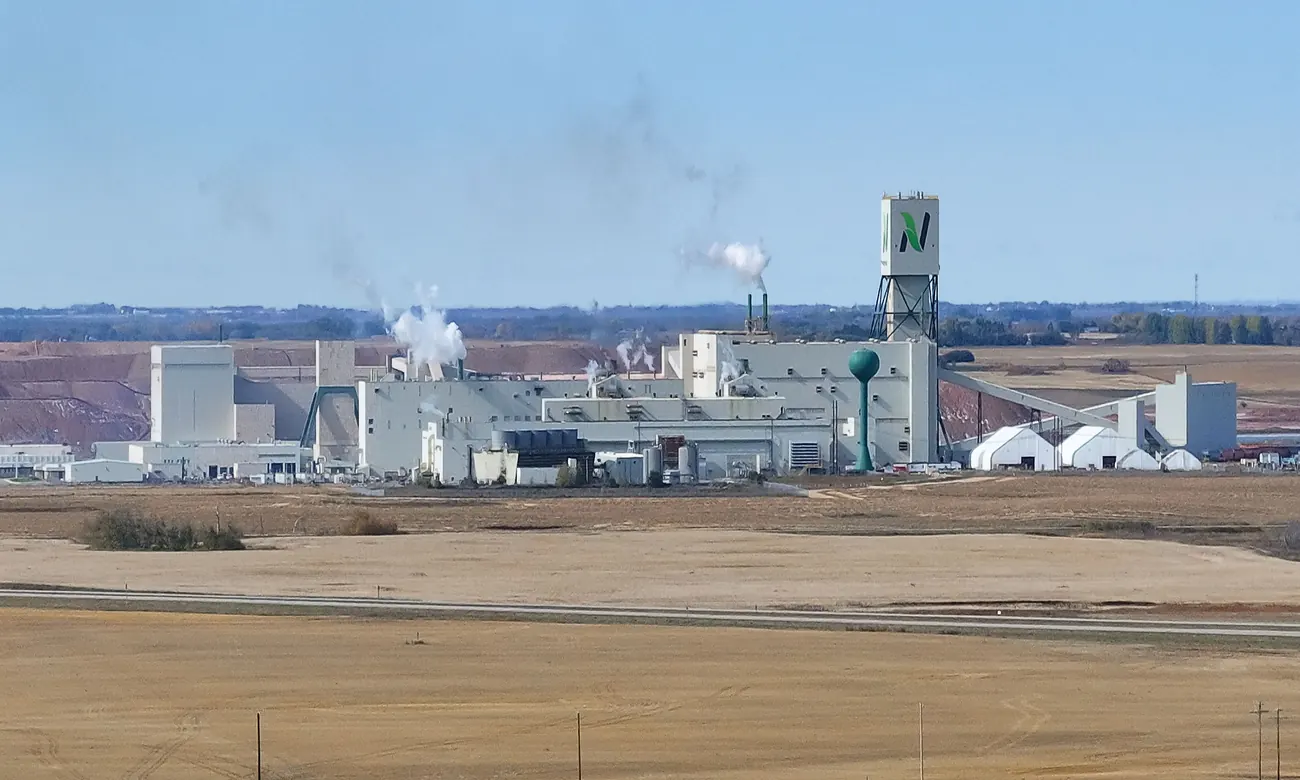
For potassium, three countries produce roughly two-thirds of global supply: Canada, Russia, and Belarus. In 2022, when Western governments sanctioned Belarus over its crackdown on political opposition, Belarusian potash exports dropped by roughly half. Global potash prices surged. Canada's mines could not make up the shortfall quickly, because expanding a potash mine takes years of construction, not months.
What happens when supply breaks
Russia's invasion of Ukraine in February 2022 was the first large-scale demonstration. Western governments imposed sanctions on Russia but carved out exemptions for fertilizer, an acknowledgment that cutting off Russian fertilizer would cause a food crisis faster than cutting off Russian oil. Russia briefly restricted its own fertilizer exports anyway. Natural gas prices spiked, shutting down nitrogen production across Europe. The price shock hit through multiple channels at once.
The countries that could afford to stockpile did. The countries that could not, mostly in sub-Saharan Africa and South Asia, absorbed the full shock. In Kenya, fertilizer prices rose more than 40 percent in a single year. Across the continent, farmers responded the only way they could: by applying less. Less fertilizer meant smaller harvests. Smaller harvests meant higher food prices. The FAO flagged Angola, Malawi, and Zimbabwe as especially at risk.
India, the world's second-most-populous country, spends roughly $20 billion a year subsidizing fertilizer for its 150 million farming households. That bill is nearly 40 percent of all the subsidies the Indian government pays. It exists because the alternative, letting global price shocks reach Indian farmers at full market rates, would mean lower yields, higher food prices, and political instability within a single growing season. Most African countries cannot afford subsidies on that scale. The continent imports more than 6 million tonnes of fertilizer a year. When prices spike, governments face a choice between spending money they do not have and accepting the smaller harvests that follow.
In early 2026, the pattern repeated. Fighting between the United States and Iran partially closed the Strait of Hormuz, cutting off the Gulf states' fertilizer exports. By April, urea shipments from the affected countries had fallen 83 percent compared with the year before, according to the UN International Trade Centre. Urea prices surged by more than $275 a ton in weeks. China responded by banning exports of several nitrogen and phosphate blends, tightening supply further. For the second time in four years, a military conflict had cut the fertilizer supply to farmers thousands of kilometers from the fighting.
Why the concentration keeps getting worse
Four forces are tightening the supply of fertilizer, not loosening it.
The first is China. Since 2021, Beijing has imposed rolling restrictions on fertilizer exports under a policy it calls "domestic first, export moderately." In 2024, Chinese urea exports fell to roughly 260,000 tonnes, down from 5 to 6 million tonnes a year before the restrictions began. China produces about a quarter of the world's fertilizer nutrients. When Beijing decides to keep them, the rest of the world's supply contracts overnight.
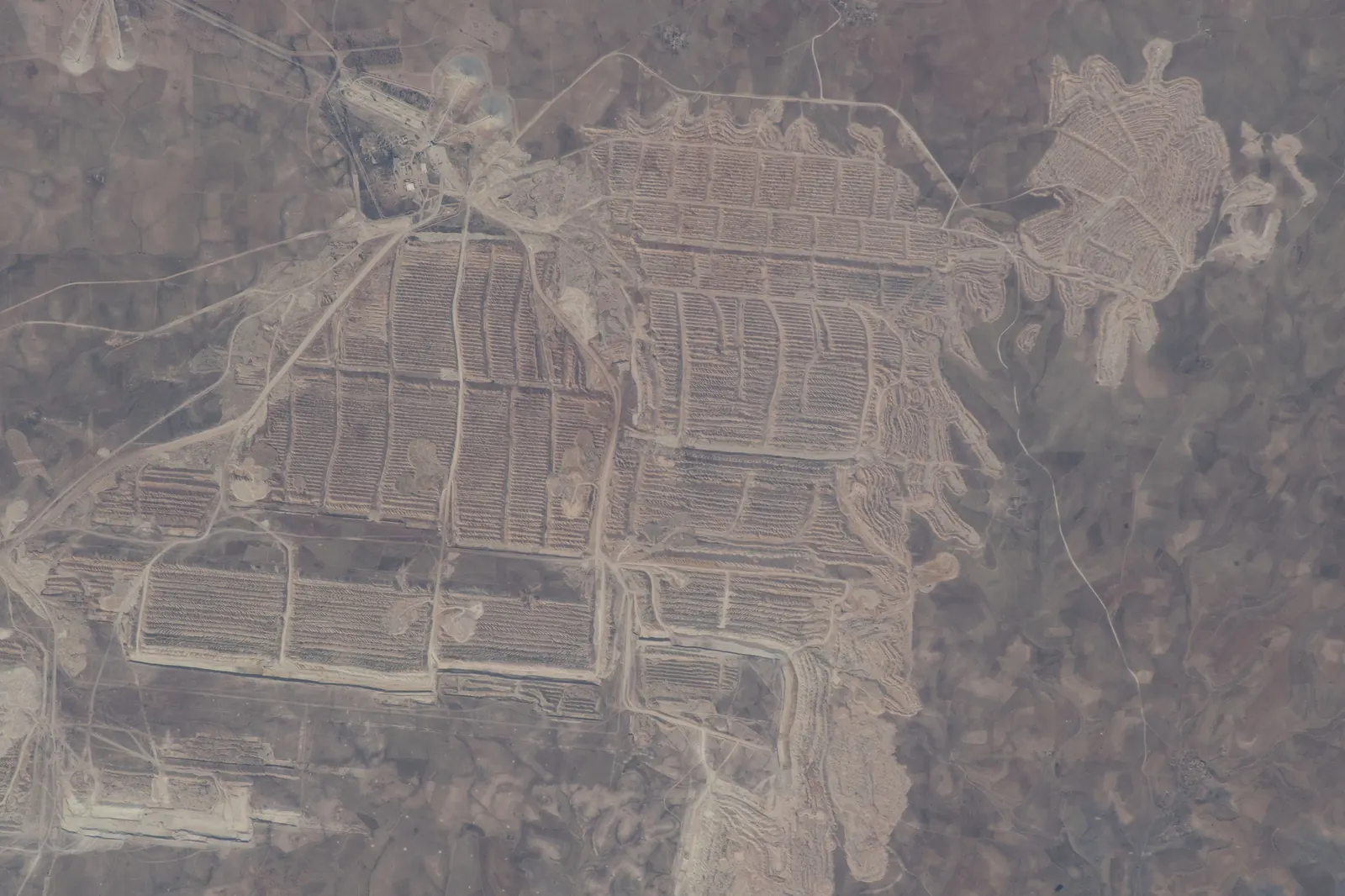
The second is Morocco's position. Seventy percent of the world's phosphate rock in one country would be a concentration risk under any circumstances. It is a larger risk when a significant share of those reserves lies beneath Western Sahara, a territory Morocco has occupied since 1975 and whose sovereignty the United Nations still classifies as unresolved. The Bou Craa mine, operated by OCP's subsidiary Phosboucraa, ships phosphate on a 100-kilometer conveyor belt to the coast. Whether mining in a disputed territory constitutes exploitation of an occupied people's resources is a legal question that has never been settled, and it could complicate Morocco's dominance at any time.
The third is Belarus and potash. After Western governments sanctioned Belarusian potash in 2022, the global supply squeeze was severe enough that the United States reversed course and lifted its sanctions in late 2025 as part of a broader diplomatic opening with Minsk. The sanctions had lasted less than four years. The pressure to restore potash supply was a major reason they ended.
The fourth is that phosphorus is finite. The reserves are large enough that a shortage is not imminent. But there is no substitute and no way to manufacture more. Nitrogen can be produced from air using the Haber-Bosch process. Green ammonia, which uses renewable electricity instead of natural gas, could eventually reduce the dependence on gas-exporting countries for nitrogen production. But green ammonia addresses only one of the three nutrients, and as of 2026, it represents a fraction of global output. Potash deposits are vast. Phosphorus is the one nutrient that cannot be replaced by engineering, and every ton mined is a ton that will not be available to future generations.
Why there is no way around it
Fertilizer does not command the attention that oil does. No cartel sets its price. No television network tracks its daily moves. But a fertilizer shortage is more directly dangerous than an oil shortage. When oil prices rise, people drive less and economies slow down. When fertilizer prices rise, farmers grow less food, and the people who can least afford it eat less first.
The countries that depend on imported fertilizer to feed their populations, most of Africa, much of South Asia, and large parts of Latin America, are one supply shock away from a food crisis. In 2022, the shock came from a war in Ukraine. In 2026, it came from a conflict in the Persian Gulf. The raw materials have not moved. Russia still sits across all three nutrients. China still restricts exports when it chooses. Morocco still holds a share of phosphate reserves that no other country comes close to matching. The structure that turns a distant conflict into a local food crisis has not changed, and no country that depends on imported fertilizer has found a way around it.
Test what you learned
6 questions on this article. About two minutes, no signup.