
Why does ASML have no real competitors?
Two Japanese giants once ran the chipmaking machine market. A small Dutch company beat both, and three decades later still has no real challenger.
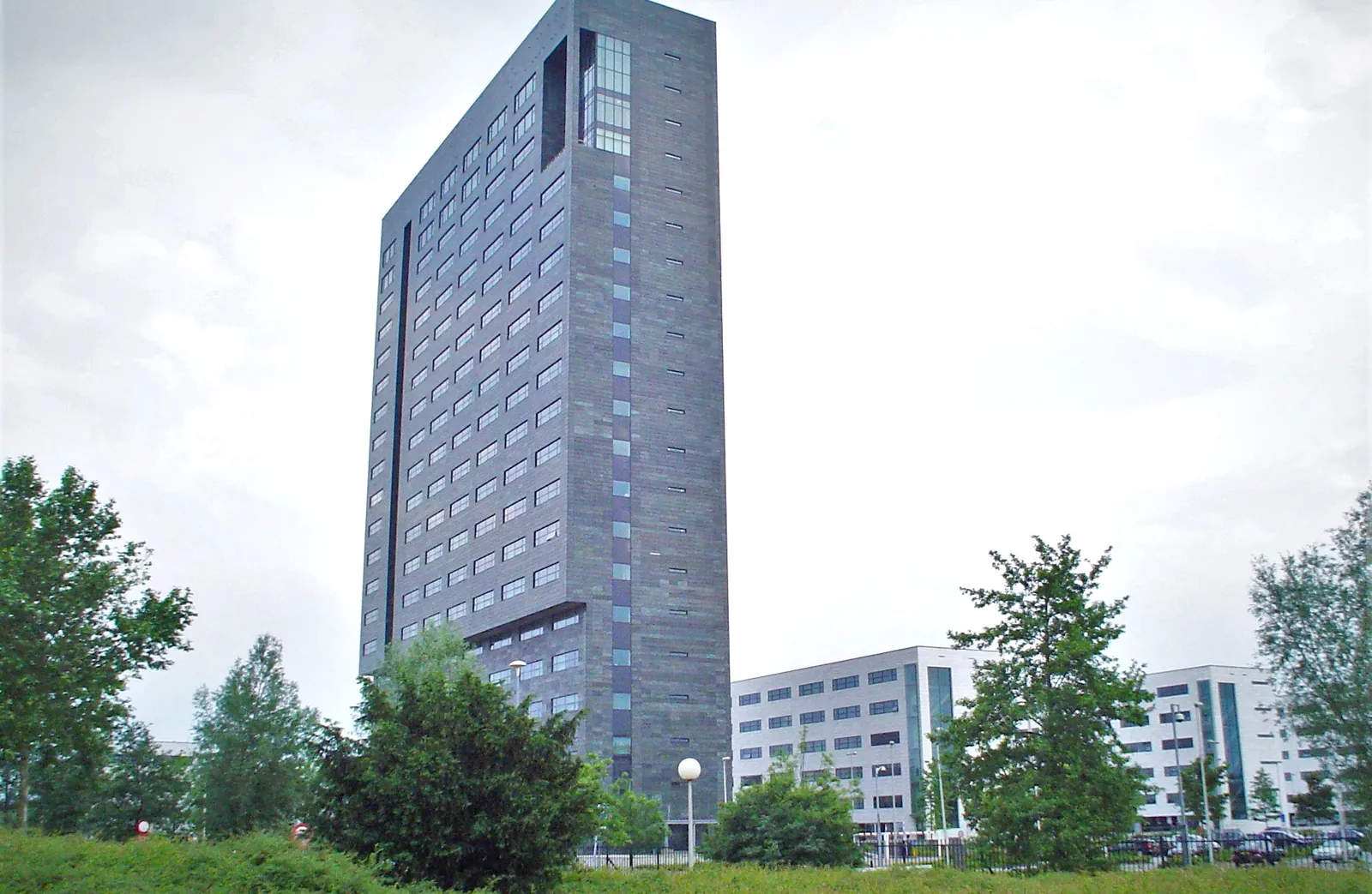
In 1984, a Dutch electronics company and a small chip-equipment maker set up a joint venture and gave it space in a leaky prefabricated shed behind a Philips office in Eindhoven. The new company, ASML, had 31 employees and no obvious future. Japan's Nikon and Canon already controlled the machines that print circuits onto computer chips. Four decades later, ASML is worth more than any other company in Europe, and it makes something nobody else on Earth can build: the machine without which no factory can manufacture the world's most advanced chips. Nikon and Canon are both still in business. Neither can build one.
When Japan owned the machines that print chips
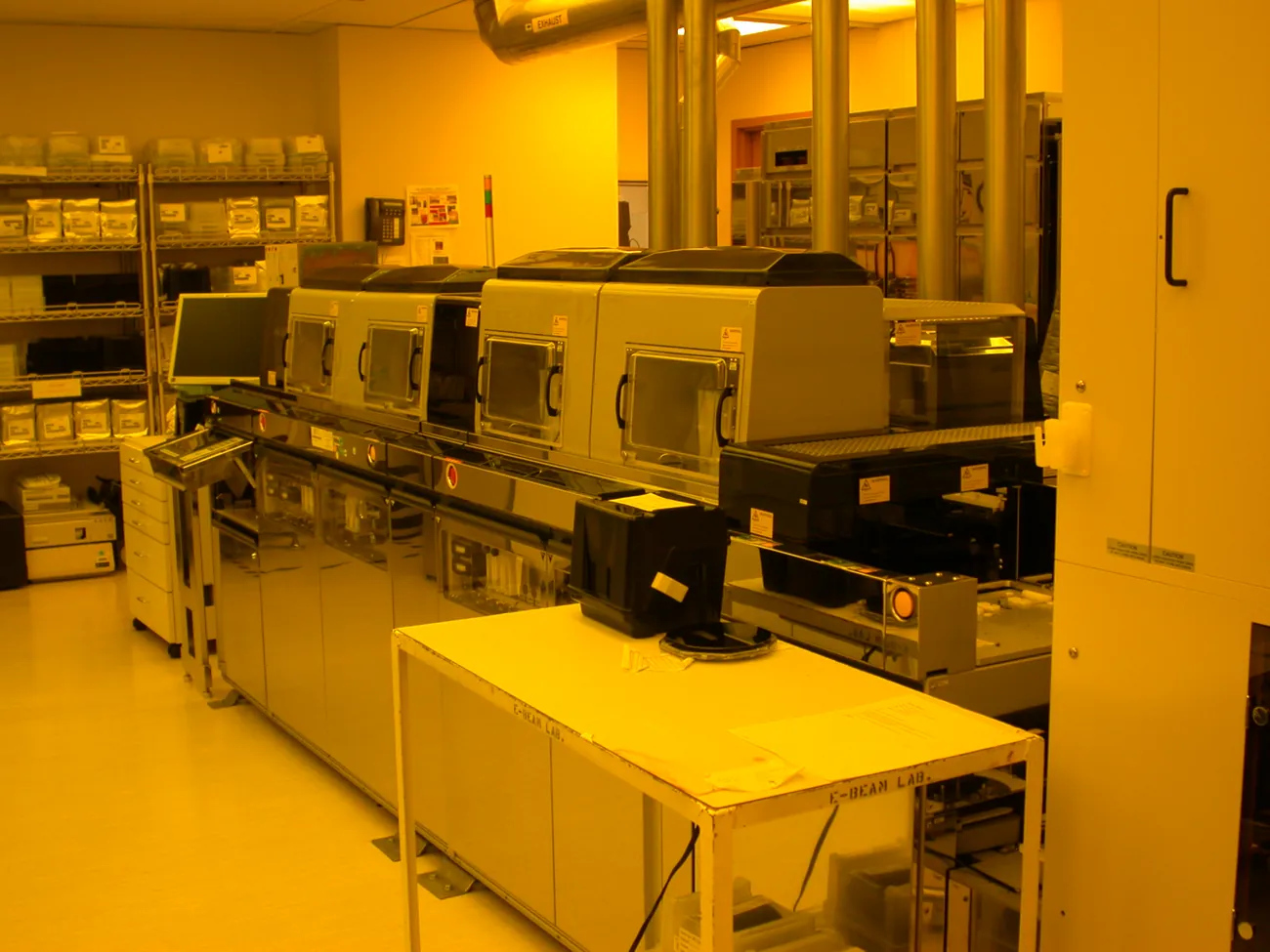
A lithography machine has one job, and it sounds simple: shine light through a patterned plate, the way a projector shines light through a slide, to cast a tiny circuit pattern onto a silicon wafer. It does that hundreds of times per chip, building the pattern up layer by layer. The thinner the beam of light, the smaller the pattern it can draw, and the more transistors fit on a single chip. For forty years, the entire semiconductor industry has been racing to make that light thinner than anyone thought possible.
In the 1980s and into the 1990s, Japan owned this business. Nikon's high-precision lenses and Canon's manufacturing scale gave the two companies a lock on the market that ASML, a joint venture nobody had heard of, could not touch. By 1995, Nikon held about 45 percent of the global lithography market and Canon another 29 percent. ASML had just 14 percent. Nobody expected that order to change. The next leap forward would be won not with a better lens, but with water.
The bet on water that flipped the market
By the early 2000s, the industry had pushed its ultraviolet light source about as far as it could go, and the plan was to jump to a shorter, harder wavelength of 157 nanometers. Nikon and Canon both committed heavily to it. In the summer of 2002, industry engineers held a workshop to plan that jump. Burn-Jeng Lin, a TSMC research executive, stood up and called it a dead end. His alternative sounded almost too simple: fill the gap between lens and wafer with ultra-pure water instead of air. Water bends light more than air does, and that alone shrank the effective wavelength by roughly 40 percent, far more cheaply than a new light source would have. Engineers now call Lin the father of immersion lithography.
ASML built the water-based machines with TSMC. Canon judged the idea a distraction and never shipped an immersion machine at all. Nikon kept faith with the dry approach for years longer than it should have. In 2006, the first full year of the immersion market, ASML took 72 percent of it, Nikon took the remaining 28, and Canon took nothing. By 2011, ASML's share had grown to 82 percent and Nikon's had shrunk to 18. Nikon has never recovered the ground: in 2025 it was still developing a new immersion machine meant to close the gap, targeted for 2028.
The lesson of the immersion bet is the lesson of ASML's whole rise. It did not win by outplaying Nikon and Canon at their own game. It won by betting correctly at a fork in the road that both of its bigger rivals read wrong.
The twenty-year bet that made it a monopoly
Immersion water only stretches a technology so far. The industry's real endgame was extreme ultraviolet lithography, or EUV, made by vaporizing droplets of molten tin with a laser fifty thousand times a second. American national laboratories began researching it in the 1990s, and for two decades most engineers doubted it would ever leave the lab.
Nikon and Canon looked at the cost and the odds and largely walked away. ASML did not, and by the 2000s the bet had grown bigger than any one company could fund alone. In 2012, ASML sold a combined 23 percent of itself to its own customers, Intel, TSMC, and Samsung, for close to 3.85 billion euros, plus another 1.38 billion for research. The following year it bought Cymer, its California laser supplier, outright for 2.5 billion dollars, and in 2016 it paid a billion euros for a quarter of Zeiss's mirror-making division. ASML was not just building a machine. It was bankrolling the entire supply chain the machine needed, because no single supplier could survive the losses required to get there alone.
The bet paid off completely. By 2024, ASML held about 94 percent of the entire lithography equipment market and more than 85 percent of the immersion segment it had built. In EUV specifically, its share was, and still is, 100 percent. Every EUV machine ever shipped anywhere has come from one factory in one Dutch town.
Why money alone can't buy your way in
ASML's edge is not a formula sitting in a locked drawer. A single EUV machine contains more than 100,000 parts sourced from roughly 5,000 suppliers, and it ships in pieces across forty freight containers on three Boeing 747s. A standard model costs more than 150 million dollars; the newest generation, called High-NA, costs two to three times that. What nobody can simply buy is forty years of trial, failure, and engineering judgment baked into how Zeiss grinds a mirror or how a laser hits a tin droplet without missing.
Christophe Fouquet, ASML's chief executive since 2024, made the point bluntly in 2026 when asked about Substrate, a well-funded American startup with its own alternative to EUV. Substrate, backed by Peter Thiel's Founders Fund, had raised 100 million dollars at a billion-dollar valuation to build lithography machines using X-rays from a particle accelerator instead of tin plasma, and planned its own chip factories by 2028. Fouquet did not dismiss the physics. He questioned the distance between a demonstration and a factory floor. "The only reason ASML could build an EUV machine is because 80 percent of it already existed," he said, pointing to decades of prior lithography work a newcomer simply does not have. "Wanting to have it and having it," he added, "is still a huge difference."
Why the world still can't live without one Dutch town
The clearest proof of how tightly this bottleneck is held is what it has let one government do. Under sustained pressure from Washington, the Netherlands has never allowed a single EUV machine to reach China, not one, in a decade of trying. China has poured enormous resources into a workaround. Its state champion, SMEE, only reached mass production of a much older, 90-nanometer tool in 2025, generations behind the cutting edge. Researchers in Shenzhen built a prototype EUV light source in December 2025, but it produced only 100 to 150 watts of light, well under a quarter of the 600 watts ASML's current machines run at. Even insiders call 2030 an optimistic date just to turn that prototype into working chips.
Washington is now extending the same pressure to ASML's older machines too. A bill moving through the US Congress in 2026, the MATCH Act, aims to restrict the deep ultraviolet tools still legally allowed into China, and ASML expects China's share of its revenue to fall from about a third in 2025 to roughly a fifth in 2026. Losing that revenue barely dents the company. The AI boom has pushed demand for advanced chips so high that ASML raised its 2026 sales forecast to as much as 40 billion euros, almost all of it from customers with no alternative supplier to turn to. TSMC runs ASML's machines to build the chips that power the modern world, and its own customers, Apple and Nvidia included, have no way around that dependency either.
ASML's monopoly was never built on a secret. It was built on being the one company willing to keep betting on a technology everyone else judged too expensive and too uncertain, for thirty years running. Plenty of people can now show Fouquet a picture of a machine that might one day compete with his. Wanting to have it and having it, he keeps reminding them, are still a huge difference.
Test what you learned
6 questions on this article. About two minutes, no signup.