
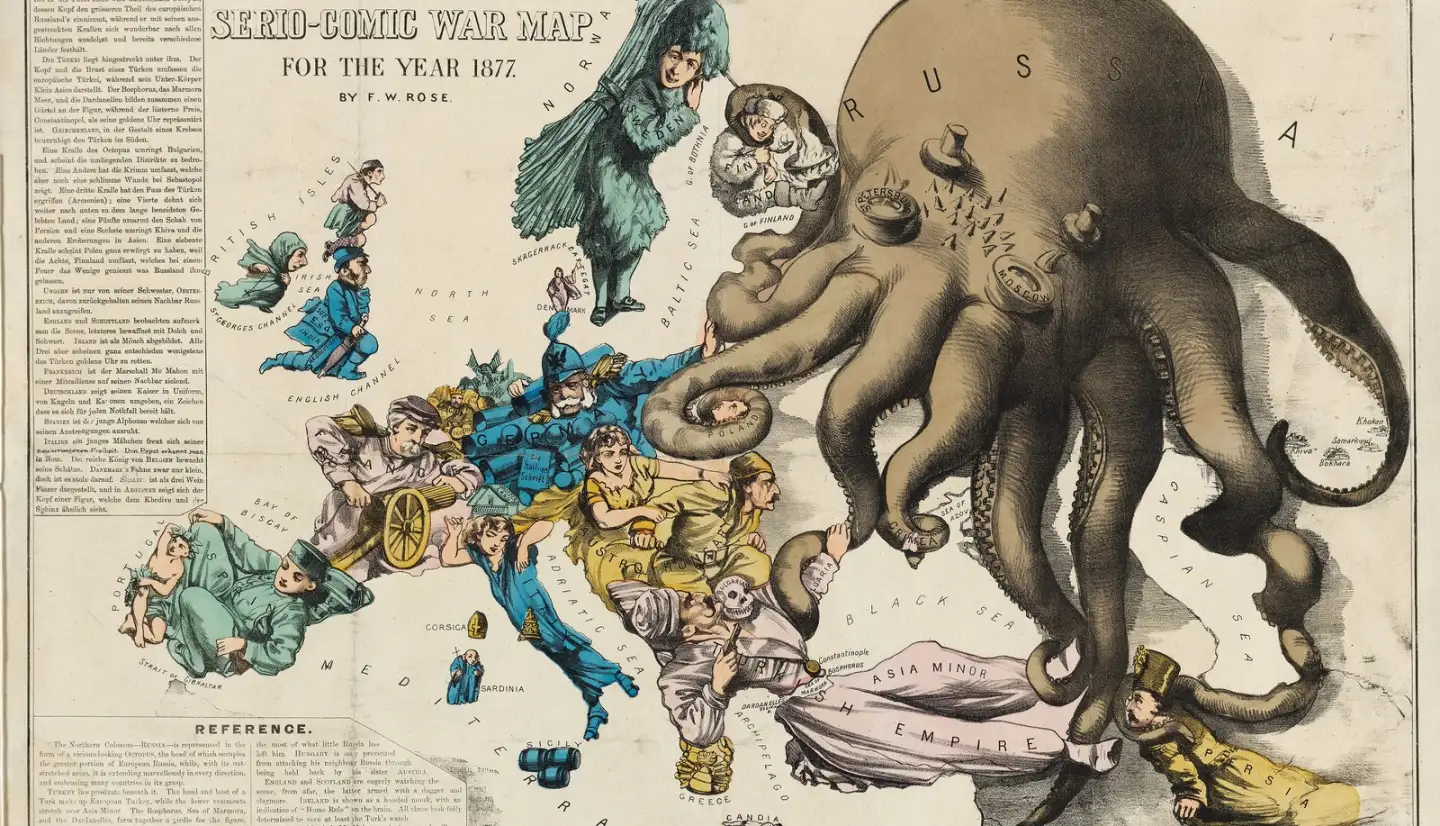
If you hear about Taiwan, the Strait of Hormuz or NATO on the news and want to understand what is actually going on, start here. You do not need to have studied politics or history. You need curiosity and a willingness to look at maps.
Step 1: Learn the map
Most confusion about the news is geographic. People hear "the Strait of Hormuz" or "the South China Sea" and cannot picture where these places are or why they matter. Geopolitics starts with where things are.
What to learn first: the continents and their major countries, the oceans and seas, the main maritime chokepoints, the narrow straits and canals that most sea trade has to pass through, and the physical barriers that shape borders and wars. The barriers that come up most often are the Himalayas (separating India from China), the Alps (dividing northern and southern Europe), the Caucasus mountains (between Russia and the Middle East), and the North European Plain (the flat corridor from France to Russia that armies have marched across for centuries).
How to learn them: take the world geography quiz and see how you do. Then work through the regional map quizzes for Europe, the Middle East and Africa. Read the chokepoints guide to understand why narrow waterways matter so much. For extra drilling, Seterra (free, at seterra.com) lets you practice naming countries and seas on blank maps until they stick.
You are ready for step 2 when you can find Taiwan, Ukraine, Iran and the Strait of Malacca on a blank map and say which countries border each.
- QuizWorld geography quiz20 questions on oceans, mountains and borders, with the story behind each answer.
- WorldMaritime chokepointsThe straits and canals world shipping depends on, and which are open in 2026.
- QuizEurope map quizFind 20 European countries on the map, from Portugal to Belarus.
- QuizMiddle East map quizName 16 countries from Turkey to Yemen by their outlines.
Step 2: Learn a dozen core ideas
A small set of ideas explains most of what countries do. You do not need to read academic theory. You need to understand roughly a dozen concepts well enough to recognize them in the news.
Start with what geopolitics actually is. Then work through these ideas, each of which has a short explanation on the site:
- Geography sets limits. Mountains, rivers, ports and climate shape what a country can and cannot do.
- Chokepoints. Whoever controls the narrow passage controls the trade flowing through it.
- Balance of power. When one country grows too strong, others team up against it.
- The security dilemma. One country builds weapons for defense; its neighbor sees a threat and arms itself; both end up less safe.
- Buffer states and spheres of influence. Big powers want friendly, or at least neutral, countries on their borders.
- Hard and soft power. Force and money are hard power. Culture, education and diplomacy are soft power. Both shape outcomes.
- Deterrence and mutually assured destruction. Nuclear weapons make direct war between great powers almost unthinkable.
- Sanctions. Cutting off trade and finance to pressure a government, without firing a shot.
- Proxy wars. Major powers fighting each other through local forces instead of directly.
- Alliances. Formal commitments like NATO and informal groupings like BRICS change who can do what to whom.
These ideas recur constantly. Once you know them, news stories start making sense on their own.
You are ready for step 3 when you can watch a news segment about, say, the Russia-Ukraine war and identify the security dilemma, the buffer-state logic, and the role of sanctions without anyone pointing them out.
 Geopolitics Foundations12 lessons
 Geopolitics Foundations II18 lessons
 World History: 12,000 Years of Civilization10,000 BC to 2026, 41 lessons
Step 3: Learn the history that still shapes the map
Every current conflict has a history that both sides quote. You do not need to learn all of history. You need the minimum that keeps coming up.
That minimum includes:
- The Peace of Westphalia (1648) and the idea that each state is sovereign within its borders. This is still the foundation of the international system.
- The age of empires and colonialism. European powers drew borders across Africa, the Middle East and Asia with little regard for the people living there. Many of those borders are still in place. Read why so many of Africa's borders are straight lines and how the Sykes-Picot agreement shaped the Middle East.
- The two world wars. They destroyed the old European empires and created the world order that still exists.
- The Cold War. The US and the Soviet Union divided the world into blocs for 45 years, and many of today's alliances, conflicts and borders date from that period.
- The collapse of the Soviet Union. The Soviet Union split into 15 countries, and Russia came out smaller, poorer and resentful.
- China's century of humiliation and rise. From roughly 1839 to 1949, foreign powers carved up China. That memory drives Chinese foreign policy today.
The best approach: follow the history behind the stories you care about. If you are interested in the Middle East, start with the Ottoman collapse and Sykes-Picot. If you care about the US-China rivalry, start with China's century of humiliation and the Cold War in Asia.
You are ready for step 4 when you can explain, in a few sentences, why the borders of Iraq look the way they do, or why Russia sees NATO expansion as a threat.
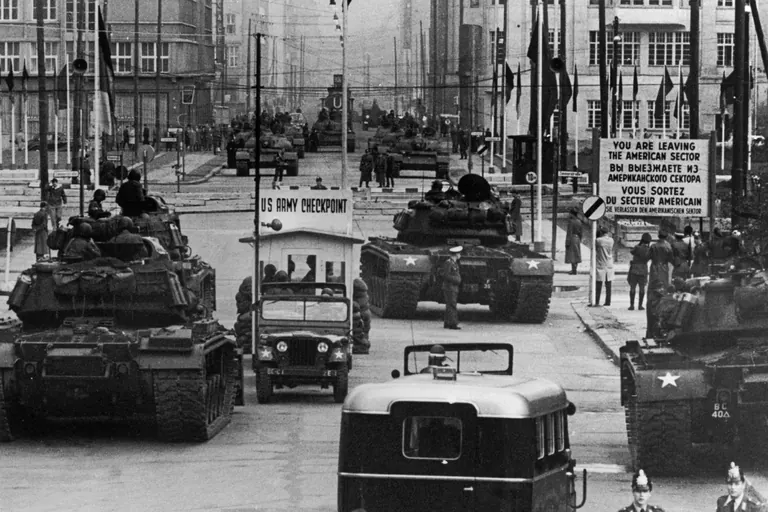 The Cold War1945 to 1991, 22 lessons
 The Ottoman Empire1299 to 1923, 32 lessons
 China: The Fall of the Middle Kingdom1368 to 1976, 29 lessons
Step 4: Study the big players one at a time
The countries that shape global events are the United States, China, Russia, the European Union (as a bloc), India, and the Middle East powers: Iran, Saudi Arabia, Turkey and Israel.
For each one, answer three questions: What does it want? What does it fear? What does geography give it and deny it?
- The United States has two oceans protecting it and the world's strongest military, but it relies on allies and bases to project power far from home. Start with whether the American empire is in decline.
- China has a huge population and the world's largest industrial base, but a chain of islands from Japan to the Philippines hems in its coast, and most of its imported oil comes through the Strait of Malacca.
- Russia has the world's largest territory but few ports that stay free of ice and a shrinking population. Read how Russia became the largest country on Earth.
- India has a young population and a fast-growing economy, but its borders with China and Pakistan are both disputed. Read whether India will be the next China.
- The European Union is one of the world's largest markets, but its 27 members struggle to act as one in foreign policy. Read how the EU actually makes decisions.
- The Middle East powers compete for influence across the region, and the rivalry between Iran and Saudi Arabia runs through many of its wars, from Yemen to Syria. Read why Iran and Saudi Arabia are enemies.
The country profiles on this site cover 44 countries with their leaders, allies, rivals, trade partners and military rankings.
- WorldChina profileWhat China wants, who it trades with, and where it ranks.
- WorldRussia profileRussia's geography, military, economy and alliances.
- WorldUnited States profileAmerica's global position, bases, trade and rivals.
- WorldIndia profileIndia's borders, economy, military and contested territories.
You are ready for step 5 when you can pick up a story about, say, Chinese military exercises near Taiwan and explain what China wants, what the US fears, and what the geography of the Taiwan Strait means for both sides.
Step 5: Follow the news with four questions
Pick a small number of sources. One wire service (Reuters or the Associated Press) gives you the facts without spin. One weekly or magazine (The Economist or Foreign Affairs) gives you analysis with context. Read at least one source from outside your own country.
For every story, ask four questions:
- Who wants what? Name the countries, leaders or groups and what each one is trying to get.
- What does the map say? Where is it happening, and how does the geography shape who has the advantage?
- Who has leverage? Money, energy, weapons, votes in the UN, or control of a chokepoint.
- What happened the last time? Almost nothing in geopolitics is new.
Take Iran's closure of the Strait of Hormuz on February 28, 2026, hours after US and Israeli airstrikes on Iran:
- Who wants what? Iran wanted to make the war costly for the whole world. The United States and the Gulf states wanted the strait open.
- What does the map say? The strait is 39 km wide at its narrowest and Iran holds its whole northern shore. Before the closure, about a fifth of the world's oil passed through it.
- Who has leverage? Iran can threaten ships with missiles, drones and mines from its own coast, and the US Navy has the strongest fleet in the region. The countries at the top of the Hormuz dependence ranking had the most to lose.
- What happened the last time? During the Iran-Iraq war in the 1980s, both sides attacked tankers in the Gulf, and the US Navy ended up escorting them.
Use the disputed territories map and the alliances page as reference while reading the news.
Be careful with sources that sell certainty. Pundits who tell you they know what will happen next are almost always wrong. Understanding why something is happening is more useful than predicting what will happen.
You are ready for step 6 when you can read a news story, apply the four questions, and come away with a clearer picture than the headline gave you.
Step 6: Check claims with data
Numbers settle many arguments. When someone says "China's military is catching up to America's," you can check the military spending ranking. When someone claims a country is "collapsing," you can look at its GDP, population and median age.
The site's country rankings cover 28 measures, from nuclear weapons to oil production to who owns US debt.
- WorldMilitary spendingWho spends the most on defense, and how the gap has changed.
- WorldGDP by countryThe world's largest economies ranked.
- WorldOil productionWho produces the most oil, and who depends on imports.
- WorldMedian ageWhich countries are young, which are aging, and why it matters.
For deeper data, three free sources are worth bookmarking: SIPRI for military spending and arms transfers, World Bank Open Data for development indicators, and Our World in Data for charts on everything from energy to population.
You are ready for step 7 when you can back up or challenge a claim you hear on a podcast with a specific number and its source.
Step 7: Make it stick
Reading about geopolitics once is not learning. In the 1880s the German psychologist Hermann Ebbinghaus found that he forgot more than half of what he had memorized within a day unless he reviewed it, and later studies keep finding the same curve. Two methods work far better than rereading.
Test yourself. After finishing a topic, close the page and write a one-paragraph summary from memory. Explain a story to a friend or family member. If you cannot explain it simply, you do not understand it yet. The quizzes on this site are a quick way to check what you actually retained.
Spaced repetition. This means reviewing a fact just before you would forget it, then waiting a little longer before the next review. It is one of the most efficient ways to move information into long-term memory. Orbis uses this method: its 4,900+ flashcards are tied to the lessons you finish, and the app brings each card back at the right interval so you do not have to plan your reviews.
A four-week plan to start
| Week | Focus | 20 to 30 minutes a day |
|---|---|---|
| 1 | The map | Take the world geography quiz and regional map quizzes. Read the chokepoints guide. Practice on Seterra until you can name every country in one region. |
| 2 | Core ideas | Read what geopolitics is. Work through the encyclopedia entries on balance of power, security dilemma, buffer states and sanctions. |
| 3 | History | Pick one era that matters to a story you care about. Read the relevant blog article and take the matching course or quiz. The Cold War course is a good default. |
| 4 | One big player plus the news | Read one country profile in depth. Apply the four questions to one news story a day. |
After week 4, repeat steps 3 and 4 for the next region or country that interests you. Each pass gets faster because the core ideas and the map are already in place.
The best books, podcasts and channels
Books to start with
- Prisoners of Geography by Tim Marshall (2015): The best first book. Ten maps, ten chapters on how geography shapes the power of Russia, China, the US and others. A revised edition (2025) covers the Ukraine war and Gaza.
- The Power of Geography by Tim Marshall (2021): The sequel, covering Australia, Iran, Saudi Arabia, Turkey, the Sahel and more.
- The Revenge of Geography by Robert D. Kaplan (2012): Deeper than Marshall, with more history and theory. Good second book.
- Chip War by Chris Miller (2022): How semiconductors became the most contested technology on Earth. Concrete and recent.
- The Silk Roads by Peter Frankopan (2015): World history told from Central Asia and the Middle East instead of from Europe. Long, but it changes how you see the map.
- Destined for War by Graham Allison (2017): The "Thucydides trap" argument about whether a rising China and the United States are headed for war. Clearly written and built around one big idea.
- The Tragedy of Great Power Politics by John Mearsheimer (2001): The academic argument for why great powers always compete. More advanced. Start with Marshall or Kaplan first.
A note on Peter Zeihan: his books (starting with The Accidental Superpower, 2014) are widely read and make geography vivid, but they contain confident predictions (demographic collapse, deglobalization timelines) that should be read critically.
Podcasts
- The Rest Is Politics: Alastair Campbell and Rory Stewart, a former Labour strategist and a former Conservative minister, argue about current events. Mostly British politics, with regular episodes on world affairs.
- The Rest Is History: Tom Holland and Dominic Sandbrook. Deep, entertaining history episodes. Over 700 episodes covering everything from Rome to the Cold War.
- The Foreign Affairs Interview: Daniel Kurtz-Phelan, editor of Foreign Affairs, interviews scholars and policymakers.
- Geopolitics Decanted: Dmitri Alperovitch interviews analysts and officials on current geopolitical issues.
- War on the Rocks: Ryan Evans and guests on defense policy, military strategy and national security.
- The Intelligence: The Economist's daily news podcast, hosted by Jason Palmer and Rosie Blau. Three stories every weekday.
YouTube channels
- CaspianReport: Shirvan Neftchi. Country and region analyses with maps. Clear, well-researched.
- Perun: Hour-long slide-based lectures on defense economics, procurement and ongoing wars. Detailed and data-heavy.
- Wendover Productions: Sam Denby. Logistics, infrastructure and supply chains explained with strong visuals.
- Good Times Bad Times: Hubert, a Polish creator. Weekly long-form videos on geopolitics, economics and international relations.
Free courses and reference sites
- CFR Education: Free nonpartisan resources from the Council on Foreign Relations, including timelines, lesson plans and simulations.
- Global Affairs Explained on Coursera: A three-course specialization by CFR Education. The first module of each course is free to preview; the rest needs a Coursera subscription or financial aid.
- MIT OpenCourseWare 17.41: Introduction to International Relations, with syllabus, lecture notes and slides. Free.
- CFR Global Conflict Tracker: An interactive map of the wars and crises the Council on Foreign Relations is tracking, with a background page for each. Free.
News sources
- Reuters or the Associated Press for facts. Wire services report what happened, with minimal interpretation.
- The Economist or Foreign Affairs for analysis. Both explain why a story matters and what might follow.
- Read at least one source from outside your own country. Everyone has blind spots, and yours are easier to see from the outside.
For a comparison of apps that help you learn and follow geopolitics, see the geopolitics apps guide.
Mistakes beginners make
Starting with dense theory instead of the map and stories. Books by John Mearsheimer or the British geographer Halford Mackinder are important, but they are hard to absorb if you cannot picture the places they describe. Learn the map and a few current stories first. The theory will make much more sense after.
Only following the news without the history. The news tells you what is happening today. Without history, you cannot tell whether something is new or a pattern that has repeated for decades. When Iran and Saudi Arabia clash, it helps to know that the rivalry long predates the current leaders.
Trusting one channel or one country's media. Every source has a perspective. American media covers the world through American interests. Russian state media serves the Russian government. Even good outlets have blind spots. Read at least two sources from different countries on any major story.
Confusing predictions with understanding. Some pundits forecast collapse, war or revolution every year, and their audience remembers the one time they were right. Understanding why something could happen is useful. Trusting someone who says it will happen by a specific date usually is not.
Treating geography as fate. Geography shapes what countries can do, but people make the decisions. Countries with few natural resources, such as Japan and Singapore, have built prosperous societies. Others with rich land and long coastlines have stayed poor because of bad government. For more on the limits of geographic thinking, read what geopolitics is and is not.