The Chip War: Semiconductors and the US-China Showdown
How a transistor invented in a New Jersey lab in 1947 created a trillion-dollar industry, why one company in Taiwan now makes around 90% of the world's most advanced chips, and how the United States and China ended up fighting over that chokepoint.
1947 to 2026 · 3 parts · 12 lessons · about 1.5 hours
Free for 7 days, cancel anytime. iPhone and Android.
Questions this course answers
- How did eight scientists who quit William Shockley in 1957 end up creating Silicon Valley?
- Why does one company in the Netherlands control the key machine in chipmaking?
- Why can no single country make an advanced chip on its own?
- Why has China spent hundreds of billions on chips and still fallen short?
- How did the United States weaponize the chip supply chain against China?
- Why are advanced chips the bottleneck for artificial intelligence?
Three parts, 12 lessons
 Part 1 · 1947 to 2026
The Most Complex Object Ever Made
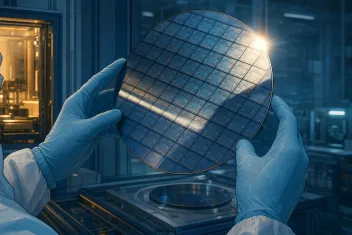
How the transistor, invented in 1947, led to Silicon Valley, why Moore's Law set the pace, and how ASML in the Netherlands and TSMC in Taiwan control the cutting edge.
-
1
7 min
The Birth of Silicon Valley
In 1957, eight young scientists quit their boss, William Shockley. Funded by an early form of venture capital, they accidentally built Silicon Valley.
-
2
7 min
What a Chip Actually Is
A chip the size of a fingernail can hold more transistors than there are stars in the Milky Way, each an on/off switch printed onto silicon with light.
-
3
7 min
The Impossible Machine
Only ASML of the Netherlands can build the machine that prints the smallest chips. It hits molten tin with a laser fifty thousand times a second.
-
4
7 min
TSMC and the Taiwan Chokepoint
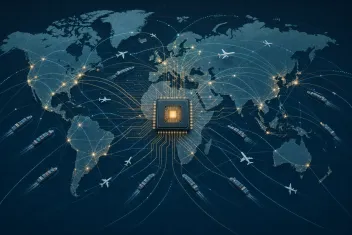
TSMC makes around 90% of the world's most advanced chips on one island. That turned Taiwan into the most strategically important place on Earth.
 Part 2 · 1978 to 2026
The Global Supply Chain
How a chip's inputs cross more than seventy borders, how America fought Japan over chips in the 1980s, and why America lost the ability to make its most advanced chips.
-
5
7 min
The Most Globalized Product on Earth
No single country can make an advanced chip alone. The silicon in your pocket was designed on one continent, etched on another, and finished on a third.
-
6
5 min
The First Chip War: America vs. Japan
In the 1980s, Japan looked set to dominate chips. The United States fought back with tariffs and industrial policy, the same tools it now uses against China.
-
7
6 min
America's Lead and How It Eroded
America invented the semiconductor and once made every one. Over fifty years of rational business decisions, it handed the physical making of chips to Asia.
-
8
7 min
China's Drive for Self-Sufficiency
China spends more on importing chips than on importing oil. Hundreds of billions poured into self-sufficiency have not closed the gap to the cutting edge.
 Part 3 · 2018 to 2026
The Chip War
How the US used the supply chain's chokepoints against China, why AI runs on scarce advanced chips, and what a fight over Taiwan would mean for the world.
-
9
8 min
Export Controls
In October 2022, the United States turned the supply chain's chokepoints into a weapon, trying to freeze China out of the cutting edge of computing.
-
10
8 min
AI and the Compute Race
AI runs on advanced chips by the tens of thousands. A graphics card designed for video games became the most strategically contested product on Earth.
-
11
7 min
Bringing the Fabs Home
New fabs in Arizona and Germany are the biggest industrial-policy gamble in generations. Even if they succeed, America and Europe will still depend on Taiwan.
-
12
6 min
The Taiwan Question
Everything in the chip war leads to Taiwan, where an unfinished civil war, the US-China rivalry and the world's most critical technology could collide.
Lessons you can finish in one sitting.
Each lesson tells one part of the story and explains why it happened, with maps, images and quotes from the sources. A few questions at the end check that it stuck, and the key facts go into the course's flashcards.
- 5 to 8 minutes a lesson
- Four to five questions after each lesson
- 74 flashcards for this course