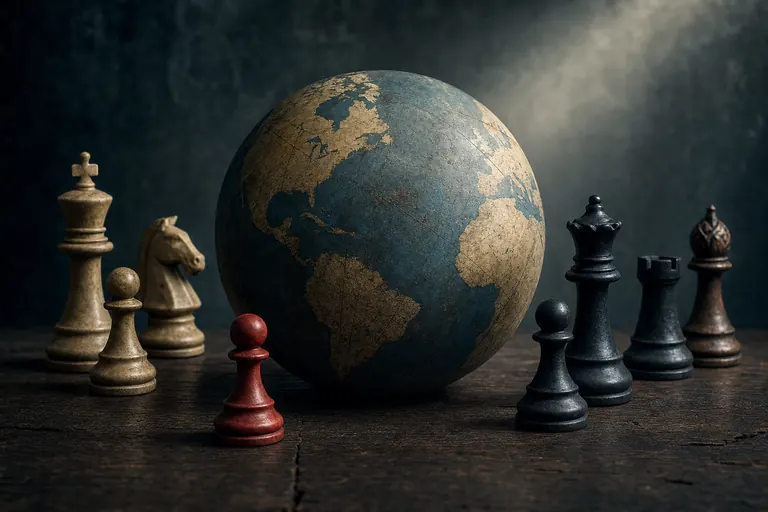
Kashmir: Three Powers, One Valley
How a maharaja's hesitation in 1947 led to a war that split Kashmir between India and Pakistan, why China seized a third piece to protect a highway, and how nuclear weapons turned a frozen border dispute into the most dangerous flashpoint on Earth.
1947 to 2026 · 3 parts · 14 lessons · about 1.5 hours
Free for 7 days, cancel anytime. iPhone and Android.
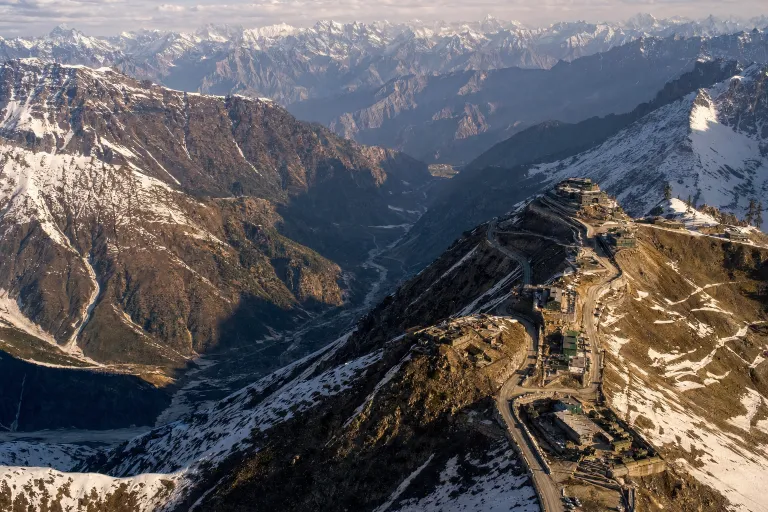
Questions this course answers
- Why did a maharaja's hesitation in 1947 create a conflict that has lasted over 75 years?
- How did China seize Aksai Chin in 32 days in 1962?
- Why did Pakistan launch the Kargil War one year after testing nuclear weapons?
- Why is nuclear deterrence between India and Pakistan more dangerous than in the Cold War?
- What does China's $62 billion corridor through Kashmir mean for India?
- Why could the Indus river make Kashmir truly unsolvable?
Three parts, 14 lessons
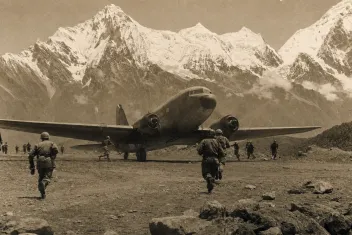 Part 1 · 1947 to 1972
Origins of the Dispute
How the 1947 war divided Kashmir after Partition, why the 1965 and 1971 wars barely moved the line, and how China took Aksai Chin in 1962.
-
1
5 min
Kashmir: Why It Matters
India, Pakistan, and China all hold parts of Kashmir, home to the Indus headwaters and China's only land link between Tibet and Xinjiang.
-
2
6 min
Partition and the First Kashmir War
Maharaja Hari Singh, a Hindu ruling a Muslim majority, hesitated. Pakistan's tribal invasion stalled to loot, he joined India, and India airlifted troops.
-
3
6 min
Three Wars Over Kashmir
India and Pakistan fought three wars in 24 years. The line through Kashmir barely moved. Neither side could take the valley by force.
-
4
6 min
1962: China Takes Aksai Chin
China attacked India across the Himalayas in 1962, took Aksai Chin in 32 days, and deliberately left the border undemarcated, as it remains today.
 Part 2 · 1989 to 2006
Insurgency and Nuclear Brinkmanship
How a rigged 1987 election in Kashmir led to an insurgency, and how the 1998 nuclear tests by India and Pakistan made limited wars like Kargil more likely.
-
5
5 min
The Insurgency
A rigged 1987 election led to an insurgency in 1989. Pakistan's ISI backed Islamist groups over the secular JKLF, and India shielded its troops with AFSPA.
-
6
6 min
Kargil: The First Nuclear War
In 1999, a year after India and Pakistan tested nuclear weapons, Pakistani troops crossed the Line of Control. Bill Clinton pressed Nawaz Sharif to withdraw.
-
7
6 min
The Nuclear Dimension
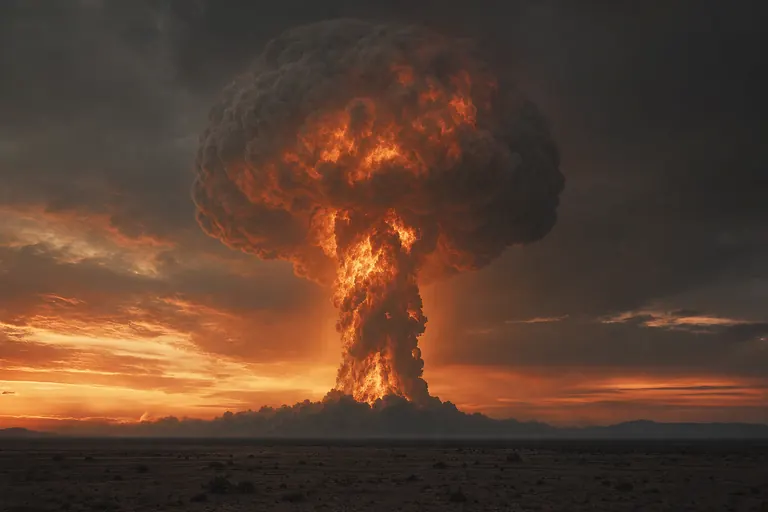
India and Pakistan have 5 to 8 minutes of missile flight time and no working hotline. Climate models project 2 billion famine deaths from 100 warheads.
 Part 3 · 2013 to 2026
The New Great Game
China builds a corridor through land India claims, Indian and Chinese troops clash at Galwan, and India revokes Kashmir's autonomy and suspends the Indus Waters Treaty.
-
8
5 min
India-China: The Line of Actual Control
India and China disagree on where their border runs and even how long it is. There are no markers or shared maps, and both sides benefit from the ambiguity.
-
9
5 min
Doklam, Galwan, and the New Rivalry
In 2020, Indian and Chinese soldiers killed each other with rocks and clubs at 14,000 feet. Both sides now keep over 50,000 troops on the line year-round.
-
10
6 min
Article 370: India's Gamble on Kashmir
On August 5, 2019, India revoked Kashmir's autonomy and imposed a 552-day internet blackout. The deadliest attack on civilians since Mumbai came in 2025.
-
11
5 min
CPEC and the China-Pakistan Axis
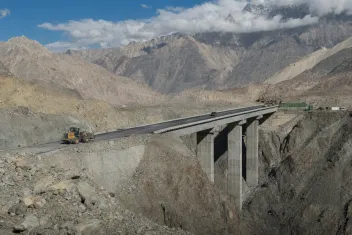
China is building a $62 billion corridor from Xinjiang to the Arabian Sea through territory India claims. India fears encirclement by China and Pakistan.
-
12
5 min
Water Wars: The Indus
The Indus feeds 80% of Pakistan's farmland from headwaters India controls. In April 2025, India suspended the 65-year-old treaty governing those waters.
-
13
5 min
Kashmir Today: By the Numbers
India keeps up to 700,000 security forces in Kashmir against 100 to 150 militants. About 70,000 people have died since 1989, and youth unemployment is 32%.
-
14
6 min
Why Kashmir Could Trigger Catastrophe
Each crisis since 1998 has climbed higher on the escalation ladder. Talks are suspended, and politics in India, Pakistan, and China rewards toughness.
Lessons you can finish in one sitting.
Each lesson tells one part of the story and explains why it happened, with maps, images and quotes from the sources. A few questions at the end check that it stuck, and the key facts go into the course's flashcards.
- 5 to 6 minutes a lesson
- Two questions after each lesson
- 111 flashcards for this course