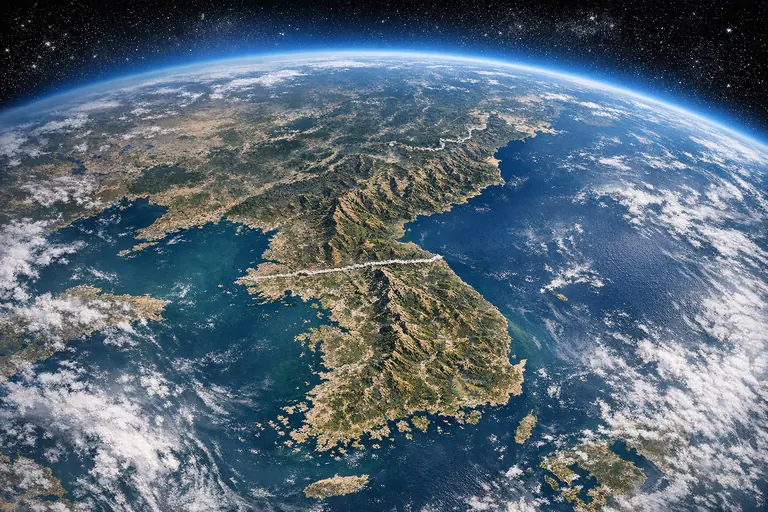
The Bomb: A History of the Nuclear Age
How two chemists in Berlin accidentally split the atom in 1938, why the discovery set off a race to build tens of thousands of warheads no one could ever use, and how the world has survived the bomb so far, partly by luck.
1938 to 2026 · 3 parts · 15 lessons · about 1.5 hours
Free for 7 days, cancel anytime. iPhone and Android.
Questions this course answers
- How did two chemists in Berlin accidentally split the atom?
- Did the atomic bombs alone force Japan to surrender?
- How did the Soviet Union build the atomic bomb in only four years?
- Why did the superpowers build far more nuclear warheads than they could ever use?
- How close did the Cuban Missile Crisis actually come to nuclear war?
- Why is the risk of nuclear war rising again?
Three parts, 15 lessons
 Part 1 · 1938 to 1945
Building the Bomb
After fission was discovered in 1938, the United States raced to build the atomic bomb and used it on Hiroshima and Nagasaki in 1945, a decision still debated.
-
1
7 min
Splitting the Atom
In December 1938, Otto Hahn and Fritz Strassmann split the uranium atom in Berlin by accident. Lise Meitner and Otto Frisch explained what had happened.
-
2
6 min
The Manhattan Project
The Manhattan Project built three secret cities, employed 130,000 workers, and cost about $2 billion. Its hardest task was producing uranium-235 and plutonium.
-
3
6 min
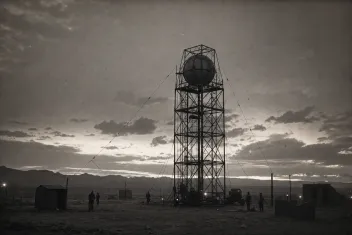
Trinity
At 5:29 a.m. on July 16, 1945, a steel tower in the New Mexico desert vanished in a flash. The nuclear age began here, three weeks before Hiroshima.
-
4
6 min
Hiroshima
On August 6, 1945, a single American bomb destroyed Hiroshima, a city of about 350,000 people that was also an army headquarters and a military port.
-
5
6 min
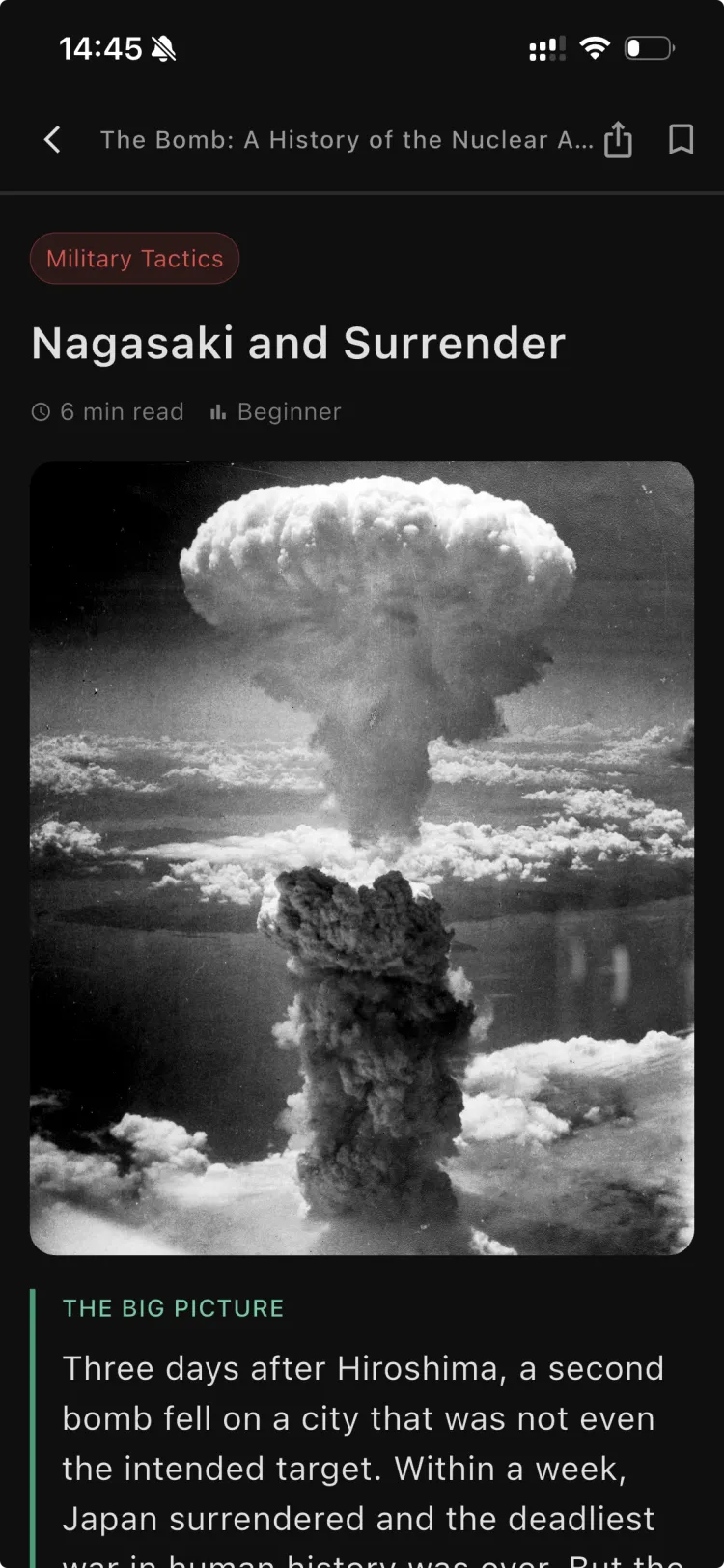
Nagasaki and Surrender
Nagasaki was not even the intended target. Three days after Hiroshima, a second bomb fell, Japan surrendered, and the argument over why has never ended.
 Part 2 · 1949 to 1964
The Arms Race
The American monopoly lasted four years. Then came the hydrogen bomb, the triad, tens of thousands of warheads, and the bomb's spread to Britain, France, and China.
-
6
5 min
The Soviet Bomb
American planners expected a decade-long monopoly. In August 1949, the Soviet Union tested a near-perfect copy of the American bomb, built from stolen designs.
-
7
6 min
The Hydrogen Bomb
The hydrogen bomb was a thousand times more powerful than the Hiroshima bomb. Truman ordered it built over the objections of Oppenheimer's advisory panel.
-
8
6 min
The Triad
The United States and the Soviet Union each built bombers, land-based missiles, and submarines, so that no first strike could stop them from striking back.
-
9
6 min
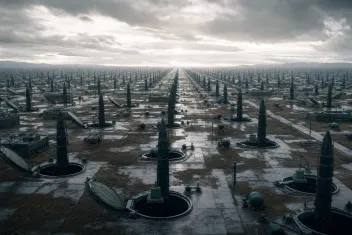
Overkill
The United States and the Soviet Union once held about 70,000 warheads, enough to destroy each other dozens of times. Fear and bureaucracy drove the buildup.
-
10
5 min
The Bomb Spreads
Britain, France, and China each built their own bomb by 1964, largely without superpower help, partly because the bomb had become the mark of a great power.
 Part 3 · 1955 to 2026
Living With the Bomb
How mutual vulnerability became stability, how the Cuban Missile Crisis nearly broke it, and why the logic that has kept the bomb unused since 1945 is under strain.
-
11
6 min
Deterrence and MAD
Under Mutual Assured Destruction, the United States and the Soviet Union could each destroy the other, so neither dared to start a nuclear war.
-
12
6 min
The Cuban Missile Crisis
In October 1962, the world came closer to nuclear war than ever. A hidden compromise ended it, and a Soviet officer refused to authorize a nuclear torpedo.
-
13
6 min
The Near-Misses
A 46-cent computer chip once signaled a Soviet attack that never happened. The world has been saved more than once by officers who distrusted the alarm.
-
14
6 min
The Non-Proliferation Bargain
In 1963, President Kennedy feared fifteen or twenty nuclear powers within a decade. Today there are nine, largely because of the 1968 Non-Proliferation Treaty.
-
15
6 min
The New Arms Race
In 2026, the last treaty limiting the American and Russian arsenals expired, and China is building a third large arsenal. The nuclear danger is rising again.
Lessons you can finish in one sitting.
Each lesson tells one part of the story and explains why it happened, with maps, images and quotes from the sources. A few questions at the end check that it stuck, and the key facts go into the course's flashcards.
- 5 to 7 minutes a lesson
- Three to four questions after each lesson
- 105 flashcards for this course