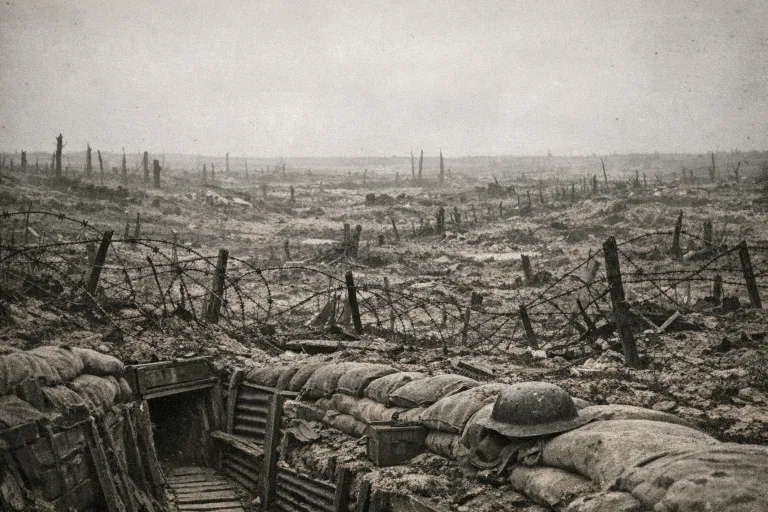
The Sino-Japanese Wars
How Japan modernized in a single generation and built an empire while China fell apart, why the wars between Japan and China from 1894 to 1945 killed tens of millions, and how Japan's invasion helped Mao Zedong's Communists win China's civil war.
1868 to 1949 · 4 parts · 22 lessons · about 2.5 hours
Free for 7 days, cancel anytime. iPhone and Android.
Questions this course answers
- How did Japan modernize in a single generation while China could not?
- Why did Japan's victory in 1895 end 2,000 years of Chinese centrality in Asia?
- How did a staged railway explosion in Manchuria break the international order?
- Why did Japan attack Pearl Harbor instead of withdrawing from China?
- How did Mao's Communists use the war against Japan to win the civil war?
- Why do the Sino-Japanese Wars still shape East Asian geopolitics today?
Four parts, 22 lessons
 Part 1 · 1868 to 1895
The First War: Japan's Announcement
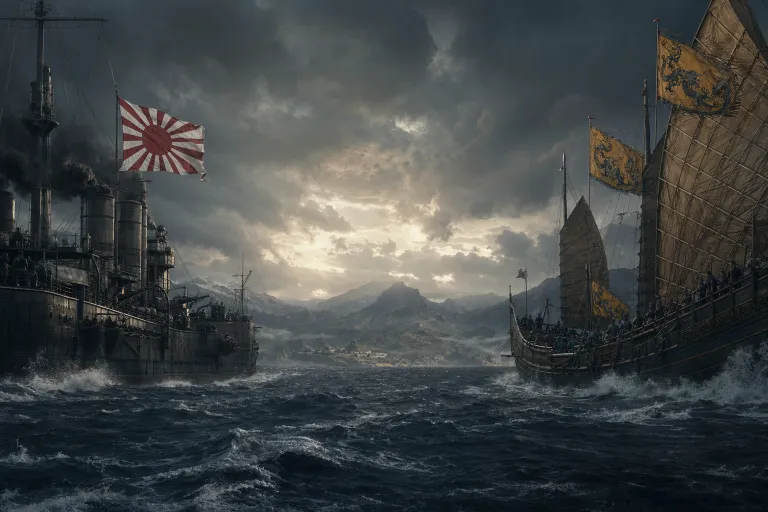
How Japan rebuilt itself in a single generation, why China bought modern weapons without modern institutions, and the eight-month war that announced a new Asian order.
-
1
6 min
Meiji Japan: Asia's New Power
In 1853, Japan could not build a steam engine. By 1895, Japan had defeated China after borrowing selectively from the West and adapting every import.
-
2
6 min
Qing China: The Crumbling Giant
China produced roughly a third of world GDP in 1820. It fell behind because it bought modern weapons without changing the institutions that made it weak.
-
3
6 min
Korea: The Prize Between Empires
Korea sat between China and Japan, claimed by both and controlled by neither. The Tonghak Rebellion gave both countries the pretext to intervene.
-
4
6 min
The War of 1894-1895
China had bigger ships and more soldiers. Japan had better training, a unified command, and officers promoted on merit, and it won the war in eight months.
-
5
7 min
Treaty of Shimonoseki: Asia's New Order
In 1895, China's Li Hongzhang, with a bullet wound in his face, ceded Taiwan to Japan, agreed to pay 200 million taels, and recognized Korean independence.
 Part 2 · 1895 to 1937
Between the Wars: Empire and Resistance
Japan builds an empire from Korea to Manchuria, and China's fury at humiliation produces modern nationalism, the reorganized Nationalist Party, and the Communist Party.
-
6
6 min
Japan Builds an Empire
Japan defeated Russia in 1905 after a decade of preparation, then annexed Korea in 1910. The South Manchuria Railway ran the region as an economic colony.
-
7
6 min
Twenty-One Demands & the Birth of Chinese Nationalism
Japan's 1915 ultimatum nearly made China a puppet state. Versailles then handed Chinese territory to Japan, and the fury created modern Chinese nationalism.
-
8
6 min
China's Revolution and Chaos
In 1912, China ended 2,000 years of imperial rule, but warlords divided the country. The Nationalists and Communists allied until Chiang Kai-shek's 1927 purge.
-
9
7 min
Manchuria 1931: The Point of No Return
In 1931, Japanese officers staged a railway bombing and used it to seize Manchuria. The League of Nations condemned the invasion but did nothing to stop it.
-
10
6 min
Rise of Japanese Militarism
In 1932, naval officers shot Prime Minister Inukai. Over 100,000 Japanese signed clemency petitions, some in blood, and the killers got light sentences.
-
11
6 min
China on the Eve of War
Zhang Xueliang kidnapped Chiang Kai-shek in 1936 and forced an alliance with the Communists against Japan. The truce saved Mao's party from destruction.
 Part 3 · 1937 to 1945
The Second War: Total War in Asia
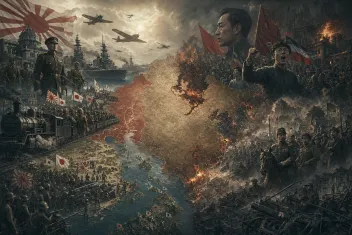
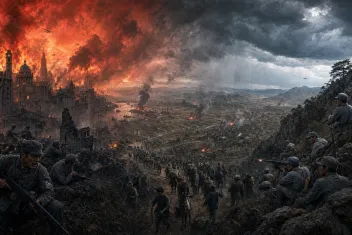
Eight years of total war from Marco Polo Bridge to the atomic bomb: Nanjing, the Yellow River flood, guerrilla warfare, and Japan's road from China to Pearl Harbor.
-
12
7 min
Marco Polo Bridge: The War Begins
A Japanese soldier went missing near a bridge outside Beijing. Within months, Japan captured Beijing, fought for three months in Shanghai, and took Nanjing.
-
13
7 min
The Rape of Nanjing
In six weeks, Japanese soldiers killed between 40,000 and 300,000 civilians and prisoners in Nanjing. Foreigners led by John Rabe sheltered up to 250,000.
-
14
7 min
China Refuses to Break
After losing its capital, coastline, and best armies, China retreated 2,000 kilometers to Chongqing, flooded the Yellow River, and refused to surrender.
-
15
7 min
The War Within the War
Two Chinese armies fought Japan and each other. The Nationalists bled in conventional battles while Mao's guerrillas built base areas of 100 million people.
-
16
6 min
Wang Jingwei and the Question of Collaboration
Wang Jingwei, once Sun Yat-sen's closest disciple, led a Japanese puppet government in Nanjing from 1940, betting that China could not win the war.
-
17
7 min
Japan's Wider War
Defeated by the Soviet Union at Khalkhin Gol and cut off from US oil, Japan attacked the United States, Britain, and the Netherlands rather than leave China.
-
18
6 min
China as Allied Power
Chiang Kai-shek sat beside Roosevelt and Churchill at Cairo, but China got roughly 3% of Lend-Lease aid, and US General Joseph Stilwell called Chiang 'Peanut.'
-
19
7 min
Ichi-Go and the Soviet Storm
Japan's largest operation sent 500,000 troops across China in 1944. Then 1.5 million Soviet soldiers destroyed the Kwantung Army in eleven days.
 Part 4 · 1945 to 1949
Aftermath: Who Won?
War crimes trials, contested memory, and the civil war that split China in two. The unfinished business of 1894 to 1945 still defines East Asia.
-
20
6 min
War Crimes and Contested Memory
The Allied tribunal in Tokyo hanged seven leaders, but Emperor Hirohito was exempted. The United States gave Unit 731's scientists immunity for their data.
-
21
7 min
The Civil War Japan Left Behind
The Nationalists had the bigger army and American support in 1945. By 1949, Mao had won. Japan's invasion created the conditions for Communist victory.
-
22
7 min
Why the Sino-Japanese Wars Still Matter
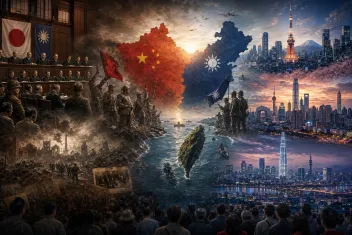
Chinese and Japanese coast guard vessels still circle islands Japan seized in 1895. Taiwan remains the world's most dangerous unresolved flashpoint.
Lessons you can finish in one sitting.
Each lesson tells one part of the story and explains why it happened, with maps, images and quotes from the sources. A few questions at the end check that it stuck, and the key facts go into the course's flashcards.
- 6 to 7 minutes a lesson
- Two questions after each lesson
- 176 flashcards for this course