Agreed Framework
The 1994 deal between the United States and North Korea that froze North Korea's plutonium program for eight years before collapsing in 2002.
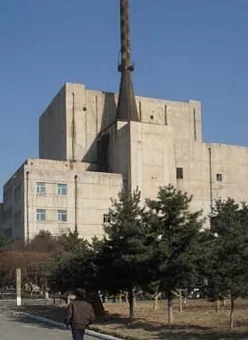
The Agreed Framework was a 1994 deal between the United States and North Korea. North Korea promised to shut down its plutonium production program at Yongbyon. The United States promised to help replace it with civilian nuclear power and deliver fuel oil in the meantime. For eight years the agreement held: international inspectors watched the reactor, cameras sat on the spent fuel rods, and North Korea produced no new weapons-grade plutonium. In 2002 the deal fell apart after the United States accused North Korea of running a secret uranium enrichment program. North Korea restarted its reactor, quit the Non-Proliferation Treaty, and tested a nuclear weapon in October 2006. The fissile material in that bomb most likely came from the fuel rods that had sat under seal at Yongbyon for eight years.
How the 1994 nuclear crisis led to the Agreed Framework
By the spring of 1994, the two countries were nearer to open fighting than they had been since the armistice at Panmunjom in 1953. North Korea was removing spent fuel rods from its Yongbyon reactor, material sufficient for several nuclear weapons, and was turning away international inspectors. The Pentagon prepared strike options and calculated that a resulting war could cost hundreds of thousands of lives.
Jimmy Carter, 69 years old and out of the White House for thirteen years, traveled to Pyongyang in June 1994 on his own initiative. He crossed the demilitarized zone from South Korea and sat down with North Korea's founder, Kim Il Sung. Carter announced a deal in principle on live television before the Clinton administration had approved it. Kim Il Sung suffered a fatal heart attack three weeks later, on July 8, but his son Kim Jong Il continued the negotiations.
The result was a four-page agreement, finalized on October 21, 1994, at a conference table in Geneva. North Korea committed to shutting down and ultimately dismantling its graphite-moderated reactors and the reprocessing facility at Yongbyon, the hardware that yields weapons-grade plutonium. North Korea also agreed to readmit inspectors and to remain a member of the Non-Proliferation Treaty. The United States organized an international consortium called the Korean Peninsula Energy Development Organization, known as KEDO, to build two light-water reactors for North Korea. Light-water designs are much harder to repurpose for weapons. The United States would also send half a million metric tons of fuel oil per year until the first new reactor was finished. Both governments committed to working toward full diplomatic and economic relations.
How the Agreed Framework collapsed
Neither government honored its commitments fully. Congress shifted to Republican control just weeks after the deal was signed and treated the agreement as a giveaway. Fuel oil deliveries ran late. The reactor project, originally scheduled for completion by 2003, fell years behind. Full diplomatic relations between Washington and Pyongyang never materialized.
North Korea violated the agreement through a different channel. In the late 1990s it covertly purchased uranium enrichment technology from the network of A.Q. Khan, the Pakistani scientist who built Pakistan's bomb and then sold the designs to several countries. The Agreed Framework's freeze addressed only the plutonium route to a weapon. Its text said nothing about uranium enrichment, which provides a second path to a bomb.
In October 2002, Assistant Secretary of State James Kelly visited Pyongyang and presented North Korean officials with intelligence about the enrichment effort. According to the American account, the officials acknowledged it. The Bush administration responded by ending fuel oil deliveries. North Korea threw out the inspectors, disabled the monitoring cameras, and fired up the Yongbyon reactor again. In January 2003 it became the first and only state to leave the Non-Proliferation Treaty. Within months it had reprocessed the 8,000 spent fuel rods that the agreement had locked away. North Korea detonated its first nuclear device in October 2006. The fissile material most likely originated from those same rods.
Did the Agreed Framework work?
The answer depends on whom you ask, and the disagreement has shaped every attempt at North Korea diplomacy since 2002.
One camp points out that the freeze held for eight real years. Without it, analysts estimated at the time, North Korea could have stockpiled enough plutonium for dozens of bombs before 2005. In this reading, the United States torpedoed its own agreement: Congress underfunded it, KEDO never finished the reactors, and the diplomatic normalization that might have given North Korea a reason to stay in the deal never came.
The other camp argues that North Korea was going to pursue a bomb regardless, and that the agreement simply gave it cover to chase one through uranium enrichment while collecting American oil. Buying a freeze, in this view, only gave the other side time to prepare.
Both arguments draw on real evidence. The disagreement played out again in the six-party talks of 2003 to 2009, a short-lived agreement in February 2012 called the Leap Day deal, and the 2018 Singapore and 2019 Hanoi summits between Donald Trump and Kim Jong Un. None produced a lasting arrangement. As of 2026, North Korea holds an estimated 60 to 120 nuclear warheads and continues to run its Yongbyon facilities. The eight years under the Agreed Framework remain the longest stretch since 1994 during which North Korea was not producing plutonium.