
Why do only nine countries have nuclear weapons?
John F. Kennedy expected twenty-five nuclear states by the 1970s. There are nine. The bomb was never the hard part, and the deal that kept the number low is breaking down.
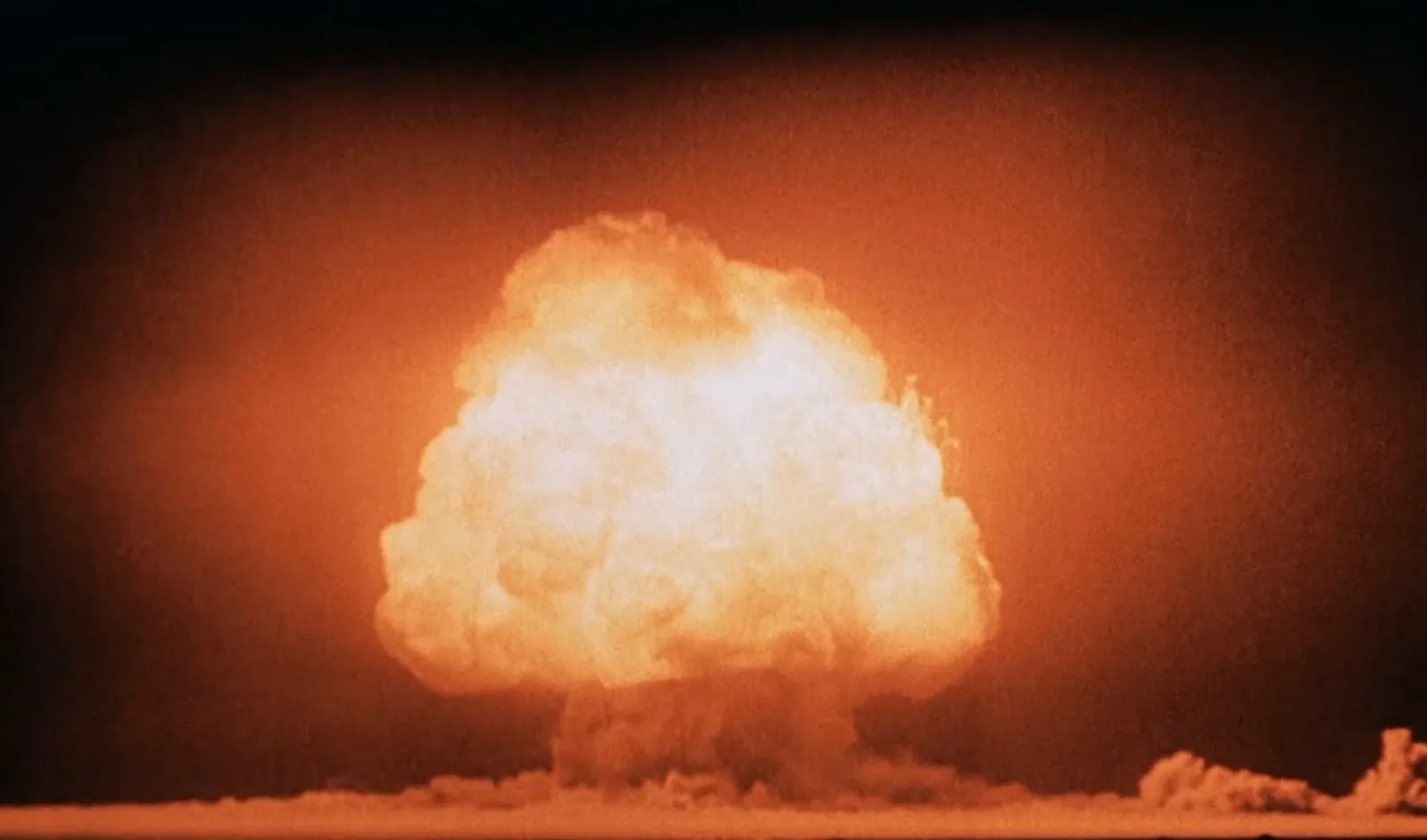
In March 1963, John F. Kennedy told reporters he was haunted by a picture of the near future. Within a decade, he warned, the world might hold "15 or 20 or 25" countries armed with nuclear weapons. It was a reasonable thing to fear. Four nations already had the bomb, a fifth was closing in, and the underlying physics was twenty years old and no longer secret. Kennedy did not live to find out how wrong he was. More than sixty years later, the number of nuclear-armed states is not twenty-five. It is nine: the United States, Russia, Britain, France, China, India, Pakistan, Israel, and North Korea. Between them they hold roughly 12,000 warheads, and just two of them, Russia and the United States, own about 86 percent of that pile.
So the real puzzle is not why nine countries built the bomb. It is why the other twenty or thirty that easily could have never did. The answer is one of the quiet triumphs of the last century, and in 2026 it is beginning to unravel.
The bomb was never the hard part
The instinct is to assume nuclear weapons are simply too hard for most countries to make. They are not. The basic design that destroyed Hiroshima was so simple that its makers did not bother to test it first. The knowledge is in physics textbooks. The genuinely hard step is producing the fissile material, the highly enriched uranium or plutonium at the core, and that takes money, industrial scale, and time. But it is engineering, not magic.
Dozens of countries have long since crossed the line where the bomb becomes a decision rather than a dream. Japan is the textbook case. It runs a full civilian nuclear industry and sits on a stockpile of separated plutonium large enough for thousands of warheads. Experts reckon it could build a working weapon within a year if it chose to. Germany, South Korea, and a handful of others are in a similar position: rich, technically advanced, and what analysts call "threshold" states, close enough that the bomb is now a political choice rather than a technical one.
If capability were the gate, Kennedy would have been right. The world would have twenty-five nuclear powers by now, maybe more. It has nine. What held the line was never the difficulty of the physics. It was politics, and politics is a far less durable thing.
The bargain of 1968
The first part of the answer is a single treaty. By the mid-1960s, with China's first test in 1964 rattling everyone, the powers that already had the bomb decided that the most dangerous thing in the world was more countries getting it. The result was the Nuclear Non-Proliferation Treaty (NPT), opened for signature in 1968 and in force by 1970.
The deal at its heart was frankly unequal. Five states that had tested a weapon before 1967, the US, the Soviet Union, Britain, France, and China, were allowed to keep their arsenals. Everyone else promised never to build one. In exchange, the non-nuclear countries got access to civilian nuclear technology and a vague pledge that the five would eventually disarm. It was an aristocracy written into international law, and plenty of governments resented it as exactly that.
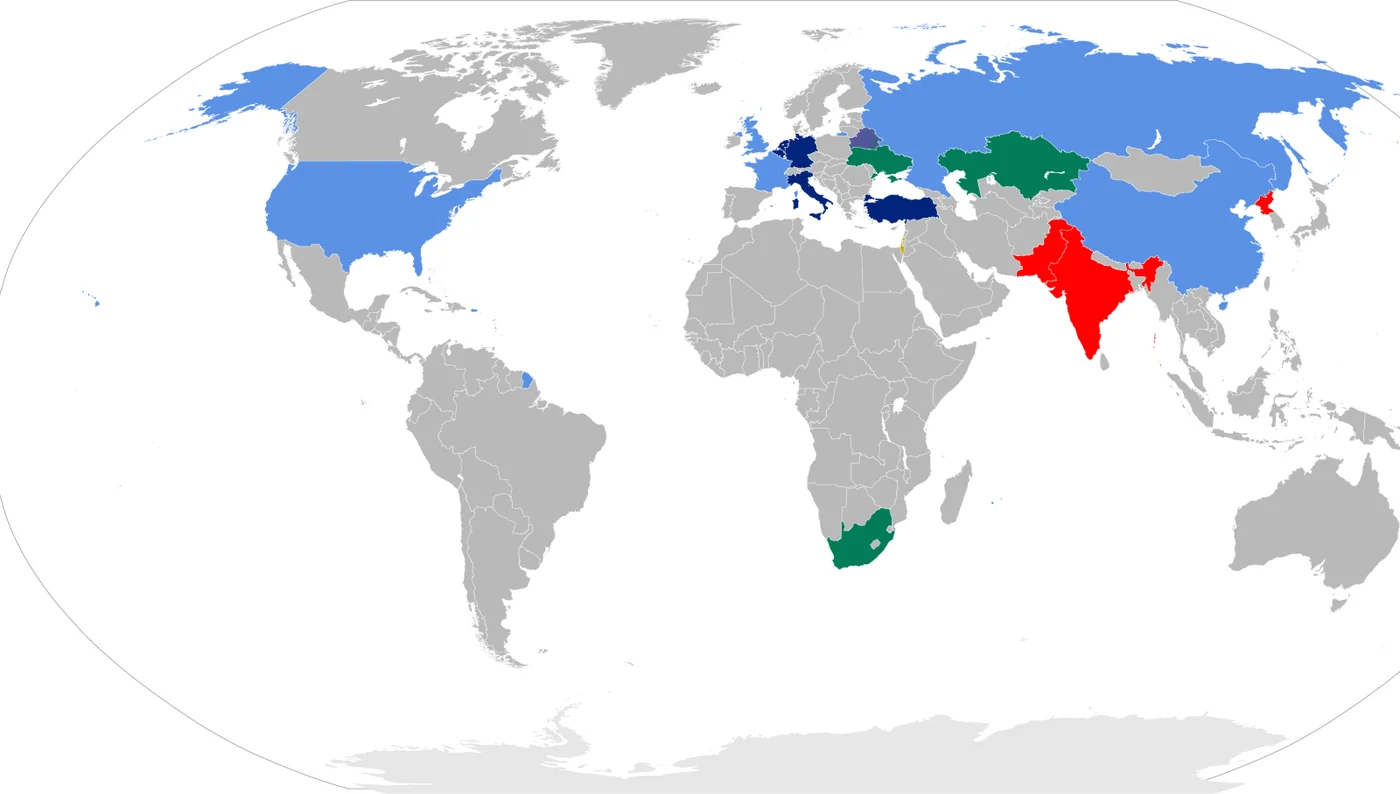
And yet almost everyone signed. Today 191 states are party to the treaty, which makes it one of the most widely accepted agreements on Earth. Only India, Pakistan, and Israel never joined, and North Korea walked out in 2003. The NPT did not make the bomb impossible. It made abstaining the normal, respectable choice, and turned building one into a decision to become an outlaw.
The umbrella that did the real work
A treaty alone does not explain why a country like Japan or Germany, sitting next to nuclear-armed rivals, would agree to stay defenseless. The deeper reason is that they were never defenseless. The United States promised to use its own nuclear weapons on their behalf.
This is the nuclear umbrella, and it is the most important part of the whole story. Some thirty countries, the members of NATO plus allies like Japan, South Korea, and Australia, shelter under an American guarantee that an attack on them will be treated as an attack on Washington. The logic is simple: if your superpower friend will retaliate for you, you do not need your own arsenal, and the enormous cost and risk of building one stops making sense.
The umbrella did not always hold on its own. West Germany, Japan, South Korea, and Taiwan all had the industrial means and, at various points, the desire to go nuclear. In the 1970s both South Korea and Taiwan secretly started weapons programs, and in both cases Washington found out and shut them down, trading protection for restraint. The message was consistent for fifty years: stay under our umbrella, and stay non-nuclear. Most allies took the deal because it was a good one.
The countries that walked away
The clearest proof that nine is a floor rather than a limit is the list of countries that got close to the bomb and then chose to stop.
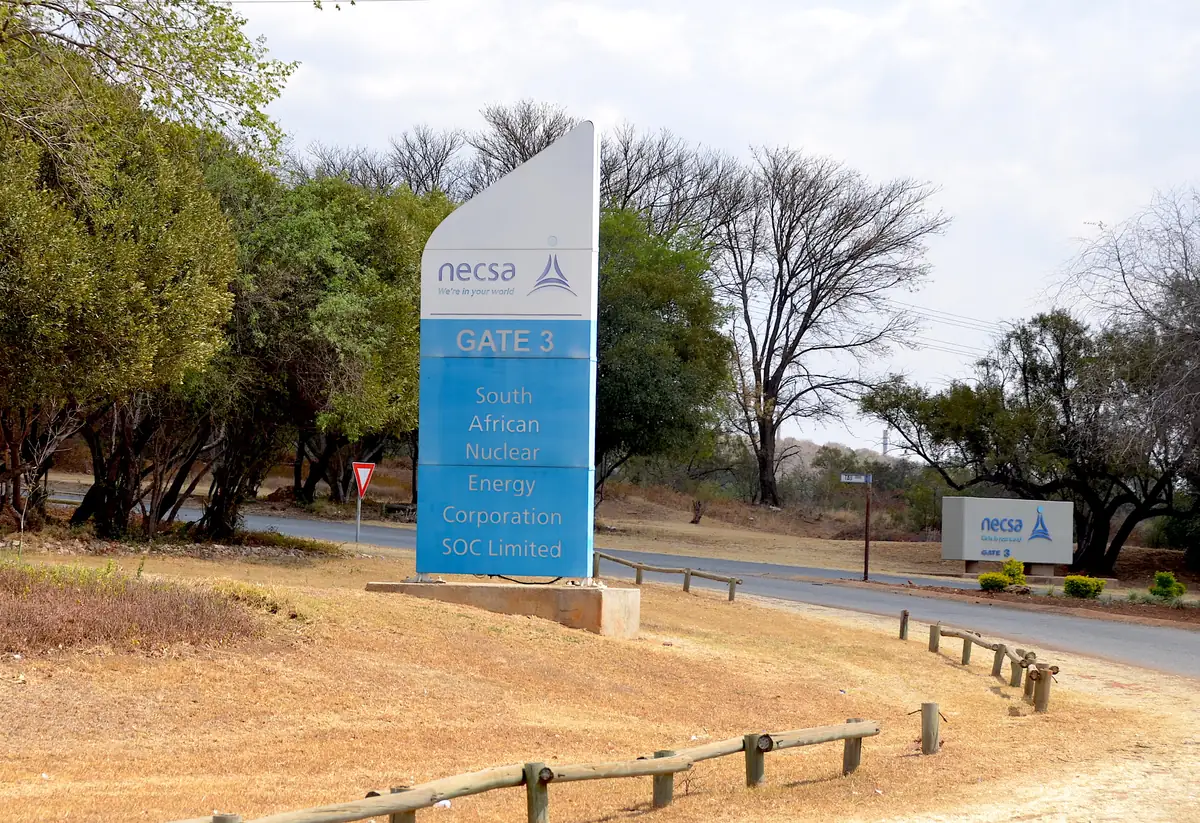
South Africa is the most striking. During the apartheid era it secretly built six nuclear devices, then dismantled every one of them between 1989 and 1991 and joined the NPT. It remains the only country ever to build a nuclear arsenal and then voluntarily give it up. Sweden ran one of the world's most advanced weapons programs into the 1960s before abandoning it. Brazil and Argentina were racing each other toward the bomb in the 1980s and chose, together, to stop. Libya traded its program away in 2003.
And then there is Ukraine, which in 1991 inherited the third-largest arsenal on the planet and handed all of it back to Russia for a written promise, a promise Moscow later tore up. (The full story of why Ukraine gave up its nuclear weapons is here.) Every one of these countries could today be a tenth, eleventh, or twelfth member of the club. None is. The number stayed at nine because governments kept deciding, one after another, that the bomb was not worth what it cost them in money, security, or standing.
What Iran is learning in 2026
For half a century the system worked well enough that most people stopped worrying about it. In 2026 it is under more strain than at any time since the Cold War, and the pressure comes from two directions at once.
The first is what America's rivals have concluded about the value of a bomb. North Korea tested one in 2006, and its regime has survived every crisis since; nobody proposes invading a country that can answer with a warhead. The opposite lesson comes from Libya. Muammar Gaddafi gave up his nuclear program in 2003 in return for warmer relations with the West, and eight years later he was overthrown and killed in a NATO-backed uprising. Neither example was lost on any government weighing the same choice.
Iran is now living out that lesson in the open. In June 2025 the United States and Israel bombed its main enrichment sites. In February 2026 they launched a far larger war, opening with roughly 900 strikes in twelve hours, and after a ceasefire in the spring broke down, American aircraft were bombing Iran again through July. Iran still has no bomb, and it is being attacked in part because it never finished building one. Its officials have drawn the obvious conclusion, moving what survives of the program into fresh tunnels dug deeper than the sites the bombs destroyed. Seen from Tehran, and from Pyongyang, the argument for a weapon has rarely looked stronger.
The allies who no longer trust the umbrella
The second pressure runs the other way, through America's friends. The umbrella only holds if allies believe Washington will truly risk its own cities to defend them, and that belief is thinning. In South Korea, a record 76 percent of the public told pollsters in 2025 that the country should build its own bomb. In Europe, rattled by a second Trump administration openly skeptical of NATO, France spent 2026 offering an enhanced version of its own nuclear umbrella, and by July eight countries including Poland and Germany had agreed to discuss joining it. These are close American allies looking for protection they no longer fully trust Washington to provide.
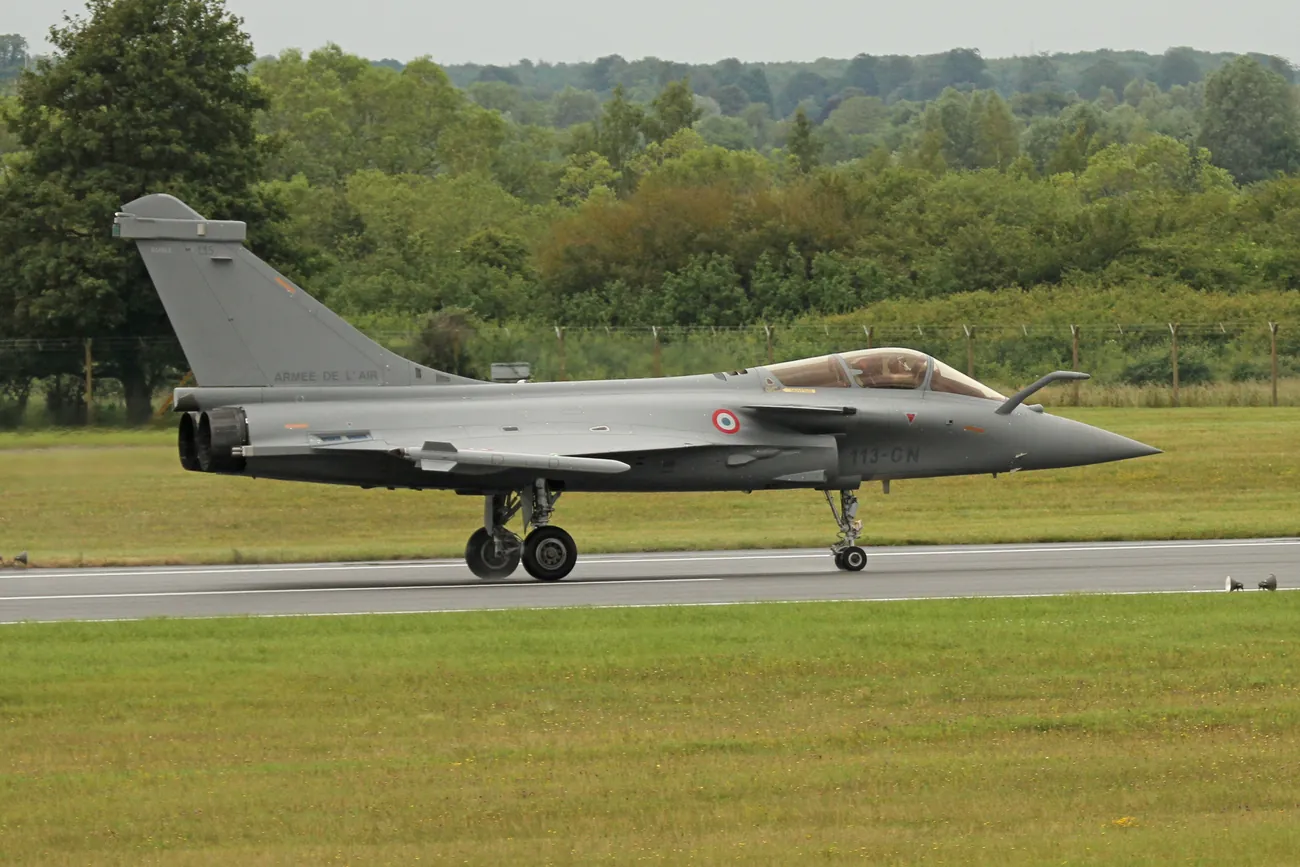
So the same question now presses from both sides. Adversaries look at Libya and Iran and conclude that only a weapon of their own is safe from attack. Allies look at Washington and wonder whether the promise that kept them disarmed is still good. The number nine was never guaranteed. It held because, for two generations, most countries decided they were safer without the bomb than with it. That calculation is being reopened in capitals on every continent, and for the first time in decades, nobody can be sure it keeps coming out the same way.
Test what you learned
5 quick questions on this article. No signup, just you against the text.