
Al-Azhar
Al-Azhar is the mosque and university in Cairo that has been Sunni Islam's most influential religious institution for centuries.
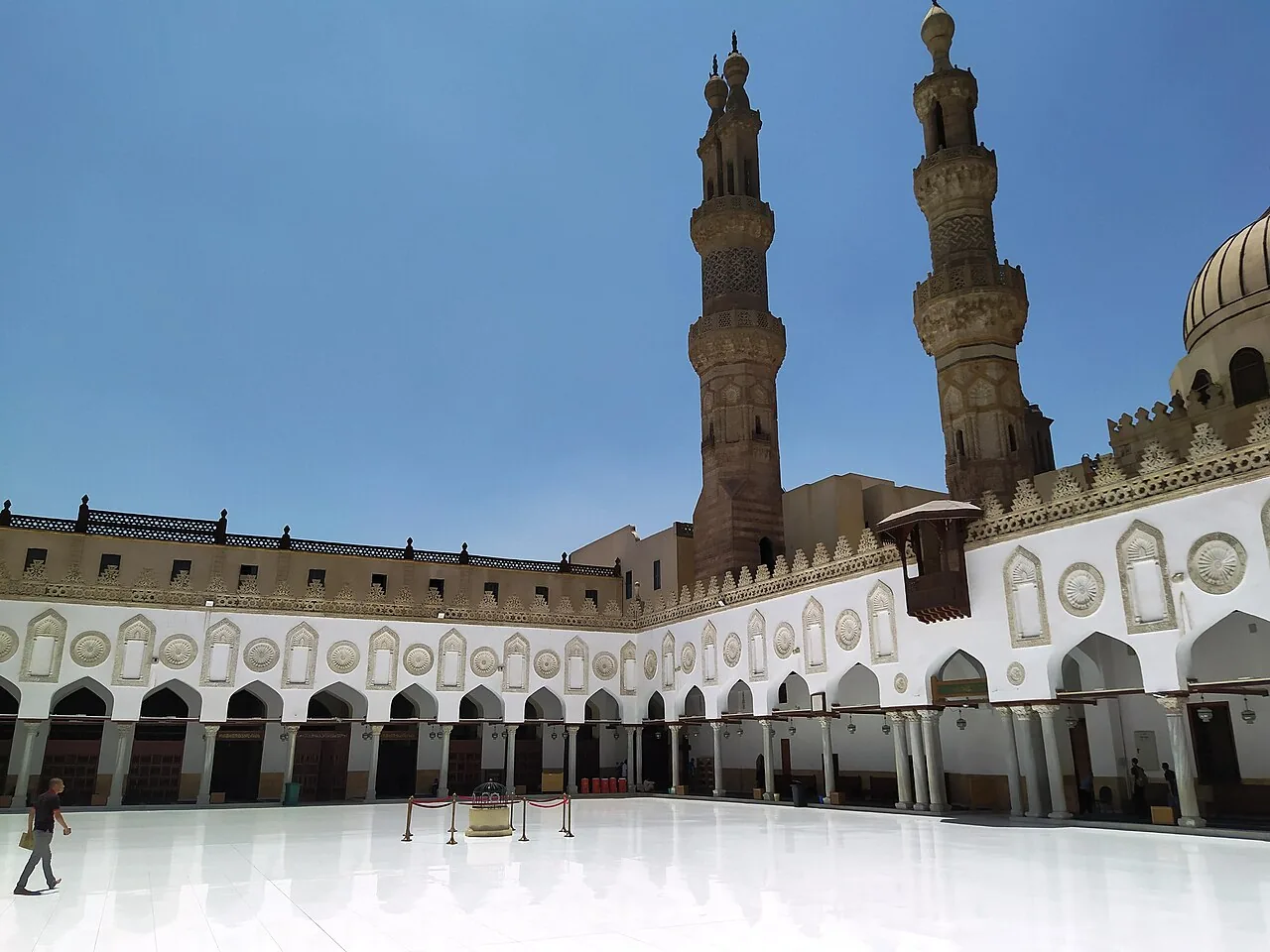
Al-Azhar sits in the old quarter of Cairo. It started as a mosque in 970, grew into a university, and became the most important religious authority in Sunni Islam. Its head, the Grand Imam, holds a position that exists nowhere else in the Sunni world: he is treated as the senior voice on Islamic law, though nobody is required to obey him. Al-Azhar produces scholars, publishes rulings on Islamic law, and deploys imams to mosques abroad. More than 300,000 students are enrolled today. Governments from Washington to Jakarta treat al-Azhar as the place to ask what orthodox Sunni teaching says on a given question.
How a Shia mosque became Sunni Islam's leading institution
The Fatimids were an Ismaili Shia dynasty that conquered Egypt in 969 and built Cairo as the new capital of a caliphate that challenged the Sunni one in Baghdad. They constructed al-Azhar between 970 and 972 as a mosque and a training center for Ismaili missionaries who would spread Fatimid Shia beliefs throughout the Islamic world. Al-Azhar served that purpose for about two centuries.
In 1171, Saladin ended the Fatimid caliphate and brought Egypt back into Sunni Islam. Al-Azhar changed with it. Under the Mamluks, who ruled Egypt from the 1250s, al-Azhar became the most important center of Sunni learning anywhere. It drew students from as far west as Morocco and as far east as Central Asia, grouping them into residential colleges by where they came from. It taught all four Sunni schools of law rather than just one.
The Fatimid, Ayyubid, Mamluk, and Ottoman states that ruled Egypt over the centuries are all gone. Al-Azhar survived them all, along with Napoleon's occupation and decades of British rule. It has been operating for more than a thousand years.
How Egypt's government took control of al-Azhar
In 1961, Egypt's president, Gamal Abdel Nasser, passed Law 103, which reorganized al-Azhar from top to bottom. Nasser seized its endowments, placed them under the Ministry of Religious Endowments, and turned the Grand Imam into a presidential appointment. He also expanded al-Azhar into a full modern university, adding faculties of medicine, engineering, and business. Women were admitted for the first time in 1962.
The law destroyed al-Azhar's financial independence. Before 1961, al-Azhar drew income from its own endowed land and operated with some autonomy from the state. After 1961, it depended entirely on the Egyptian government for funding. Every Egyptian president since Nasser has used al-Azhar to endorse official policy, and critics of al-Azhar have pointed out that endorsements given under those conditions carry less weight. Islamist movements accuse al-Azhar's scholars of serving the state rather than the faith. Al-Azhar's clerics have at times pushed back against presidential pressure on specific questions, but the pattern holds.
The current Grand Imam, Ahmed el-Tayeb, has held the position since 2010. He leads the Council of Senior Scholars, the Islamic Research Academy, and the Supreme Council of al-Azhar.
Is al-Azhar Sunni or Shia?
Al-Azhar is a Sunni institution today, and has been since Saladin converted it in 1171. But it was founded by a Shia dynasty, and it has kept a more open stance toward Shia Islam than most Sunni bodies.
In 1959, the Grand Imam Mahmoud Shaltut issued a fatwa declaring that following Ja'fari law, the Twelver Shia legal tradition, is permissible for Sunnis. The fatwa recognized Ja'fari law as a legitimate fifth school alongside the four Sunni schools, and al-Azhar added it to its curriculum. That recognition makes al-Azhar a direct counterweight to Saudi-backed Salafi movements, which treat Shia Islam as outside the faith entirely. When Saudi Arabia and Egypt vie for religious influence across Africa and South Asia, this theological difference is at the center of it. The Orbis blog covers this broader rivalry in the Sunni-Shia split.
What al-Azhar does today
Al-Azhar operates on several levels at once. As a university, it enrolls more than 300,000 students across religious and secular faculties. As a religious authority, it educates scholars, publishes rulings through the Islamic Research Academy, and certifies religious curricula used in schools across the Muslim world. It dispatches imams and teachers by the hundreds to mosques in Africa and Asia.
One of its most visible recent roles has been countering the theology of the Islamic State. Al-Azhar's scholars have issued detailed rebuttals of the Islamic State's religious arguments while refusing to declare its members apostates. That refusal is itself a theological statement: declaring other Muslims to be unbelievers is a practice al-Azhar objects to in groups like the Islamic State.
Al-Azhar's opinions carry weight with roughly a quarter of humanity, and it has no enforcement power at all. The Grand Imam cannot excommunicate anyone, and no Muslim beyond Egypt's borders is required to follow him. That combination of wide influence and no coercive authority is how religious leadership works in Sunni Islam, where no single person or institution holds the role that the papacy holds in Catholicism.