
The Sunni-Shia split: how a fight over succession still shapes the Middle East in 2026
How a dispute over who should lead Islam after Muhammad's death in 632 became the Sunni-Shia fault line running through Iran, Iraq, and the Gulf.
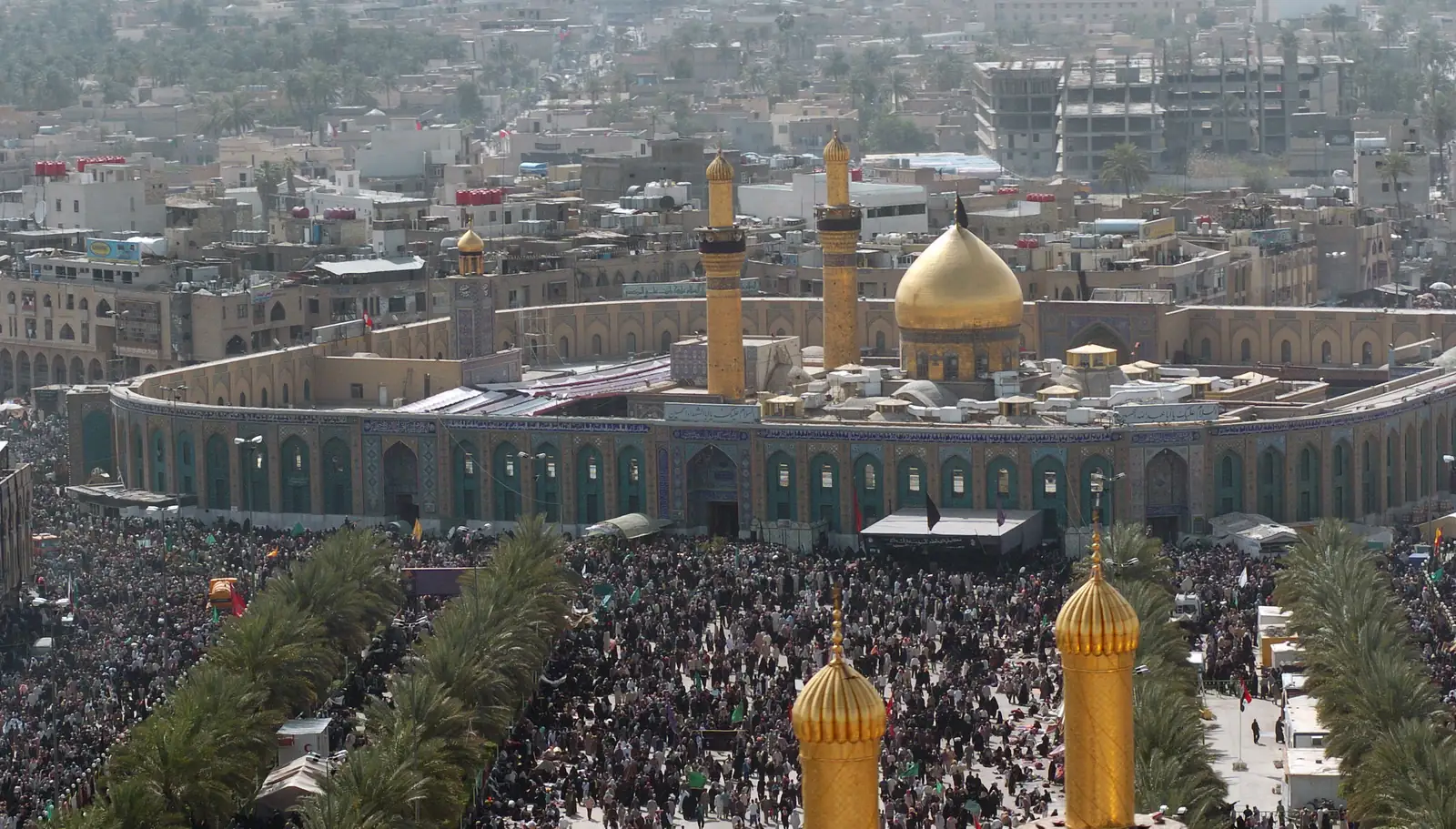
Every year, more than twenty million people converge on a city of under a million in central Iraq. Many walk the last 80 kilometers from Najaf to Karbala in summer heat, past roadside tents where strangers hand out free food and water. In August 2025 the shrine authority in Karbala counted 22.3 million visitors over nine days. It is the largest annual gathering of human beings anywhere on Earth.
They come to mourn a man killed on that spot in the year 680. His name was Hussein, he was the grandson of the Prophet Muhammad, and the army that cut him down belonged to a Muslim caliph. The quarrel that put him there came down to one question: who had the right to lead Islam after Muhammad died? It never got a shared answer, and the two answers Muslims gave became Sunni and Shia.
The meeting that picked a successor
Muhammad died in Medina in June 632, having spent twenty years turning quarreling desert tribes into one community with one faith and one government. He left no instruction naming the man who should take over. While his cousin Ali washed the body for burial, the leading men of the city met in a covered yard and picked somebody else: Abu Bakr, Muhammad's oldest friend and the father of his wife Aisha. They gave him the title caliph, meaning successor.
Two answers came out of that meeting. One held that the community picks its own leader, the most capable man available. That side became the Sunni, from sunna, the way of the Prophet. The other held that leadership belonged inside Muhammad's family, to Ali, his cousin and the husband of his daughter Fatima. That side became the Shia, short for shiat Ali, the party of Ali.
Both sides point at the same afternoon. Months before he died, at a watering place called Ghadir Khumm, Muhammad took Ali's hand in front of a crowd and called him mawla. Sunni and Shia scholars agree that he said the word, and have argued for fourteen centuries about whether it meant friend or master.
Ali waited twenty-four years for the job, and got it in 656 after soldiers killed the third caliph, Uthman, while he was reading the Quran. Within months he was fighting a Muslim army outside Basra raised in part by Aisha, Muhammad's widow and Abu Bakr's daughter, who accused him of shielding the men who had killed Uthman. In January 661 a man with a poisoned blade struck him during dawn prayer at Kufa, and he died two days later.
Karbala, and why losing built a religion
The caliphate went to Muawiya, the governor of Syria who had fought Ali for it, and he moved its capital to Damascus. Then he did something no ruler of the Muslim community had done before: he named his own son, Yazid, to follow him. The job meant for the best available man had become a family inheritance.
Hussein, Ali's son and Muhammad's grandson, refused to swear allegiance to Yazid. Letters began arriving from Kufa, the Iraqi garrison town that had been his father's capital, promising an army if he came to lead it. The cousin he sent ahead to count the support reported 18,000 men. Then Yazid's governor reached the town first, executed the cousin, and frightened the city into silence. The 18,000 evaporated. The news found Hussein already deep in the desert, with about seventy followers, most of them his own family. He kept going anyway.
On October 10, 680, on a dry plain at Karbala, the governor's army, roughly 4,000 men, caught his party in the open and cut it off from the Euphrates. After days in the heat, the soldiers killed nearly every male in the camp, including Hussein's infant son, hit by an arrow in his father's arms. Hussein's head was carried to Kufa, put on public display, and sent on to the caliph in Damascus.
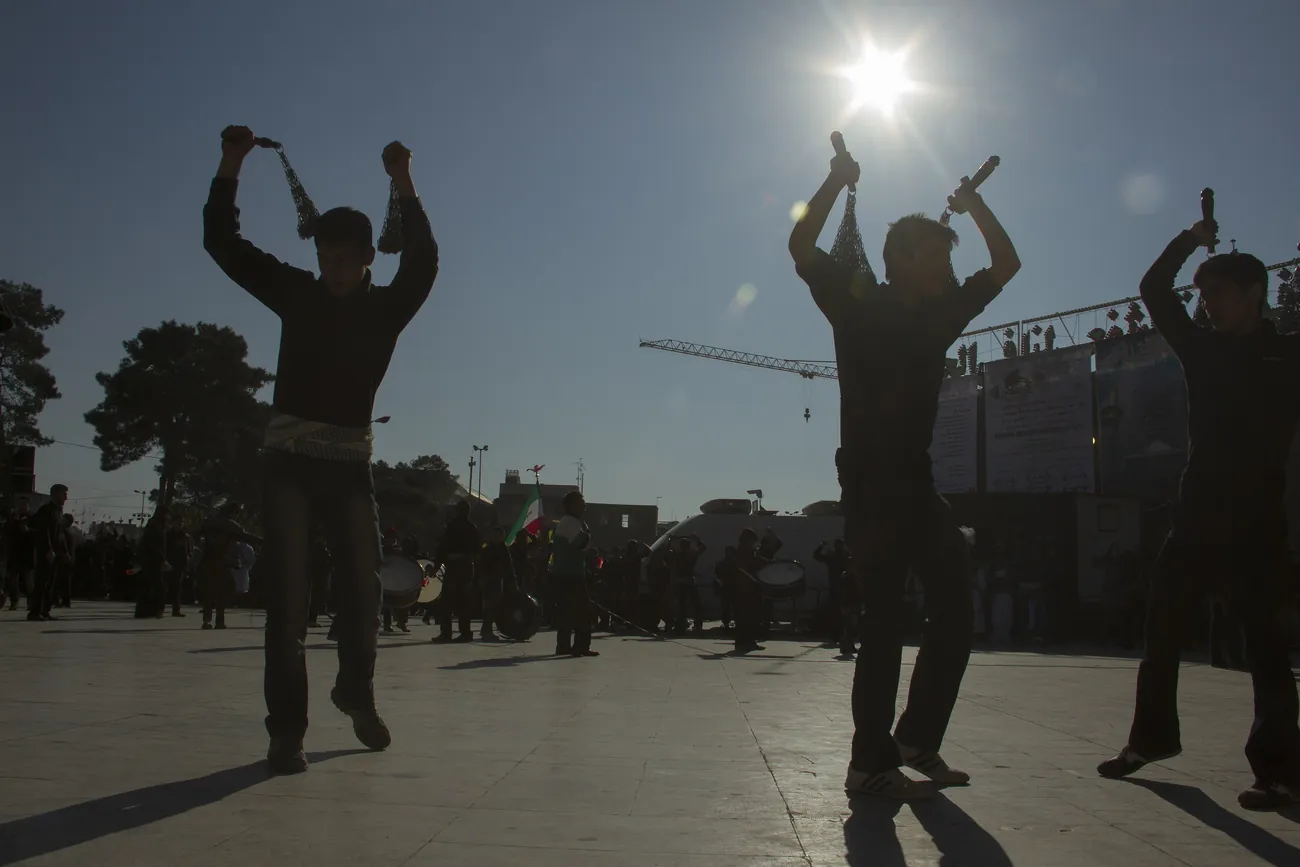
A skirmish of seventy-odd men against thousands should have been forgotten. Instead it became the founding story of a religion. Karbala handed Shia Islam a picture of the world it has never put down: real authority is stolen by the powerful, the honest few are crushed by a corrupt state, and death is better than submission.
What actually separates Sunnis and Shia
Less than most outsiders expect. The two branches share the Quran, the five pillars, the fasting month, and the pilgrimage to Mecca. Shia add a line to the call to prayer, fold the five daily prayers into three sittings, and keep a calendar of mourning that Sunnis do not.
The real difference is who is allowed to speak for God. Shia leadership passed after Ali through his descendants, called Imams. In 874 the eleventh of them died and his small son disappeared. Twelver Shia believe that twelfth Imam is still alive, hidden by God, and will return to set the world right. If the only fully legitimate ruler is in hiding, every government on Earth is a temporary arrangement, and for roughly a thousand years the senior Shia scholars drew that conclusion and stayed out of power.
Shia are 10 to 15 percent of the world's two billion Muslims, concentrated in a strategically loaded arc. Iran is over 90 percent Shia and Iraq about two thirds, and large Shia minorities live in Lebanon, Pakistan, northern Yemen, and the Eastern Province of Saudi Arabia, where the kingdom's oil is.
How the split got a border
For nine hundred years the two sides lived mixed together across the same cities and empires, and long stretches passed without sectarian violence. One dynasty changed that.
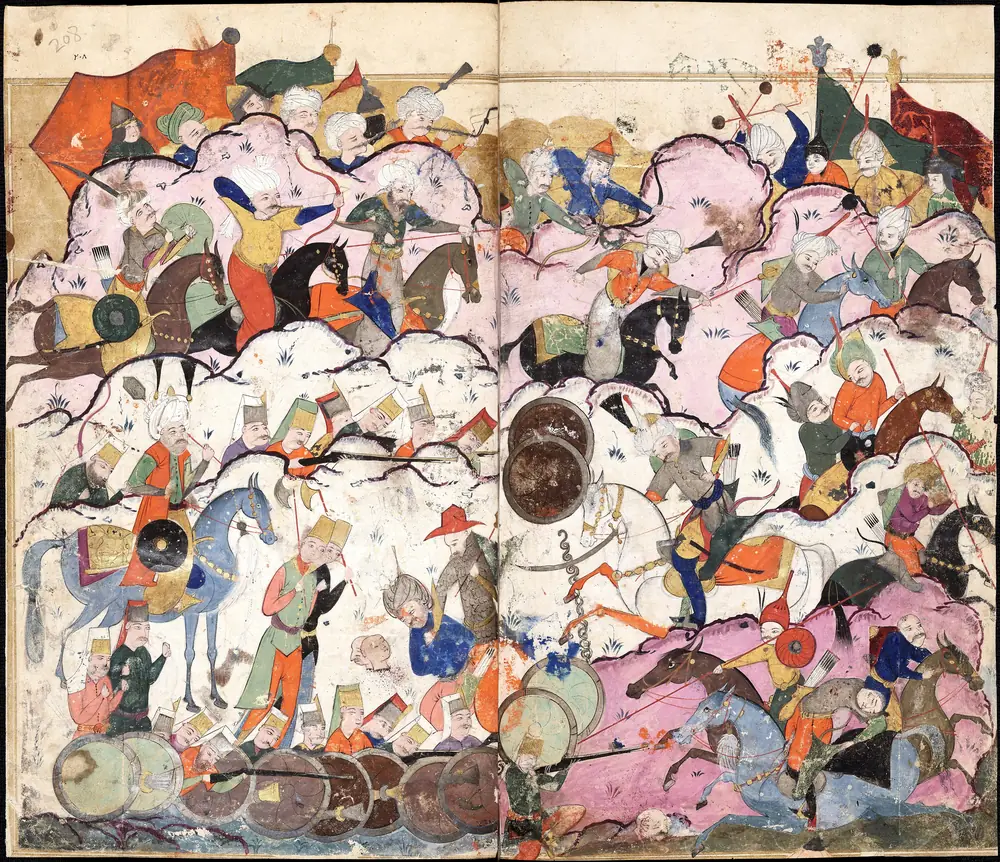
In 1501 a fourteen-year-old warlord named Ismail took Tabriz and declared himself shah of Persia. Persia was then mostly Sunni. Ismail ordered it Shia and enforced the order with exile, execution, and compulsory cursing of the first three caliphs from the pulpit. Turning the population genuinely Shia took another two hundred years.
The purpose was political. Ismail's enemy was the Ottoman Empire next door, the largest Sunni power in the world, and a separate religion gave his state an identity worth fighting for. The two empires fought on and off for more than a century, and the treaty that froze the front line in 1639 runs close to today's Iran-Iraq border. The difference was no longer just a belief. It was a border, with a state and an army on each side.
1979 and 2003: how the split got two governments
In 1970 an exiled Iranian cleric teaching in Najaf broke the thousand-year rule against clerical government. Ayatollah Khomeini argued that until the hidden Imam returned, the senior clergy should run the state themselves. Most grand ayatollahs of his generation thought he was wrong, and Iraq's leading cleric, Ali al-Sistani, still does. Khomeini also had money no Sunni preacher could match: Shia believers pay a religious tax of one fifth of their surplus income, half of it to a cleric of their own choosing, so senior Shia clergy answer to no government. Nine years later Khomeini was running Iran. Saudi Arabia answered by exporting Wahhabism, its own austere reading of Sunni Islam, to mosques and schools from Pakistan to Nigeria.
Then came 2003. Iraq has a Shia Arab majority, but for its entire modern history Sunni Arabs had held political power, under the Ottomans, the British, the monarchy, and Saddam Hussein. The American invasion dissolved that state, and the elections of 2005 produced a Shia-majority parliament for the first time.
What followed was the worst sectarian violence in modern Middle Eastern history. In February 2006 Sunni militants blew the golden dome off the shrine at Samarra, one of the holiest Shia sites in the world. Nobody died in the blast, and the revenge killings it set off made the next year the deadliest of the war for Iraqi civilians.
Where the line runs in 2026
In Iraq, every prime minister since 2005 has come from the Shia majority the American invasion put in charge, and the one approved in May 2026 was the choice of a bloc of Iran-aligned Shia parties.
Syria ran the same machinery in reverse. Bashar al-Assad's government rested on the Alawites, a sect loosely related to Shia Islam, and it fell to Sunni rebels in eleven days in December 2024. Three months later, gunmen worked down the Syrian coast knocking on doors and asking one question: are you Alawi? They killed more than 1,400 people.
Saudi Arabia and Iran have stopped pretending to get along. They restored relations in a deal brokered by China in March 2023, then broke again in the spring of 2026, when Iranian missiles hit Saudi territory during the war that closed the Strait of Hormuz. Weeks earlier, Yemen's Zaydi Shia Houthis had begun attacking ships bound for Saudi ports.
Even Iran does not pick its allies by sect. It armed Sunni Hamas for thirty years, and its costliest foreign commitment was Assad, whose value to Tehran was a supply road to Hezbollah rather than anything he believed.
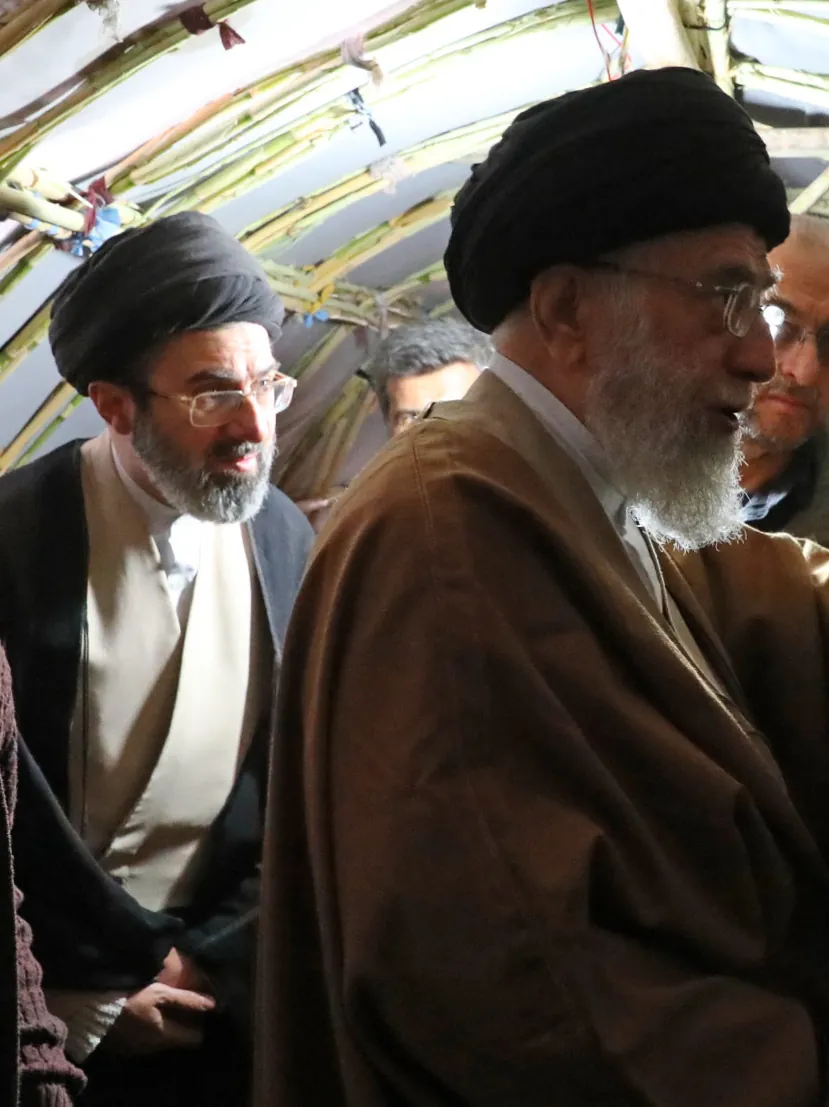
In March 2026, days after American and Israeli strikes killed Ali Khamenei, Iran's Assembly of Experts named his 56-year-old son Mojtaba the third supreme leader of the Islamic Republic. Members of the assembly objected that passing the office from father to son would make the republic look like a monarchy. They were outvoted. Writing in the Wall Street Journal, the Iran analysts Reuel Marc Gerecht and Ray Takeyh called it "the collapse of the last egalitarian pillar of the revolution, namely that the mullahs, unlike decadent Persian shahs, don't do dynastic succession."
In 680 Hussein rode into the desert and let himself be killed rather than accept a caliph who had inherited the office from his father. In 2026 the leadership of the world's only Shia theocracy passed from a father to his son, and the men who called that illegitimate lost the vote. The Sunni-Shia split is usually described as a religious quarrel. It began as an argument about who gets to hold power and how power is handed on, and fourteen centuries later that is still what it is.
Test what you learned
6 questions on this article. About two minutes, no signup.