
Papacy
The papacy is the office of the bishop of Rome, the oldest continuously functioning institution in the Western world.
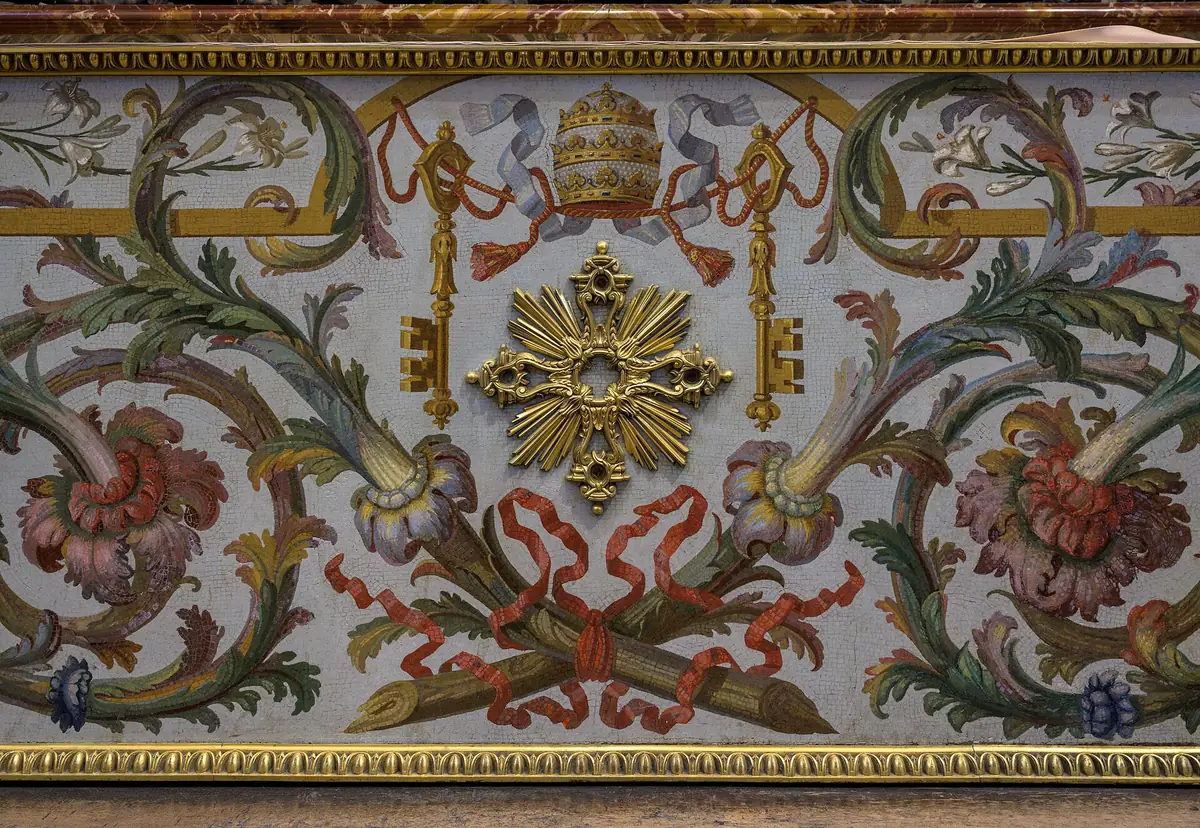
The papacy is the office of the bishop of Rome, the head of the Roman Catholic Church. No other institution in the West has operated without interruption for as long. The claim to authority traces back to the apostle Peter, whom tradition holds was the first bishop of Rome and was executed there around 64 AD. Since then, 267 popes have held the office. For roughly a thousand years the pope was the only authority in Europe whose reach crossed every kingdom, claiming spiritual power over all Christians. Today the pope leads about 1.4 billion Catholics and governs Vatican City, the world's smallest country, covering about 110 acres in the center of Rome. The current pope is Leo XIV, an American, elected in May 2025.
How the papacy became a political power
The claim rests on a line in the Gospel of Matthew. In it, Jesus calls Peter the rock of his church and hands him the keys to heaven. Each new bishop of Rome said he had inherited Peter's authority. Not all the evidence behind that claim was genuine. The Donation of Constantine was a forged document, likely written in the eighth century, claiming that the emperor had given the pope governing power over the western half of the Roman Empire. Popes cited it for centuries to justify ruling territory. In 1440 the humanist Lorenzo Valla exposed the forgery by showing that its Latin belonged to a much later period.
In 756 the Frankish king Pepin gave a large part of central Italy to the pope, making the bishop of Rome a territorial ruler. The territory that resulted, the Papal States, lasted for over a thousand years.
Papal power reached its peak in the 1000s and 1100s. Pope Gregory VII insisted that bishops answered to Rome, not to kings, and claimed the right to remove any ruler. When Henry IV of Germany rejected this, Gregory excommunicated him and declared the king's subjects free from any obligation to obey. In January 1077, Henry traveled to the castle at Canossa and waited barefoot outside in January snow for three days until the pope agreed to forgive him. A century later, Pope Innocent III wielded even greater authority. He chose who would become Holy Roman Emperor, shut England's churches until its king obeyed, and called the Fourth Crusade.
How the papacy lost its territory
Ruling territory brought popes into wars, alliances, and family rivalries. In 1309 the papacy relocated to Avignon, in southern France, where it fell under French control. The Great Schism that followed, from 1378 to 1417, left two men claiming to be pope, one in Rome and one in Avignon, each declaring the other excommunicated. For a time a third claimant appeared, meaning every Christian in western Europe was condemned by at least one would-be pope. A church council, not a pope, ended the split, raising the question of whether the pope truly held final authority in the church. The Reformation challenged that authority starting in 1517.
By 1870 Italian unification had absorbed the Papal States, and Italian soldiers occupied Rome. The pope would not recognize the new Italian state and withdrew behind the Vatican walls. He and his successors stayed there for fifty-nine years. In 1929 the Lateran Treaty, negotiated with Mussolini, created Vatican City as a sovereign state.
Stalin reportedly asked how many military divisions the pope commanded. The pope commanded none. That turned out not to matter. In June 1979, Pope John Paul II, the first Polish pope, returned to his home country. An estimated ten million Poles, more than a quarter of the population, turned out to see him. The Solidarity movement that helped end communist rule in Poland began fourteen months later.
Who is the pope today?
The current pope is Leo XIV. Born Robert Francis Prevost in Chicago in 1955, he joined the Augustinian religious order and moved to Peru as a young missionary. He spent roughly twenty years there, took Peruvian citizenship, and served as bishop of Chiclayo. In 2023, Pope Francis brought him to Rome to lead the Dicastery for Bishops.
Francis died on April 21, 2025, at 88. 133 of the 135 cardinals eligible to vote gathered in the Sistine Chapel and chose Prevost on the fourth ballot, on May 8. He picked the name Leo XIV, becoming the 267th pope and the first born in the United States.
How is a pope chosen?
The process is called a conclave, from the Latin for "with a key," because the cardinals are locked in, voting in the Sistine Chapel, until they have a result. Only cardinals under 80 may vote, and the winner needs a two-thirds majority. After each voting session the papers are burned. Black smoke from the chapel chimney tells the crowd outside that no one has won yet. White smoke means a new pope has been elected, and a senior cardinal steps onto the balcony of St. Peter's Basilica to announce the name.
The Holy See keeps diplomatic ties with 184 countries and sits as a permanent observer state at the United Nations, something no other religious institution does.