
Algerian War
The Algerian War (1954-1962) was an independence war against France that killed hundreds of thousands and brought Charles de Gaulle to power.
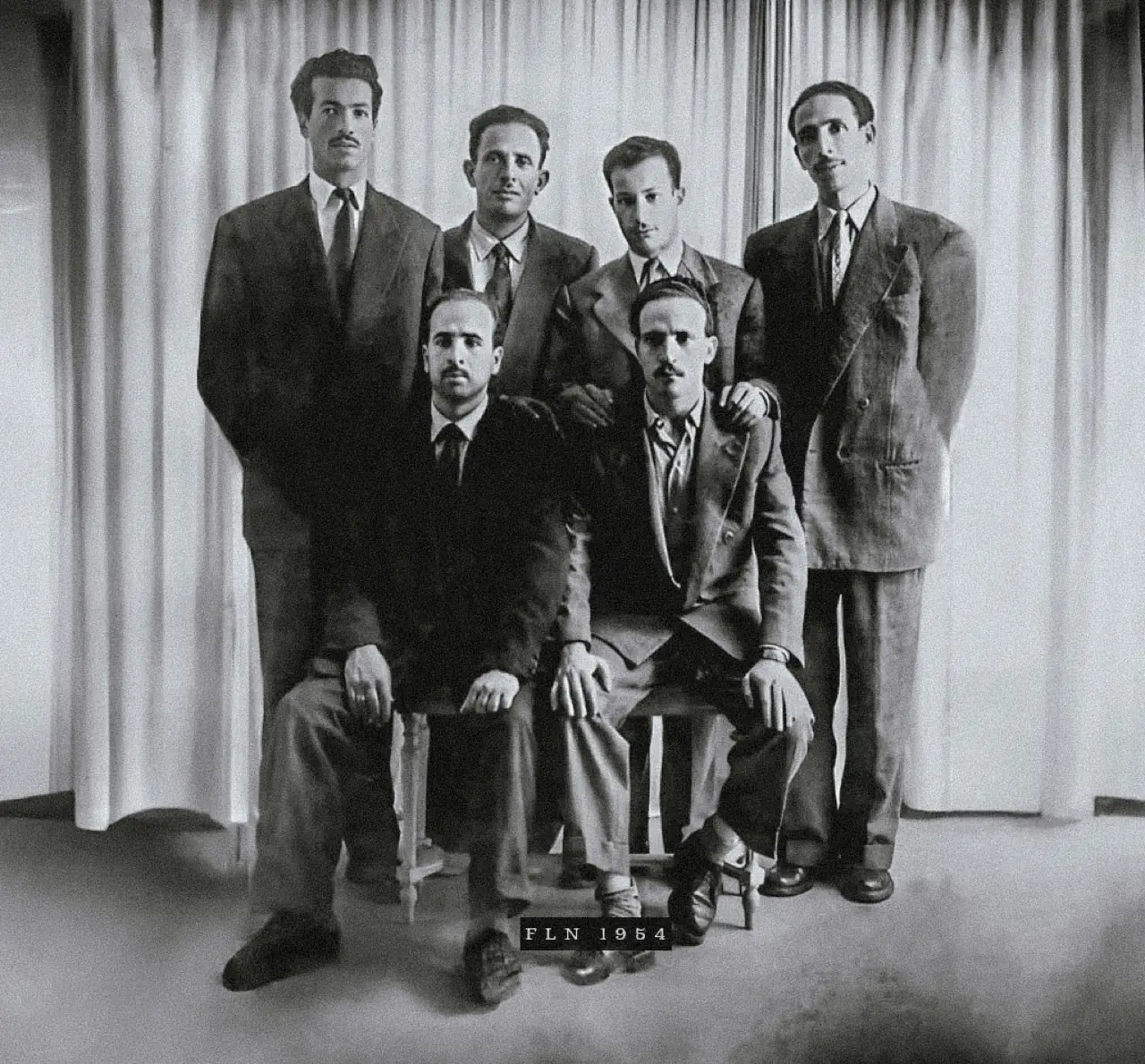
The Algerian War was fought from 1954 to 1962 between France and the Algerian National Liberation Front, known as the FLN. It ended 132 years of French rule and killed between 300,000 and 500,000 people, most of them Algerians. The war also destroyed the French Fourth Republic and brought Charles de Gaulle back to power.
What made the war different from other independence struggles was Algeria's legal status. Algeria was not legally a colony. French law classified it as three departments, on the same footing as any mainland region. About one million Europeans had settled there since 1830 and considered it home. Nine million Muslims lived alongside them as French citizens, but without equal rights. Giving up Algeria meant giving up territory that French law said was France. That is why the war lasted eight years, brought down a government, and nearly started a civil war inside France itself.
How the FLN started the war
The FLN announced itself on November 1, 1954, All Saints' Day, with coordinated attacks on French military and government targets across Algeria. The attacks were small and most of them failed, but they were spread across the country. The French government called the violence banditry, not war. France's government did not call it a war until 1999, decades after the fighting ended.
Within three years, nearly 500,000 French soldiers were in Algeria. The FLN fought as a guerrilla force in the countryside and carried out bombings in the cities. In 1956 the FLN launched a series of bombings targeting restaurants, bars, and gathering spots in Algiers. The French government responded by giving authority over law enforcement in Algiers to General Jacques Massu and his 10th Parachute Division.
Massu's paratroopers broke the FLN's network in the city through systematic torture, using electricity and water on prisoners to extract names and safe-house locations. The torture worked in military terms. It also became public. Henri Alleg, a newspaper editor who had been tortured by paratroopers, published a book in 1958, called La Question, that described what they did to him. The government banned it, but it circulated anyway. French conscripts who served in Algeria came home and talked about what they had seen. France had lived under German occupation only fifteen years earlier. Public support for the war began to crack.
How de Gaulle came to power and ended the war
On May 13, 1958, European settlers and army officers took over government offices in Algiers. They demanded a government committed to keeping Algeria French. The Fourth Republic, already weakened by more than twenty changes of government in twelve years, could not survive the crisis.
De Gaulle returned from retirement, assumed emergency authority, and drafted a new constitution for the Fifth Republic, which France still uses. He flew to Algiers and stood before a crowd of settlers. "I have understood you," he told them. The sentence was vague enough that the settlers heard a promise to keep Algeria, while others heard something different.
De Gaulle came to believe that holding Algeria was too expensive for France. He moved in stages toward recognizing Algerian self-determination. The settlers and military officers who had helped bring him to power turned against him. In January 1960, settlers built barricades in Algiers. In April 1961, four French generals attempted a coup. It failed because conscript soldiers refused to follow them. Survivors of the failed coup joined the OAS, the Organisation de l'armee secrete, which carried out bombings in Algeria and mainland France, with repeated attempts to assassinate de Gaulle.
France and the FLN signed the Evian Accords on March 18, 1962. Algerians voted for independence on July 1, 1962. De Gaulle formally accepted the result two days later.
How many people died in the Algerian War?
Estimates of how many people died vary widely and remain politically sensitive. French official figures put Algerian deaths at around 200,000. Many historians estimate between 300,000 and 500,000. The Algerian government's official figure is 1.5 million "martyrs," a number that functions as a symbol of the independence struggle more than as a historical estimate.
The war also uprooted more than a million people. After independence, around 800,000 Europeans left Algeria within months. Most of these pieds-noirs, as they were called, had never set foot in mainland France. Most left through Marseille.
The harkis, Algerian Muslims who had fought alongside the French army, suffered the worst outcome. About 250,000 had served on the French side. The French government largely abandoned them after independence. Perhaps 40,000 managed to reach France, where many lived in transit camps for years. Tens of thousands who stayed behind in Algeria were killed.
The Algerian War's legacy in France and Algeria
The war gave France the Fifth Republic, a political system built around a strong presidency that de Gaulle designed for himself. It also left decades of official silence. Starting in the 2000s, French presidents began acknowledging what the army did during the Battle of Algiers and France's failure to protect the harkis. They also addressed what happened on October 17, 1961, when police in Paris attacked an Algerian protest march and killed demonstrators.
Algeria's government has been run by the military establishment that won the war ever since independence. The ruling elite's claim to power, based on the independence struggle, has outlasted nearly everyone who fought in it. During the 1990s, after a younger generation of Algerians tried to vote the establishment out, the country fell into a civil war. Both countries are still shaped by the eight years between 1954 and 1962.