
Battle of Tannenberg
The Battle of Tannenberg was a German victory in East Prussia in August 1914 that destroyed a Russian army and made Hindenburg a national hero.
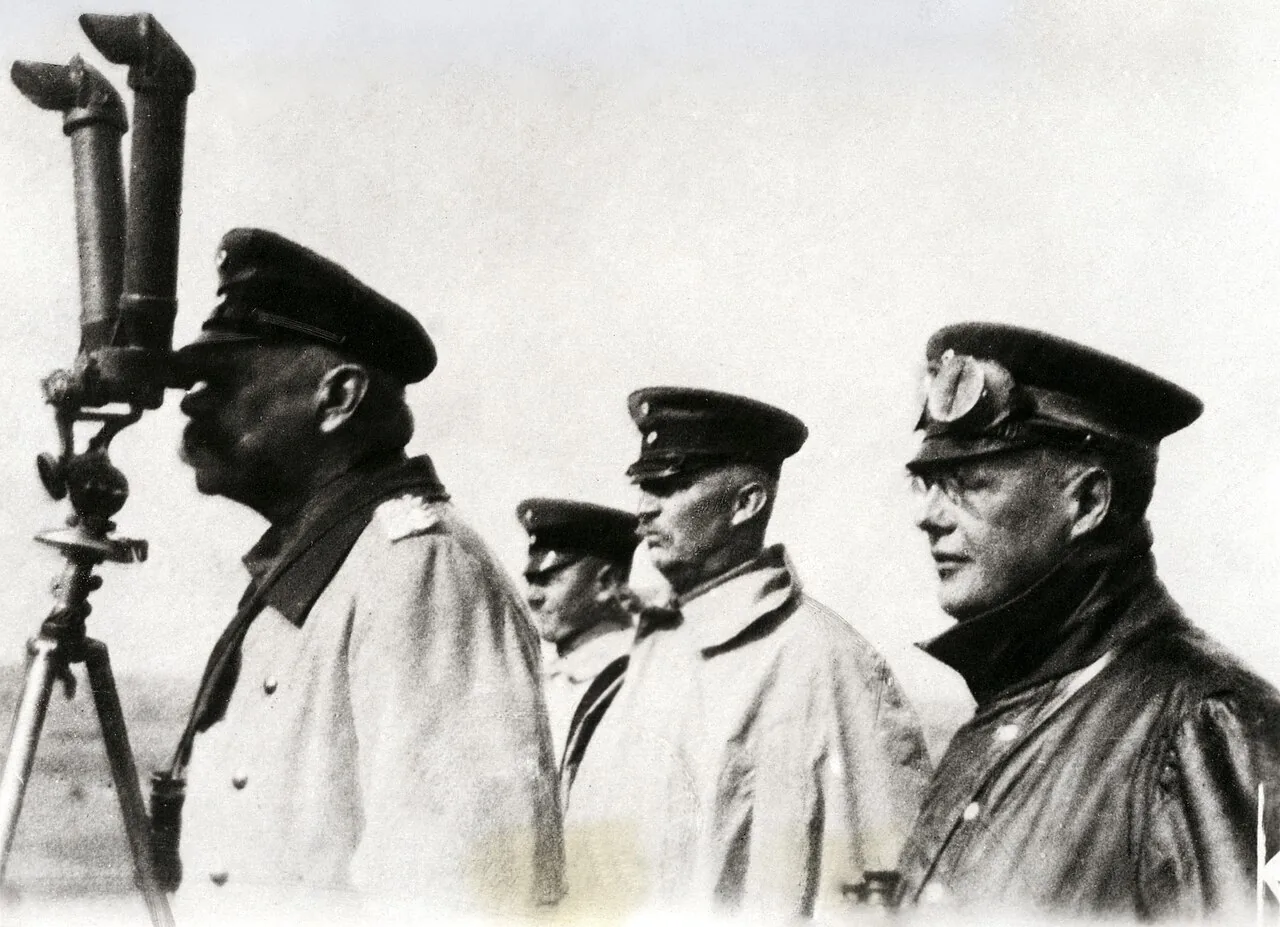
The Battle of Tannenberg was fought between Germany and Russia from August 26 to 30, 1914, in East Prussia, during the opening weeks of the First World War. A German army surrounded and destroyed almost the entire Russian Second Army in five days. Around 92,000 Russian troops were captured and 30,000 were killed or wounded. The Russian commander, General Alexander Samsonov, walked into a forest on the night of August 29 and shot himself rather than report the defeat to Tsar Nicholas II. German losses were about 13,000. No battle in the first months of the war was as lopsided. The victory turned Paul von Hindenburg, a retired general who had been recalled to lead the fight, into the most famous soldier in Germany.
How Germany destroyed the Russian Second Army
Germany's war plan, the Schlieffen Plan, assumed Russia would need six weeks to mobilize its army. Almost the entire German force went west to defeat France first, leaving only a single army, the Eighth, to hold East Prussia. Russia moved faster than expected. France pressed Russia to attack early, to draw German forces away from the western front. Russia sent two separate forces into East Prussia in a matter of weeks. General Paul von Rennenkampf led the First Army from the northeast. Samsonov led the Second Army from the south.
The Masurian Lakes, a chain of lakes and forests in southern East Prussia, separated the two Russian armies and made it difficult for either to help the other. Russian coordination was poor, and Russian units sent their orders by radio without encrypting them. Their cipher system had broken down, so they transmitted in the clear. German listening stations picked up the messages and read them all.
The first German commander of the Eighth Army, General Maximilian von Prittwitz, panicked and proposed retreating behind the Vistula River. That would have meant abandoning East Prussia entirely. The German high command replaced him on August 22 with Paul von Hindenburg, a 66-year-old general who had been retired for three years, and Erich Ludendorff to serve as chief of staff. The strategy they executed was largely the work of Lieutenant Colonel Max Hoffmann, a staff officer already on the ground who had drafted it before Hindenburg and Ludendorff arrived.
From the intercepted radio messages, Hoffmann knew that Rennenkampf's First Army to the north was moving slowly and could not reach the fighting for days. His plan was risky: leave only a thin cavalry screen facing Rennenkampf and move almost the entire Eighth Army south against Samsonov, partly by rail. East Prussia's dense railway network let the Germans shift soldiers south more quickly than Russian columns could cover the same ground on foot.
Samsonov believed he was chasing a retreating enemy and drove his center corps forward into an opening between his flanks. German forces closed on both sides. By August 29 the Russian Second Army was encircled in the forests and lakes near the town of Allenstein, and the pocket collapsed. Samsonov, lost in the woods with a small group of officers, shot himself that night. Of roughly 150,000 men in the Second Army, about 92,000 were captured, 30,000 were killed or wounded, and only around 10,000 escaped. The Germans also captured more than 350 Russian guns.
How the battle got its name
The fighting did not center on the village of Tannenberg. Hindenburg's staff chose the name because a combined Polish and Lithuanian force had crushed the Teutonic Knights near the same spot in 1410, in one of the largest battles of medieval Europe. Germans called that earlier defeat the Battle of Tannenberg. By giving the 1914 victory the same name, Hindenburg's staff presented it as revenge for a historic humiliation, five hundred years later. The framing was deliberate, and Germans embraced it. Tannenberg became one of the most celebrated battles in German history.
The significance of the Battle of Tannenberg
Tannenberg helped save East Prussia from Russian occupation, but the battle's most lasting consequences were political. The eastern front did not collapse. Russia rebuilt its forces and fought for three more years.
The battle's biggest product was Hindenburg himself. He became a national hero for a strategy he had no part in creating. He and Ludendorff gained increasing power during the war, and by 1916 the two generals controlled Germany's war effort as a military dictatorship in all but name. After the war, Hindenburg won the presidency of the Weimar Republic in 1925. In January 1933, he appointed Adolf Hitler as chancellor.
On the Russian side, Tannenberg was the first of several defeats that destroyed confidence in the tsarist military leadership. Nicholas II assumed direct command of the army in 1915, tying his own legitimacy to every failure that followed. The army collapsed in 1917, and the revolution that year ended the Romanov dynasty.
A large memorial was built at the battle site in the 1920s, and when Hindenburg died in 1934 he was buried there. The Nazis held rallies at the memorial in the 1930s. In January 1945, as the Red Army advanced into East Prussia, German troops removed Hindenburg's remains and partly demolished the memorial rather than let it be captured. The site is now near the town of Olsztynek in Poland. Almost nothing of the memorial remains.