
Belt and Road Initiative
The Belt and Road Initiative is China's global infrastructure program, launched in 2013, funding ports, railways, and power grids in about 150 countries.
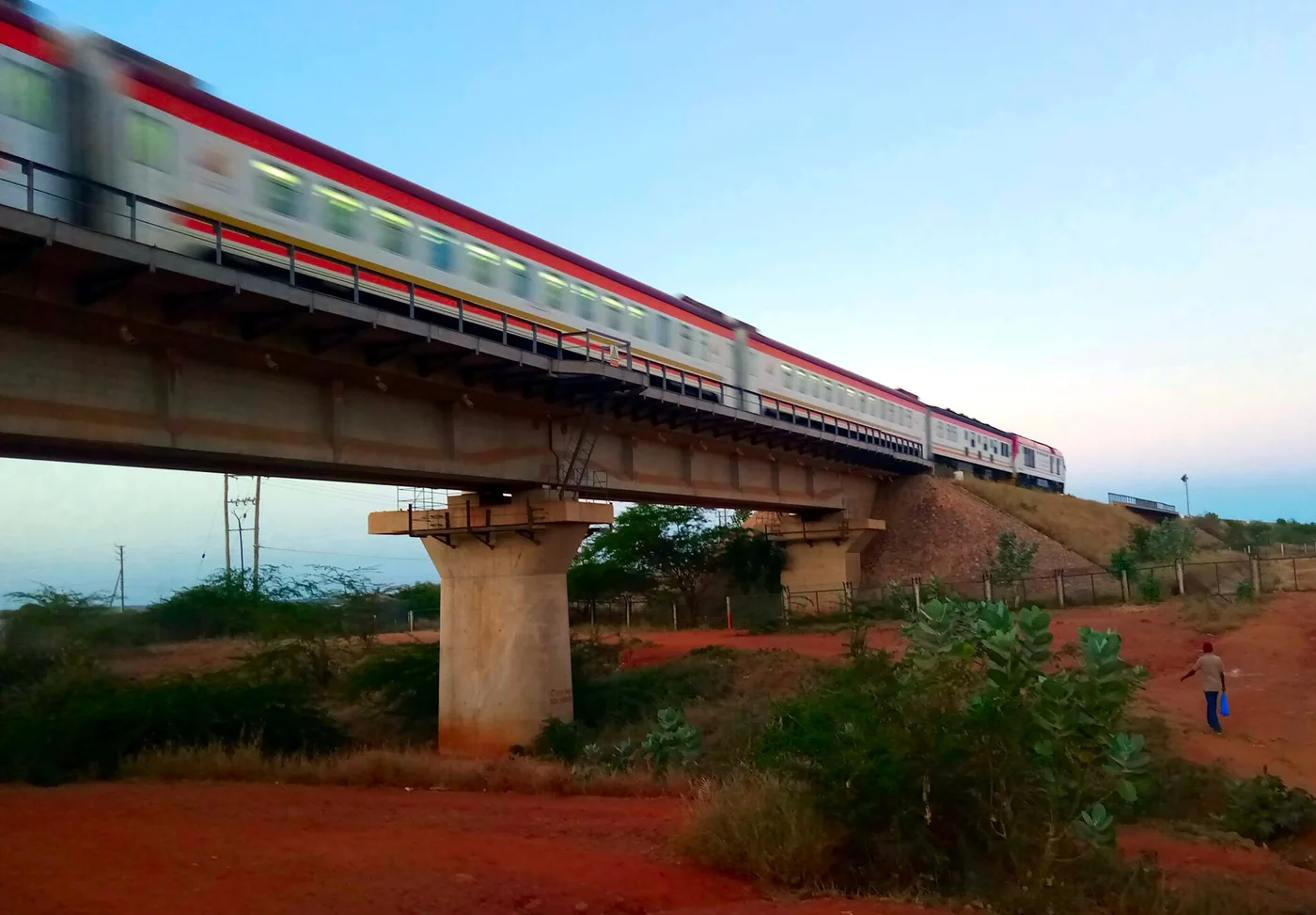
The Belt and Road Initiative is the largest infrastructure program any single country has ever attempted. China's president, Xi Jinping, announced it in two speeches in late 2013, less than a year after taking power. The first, at Nazarbayev University in Kazakhstan in September, called for building what he named the "Silk Road Economic Belt," a network of roads and railways connecting China to Europe through Central Asia. The second, to Indonesia's parliament in October, laid out his vision for a maritime counterpart, which he called the "21st Century Maritime Silk Road," connecting China by sea to Southeast Asia, the Indian Ocean, and East Africa. Together they became a single program to finance and build ports, railways, pipelines, and power grids across the developing world. About 150 countries have signed on. By the end of 2025, cumulative Chinese construction contracts and investments under the Belt and Road banner had reached roughly $1.4 trillion. The name invokes the ancient Silk Road, the trading network that once connected China to Europe overland.
Why China launched the Belt and Road
By 2013, China had spent two decades building roads, railways, and cities at home. Its state construction firms had built up a huge oversupply of steel, cement, and workers, with less and less to build domestically. Exporting that capacity, by lending money to other countries and sending Chinese firms to do the work, kept those companies employed. That was the most straightforward motive.
The second was energy security. Most of China's oil arrives by tanker through the Strait of Malacca, the narrow waterway between Malaysia and Indonesia that the United States Navy could shut in a conflict. To reduce that vulnerability, China has built oil and gas pipelines across Central Asia and into Myanmar, developed a port at Gwadar on the Pakistani coast, and laid railway connections spanning the continent.
The third motive was financial. China had accumulated enormous dollar reserves, mostly held in low-yielding US Treasury bonds. Lending those reserves as infrastructure loans, increasingly denominated in China's own currency, the renminbi, earned higher returns and created a financial network that runs parallel to the roads and ports.
The fourth, and the one Beijing discussed least publicly, was political influence. A country whose port, power grid, and railway were financed by Chinese banks and built by Chinese firms has reasons to side with China in votes at the United Nations or to stay quiet about issues Beijing considers sensitive. The infrastructure creates a relationship that lasts decades, reinforced every time the borrower makes a loan payment or calls a Chinese maintenance contractor.
Is the Belt and Road a debt trap?
The most common criticism of the Belt and Road is the "debt-trap diplomacy" argument: that China deliberately lends unpayable amounts so it can seize assets when borrowers default. The case cited most often is Hambantota, a port in southern Sri Lanka. Sri Lanka was struggling to service its debts, and in 2017 it signed a 99-year lease giving a Chinese company control of Hambantota.
Researchers who have studied China's loan books mostly tell a different story. Deborah Brautigam of Johns Hopkins University and other scholars have found that the lending was reckless rather than calculated. China's state lenders funded projects that made little commercial sense, in many cases because the borrowing government pushed for a new airport or stadium ahead of an election. The loans involved weak risk assessment and little coordination across dozens of Chinese banks and agencies. Sri Lanka's broader debt crisis was caused more by bonds sold to Western investors than by the Chinese loans themselves.
That does not mean the loans carry no leverage. Chinese loans are frequently tied to commodity revenues as collateral. They carry confidentiality clauses. And they are renegotiated one-on-one between Beijing and the borrower instead of going through the Paris Club, the forum where Western creditors jointly negotiate debt relief. That gives China a one-on-one relationship with each borrower, outside the shared system other creditors rely on.
Belt and Road Initiative today
New lending under the initiative peaked around 2016, when Chinese state-backed loans totaled more than $50 billion in a single year. After that it fell sharply. Dozens of borrowing countries fell into debt distress, and China found itself rolling over loans and sending rescue funds to keep its own borrowers from defaulting. By 2020, many Western analysts declared the program finished.
They were wrong. In 2025, Belt and Road engagement hit a record $213.5 billion in new contracts and investments, the highest total in any year since the program began. The new wave of spending has shifted toward energy and mining, with energy-related deals alone reaching $93.9 billion in 2025.
Italy, the only G7 country to have joined the initiative, withdrew in December 2023 after its exports to China failed to grow as expected. The G7 has launched a competing program, the Partnership for Global Infrastructure and Investment, aiming to mobilize $600 billion by 2027. The European Union's Global Gateway, the largest part of that effort, announced in 2025 that it had met its initial 300 billion euro target. Neither has yet matched the pace of Chinese construction on the ground. The Orbis blog has a fuller account of where the Belt and Road stands in 2026.
The infrastructure already in place includes the Mombasa-to-Nairobi railway in Kenya, ports across the Indian Ocean, and power grids in Central Asia. Much of it runs on Chinese engineering standards, Chinese-made equipment, and maintenance contracts held by Chinese firms. Those ties between China and the countries that host the projects will last for decades, regardless of what happens to Chinese lending.