
Chechen Wars
The Chechen wars were two conflicts between Russia and Chechen separatists, fought from 1994 to 2009, that destroyed Grozny and brought Putin to power.
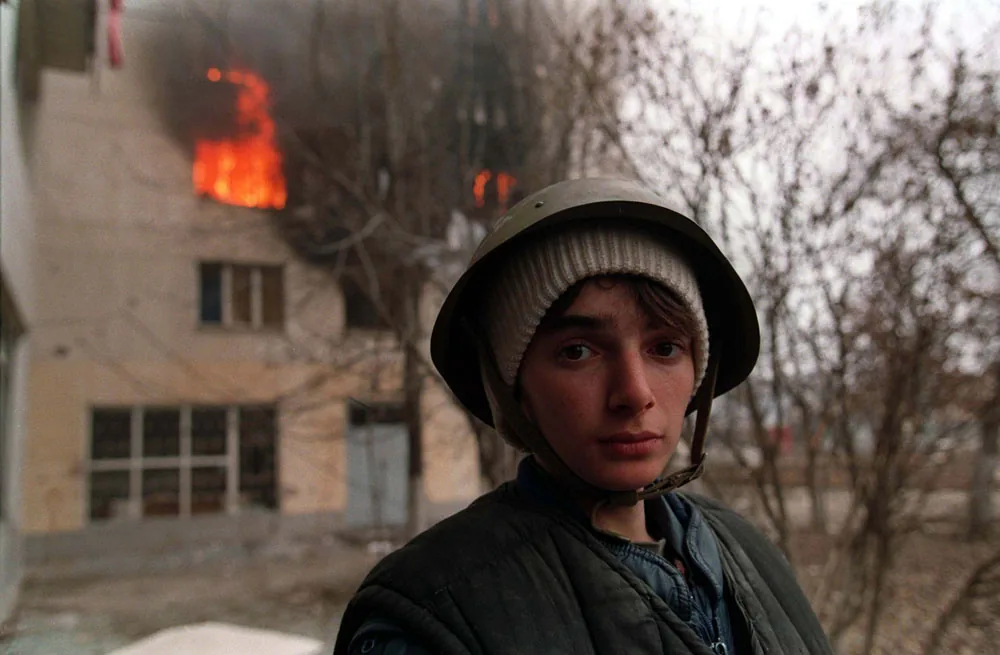
The Chechen wars were two conflicts between Russia and Chechen separatists in the North Caucasus. The first lasted from 1994 to 1996 and ended in a Russian defeat, the first time Moscow lost a war to a domestic rebellion. The second began in 1999 and ended with Russia leveling the Chechen capital, Grozny, and installing a local strongman to govern the territory. Together the wars killed tens of thousands of civilians and thousands of soldiers. They brought Vladimir Putin to power and produced the methods of urban destruction that Russia later used in Syria and Ukraine. Chechnya is about the size of Connecticut, with roughly 1.5 million people, on the northern slope of the Caucasus Mountains. Russia took control of it after decades of war in the nineteenth century, and resistance continued long afterward.
How Russia lost the first Chechen war
In February 1944, Stalin ordered every Chechen and Ingush person deported to Central Asia, accusing them of collaborating with Germany. About a quarter of the deportees died. Survivors were allowed to return in 1957, but the memory of the deportation shaped everything that followed.
When the Soviet Union collapsed in 1991, the Chechen republic declared independence under Dzhokhar Dudayev, a former Soviet air force general. Moscow tolerated this for three years. In December 1994, Russia invaded. The defense minister, Pavel Grachev, claimed one airborne regiment could take Grozny in two hours.
The assault on Grozny on New Year's Eve 1994 was a disaster. Armored columns of conscripts entered the city without maps, without infantry support, and without a clear chain of command. Chechen fighters destroyed them street by street, and one Russian brigade was effectively wiped out. Russia then turned to artillery and airstrikes, flattening large parts of Grozny and killing thousands of civilians, including ethnic Russian residents who could not leave.
The war dragged on for two years. Chechen fighters carried it into Russia: in June 1995, the commander Shamil Basayev seized a hospital in the town of Budyonnovsk with more than 2,000 hostages and negotiated safe passage home on live television. In April 1996, Dudayev was killed by a Russian missile that homed in on his satellite phone signal. But the war was already lost. That August, Chechen fighters retook Grozny. Russia signed the Khasavyurt Accord on August 31, 1996, withdrew its troops, and postponed the question of Chechnya's status for five years. The war, covered freely by the Russian press, cost President Boris Yeltsin what remained of his public support.
How the second Chechen war brought Putin to power
After the withdrawal, de facto independent Chechnya collapsed into warlordism. Kidnapping became the main economy. Foreign jihadists arrived, turning the cause from national independence toward religious war.
In August 1999, Basayev and a Saudi commander known as Khattab led fighters into neighboring Dagestan. In September, apartment buildings in Moscow, Buynaksk, and Volgodonsk were bombed at night, killing 307 people. The government blamed Chechen terrorists. Some journalists and investigators alleged that Russia's security services were involved, but several of those who pursued the question died under suspicious circumstances, and the case has never been resolved.
Vladimir Putin had been prime minister for barely a month and was almost unknown to the Russian public. He promised to destroy the terrorists and launched a second invasion in October 1999. The war made him president. He was elected in March 2000.
Russia fought the second war with overwhelming force. Russian artillery and air power pounded Grozny for months until it fell in February 2000, with almost nothing left standing. In 2003 the United Nations called it the most destroyed city on earth. Moscow handed local control to Akhmad Kadyrov, a former separatist mufti who had switched sides, and relied on Chechen forces to fight the remaining insurgency.
The violence spread beyond Chechnya. In October 2002, Chechen fighters seized a Moscow theater and took more than 900 hostages. Russian forces pumped a chemical agent into the building and stormed it, killing the attackers but also 132 hostages, most of whom died from the gas. Kadyrov was killed by a bomb in Grozny on May 9, 2004. Four months later, fighters seized a school in Beslan, North Ossetia, taking more than 1,100 people hostage, most of them children. The siege ended in a battle that killed 334 people, 186 of them children. By then, Kadyrov's son Ramzan had taken control of Chechnya's security forces. He became president in 2007.
Who won the Chechen wars?
Russia won the second war militarily, but the result was not a return to normal Russian governance. Ramzan Kadyrov runs Chechnya as a personal domain, with his own armed forces funded by federal money from Moscow. He answers to Putin personally, not to Russia's regular chain of command. In September 2026, he was re-elected with 99.85% of the vote. Human rights organizations have documented widespread abuses under his government, including the persecution of journalists and gay men.
Kadyrov's forces have been deployed in Ukraine since 2022, including in Bakhmut and Kharkiv. The methods Russia developed in Grozny, destroying a city with bombardment rather than fighting through it, reappeared in Aleppo in 2016 and in Mariupol during the war in Ukraine.
The human rights group Memorial estimated that up to 75,000 civilians died across both wars. Estimates of Russian soldiers killed range from about 10,000 to 40,000. Grozny has been rebuilt with federal money. Chechnya remains formally part of Russia, governed by a family that once fought against it.