
Why did the Soviet Union collapse?
The USSR had 30,000 nuclear weapons and the world's second-largest army. Within three months it dissolved without a war. Here is how a superpower talked itself out of existence.
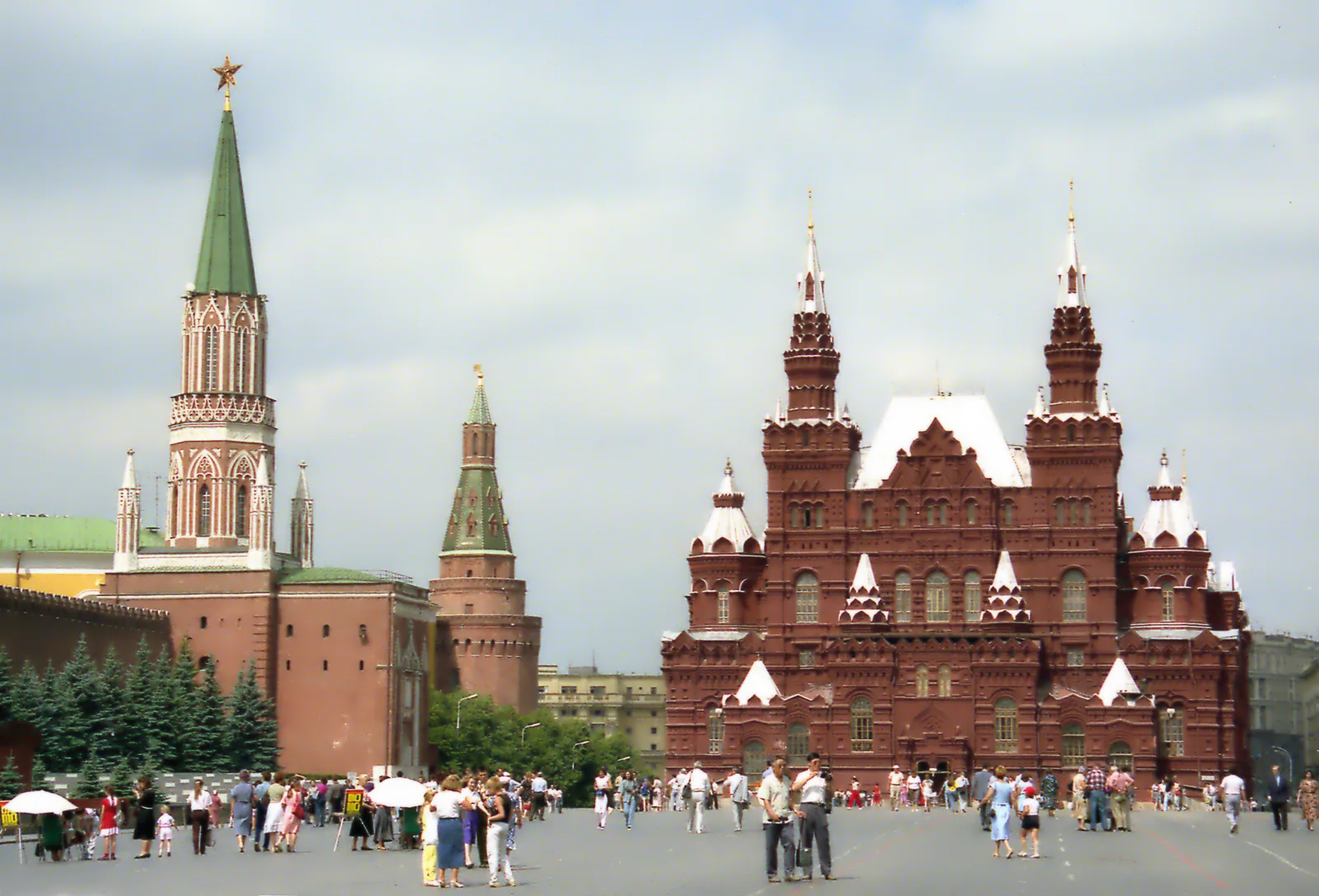
At 7:32 in the evening on December 25, 1991, a soldier lowered the red Soviet flag from the dome of the Kremlin Senate and raised the Russian tricolor in its place. There was no battle, no foreign army at the gates, no shell damage to the walls. The largest country on Earth, a superpower with the world's second-largest military and more than 30,000 nuclear warheads, had voted, argued, and signed itself out of existence in the space of a few months. Empires almost never end this way. The Habsburgs and the Ottomans went down in war and partition. The Soviet Union went down with a flag change and a resignation speech.
The rot no one outside could see
From the outside, the USSR of the early 1980s still looked like a monolith: tanks in Red Square, missiles in silos, a bloc of satellite states stretching to the middle of Germany. Inside, the system was failing. Official growth figures were positive; the real economy, as party economists quietly admitted, was stagnant or shrinking. To hide that gap, the system leaned on one thing above all, and that was oil. By the mid-1980s petroleum and gas made up close to 60 percent of Soviet export earnings, the hard currency that bought Western grain, machinery, and technology.
Then the floor fell out. In 1986 the world oil price collapsed from over $30 a barrel to under $10, and a large share of Moscow's foreign income vanished with it. On top of that sat a war in Afghanistan draining money and returning coffins, and a leadership that was literally dying of old age: three general secretaries, Brezhnev, Andropov, and Chernenko, died in the span of thirty months, each frailer than the last. The men running a twentieth-century superpower were too old and too sick to change its direction.
Gorbachev tried to save it, and broke it
When the party reached past the old men in 1985, it picked Mikhail Gorbachev, at 54 the youngest man in the senior leadership. He was not a closet liberal. He was a committed communist who believed the system had drifted off course and could be fixed with more honesty and more efficiency. His two famous reforms were meant as tools for that repair. Glasnost, openness, was supposed to let the press expose the corrupt officials blocking change. Perestroika, restructuring, was supposed to loosen the command economy just enough to make it work.
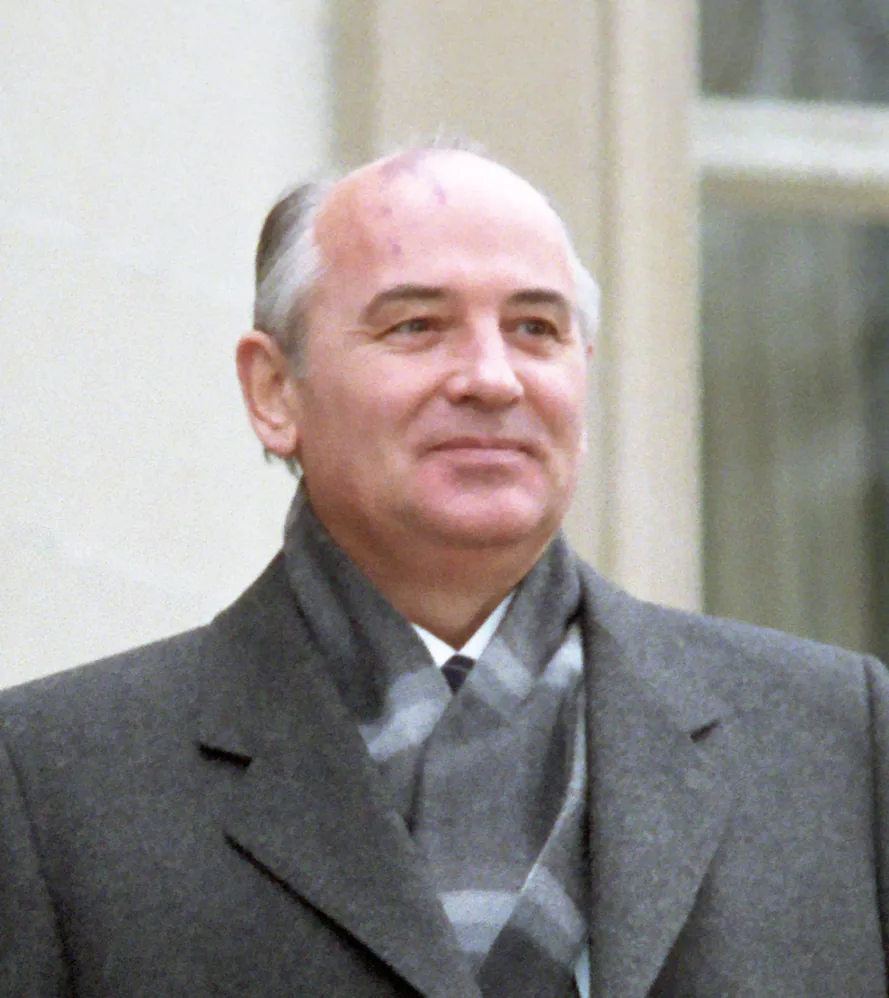
Both did the opposite of what he intended. Once you allow honest discussion in a country that has been lied to for seventy years, you cannot decide where the honesty stops. Newspapers began printing the truth about the Gulag and the purges; the non-Russian republics began asking why their languages and histories had been crushed. The economy, given half a market and half a plan, delivered neither: factory managers used their new freedom to raise prices and cut output, and the shortages got worse, not better. This is the trap of reforming a system built on control. Loosen the grip enough to fix it, and you remove the very thing holding it up.
Chernobyl, and the end of the lie
The turning point came from a reactor. When Chernobyl's reactor number 4 exploded in April 1986, the Soviet state did what it always did: it suppressed, minimized, and delayed. Local officials sent reassuring reports upward while the reactor burned. Pripyat, the town next door, was not evacuated for thirty-six hours. It took Swedish scientists detecting the radioactive cloud drifting over Scandinavia to force Moscow to admit what had happened.
Every instinct that made the disaster worse, the secrecy, the false reports, the fear of telling a superior bad news, was exactly what glasnost was supposed to cure. Gorbachev drew the obvious lesson and pushed openness further and faster. The old habit of control had just nearly poisoned a continent, and it could no longer be defended.
The republics walk out the door
Here is the part that surprises people. The Soviet Union was not conquered from outside or overthrown from below. It was dissolved, legally, by its own member republics, using a mechanism written into its founding document. When Lenin built the USSR in 1922, he insisted, over Stalin's objections, on a federation of formally sovereign republics rather than territories simply swallowed into Russia. On paper, each republic had the right to leave. For sixty-nine years that clause meant nothing. In 1991 it became the exit.
The Baltic states went first, declaring independence outright. The decisive blow came from Ukraine. On December 1, 1991, Ukrainians voted on independence and 92 percent said yes, including a majority in Crimea and 83 percent in the heavily Russian-speaking east. That number destroyed the story that only western nationalists wanted out. And it was fatal arithmetic: Ukraine, with Russia and Belarus, was the core of the whole union. Without it, there was no union left to save.
The coup that proved the state was hollow
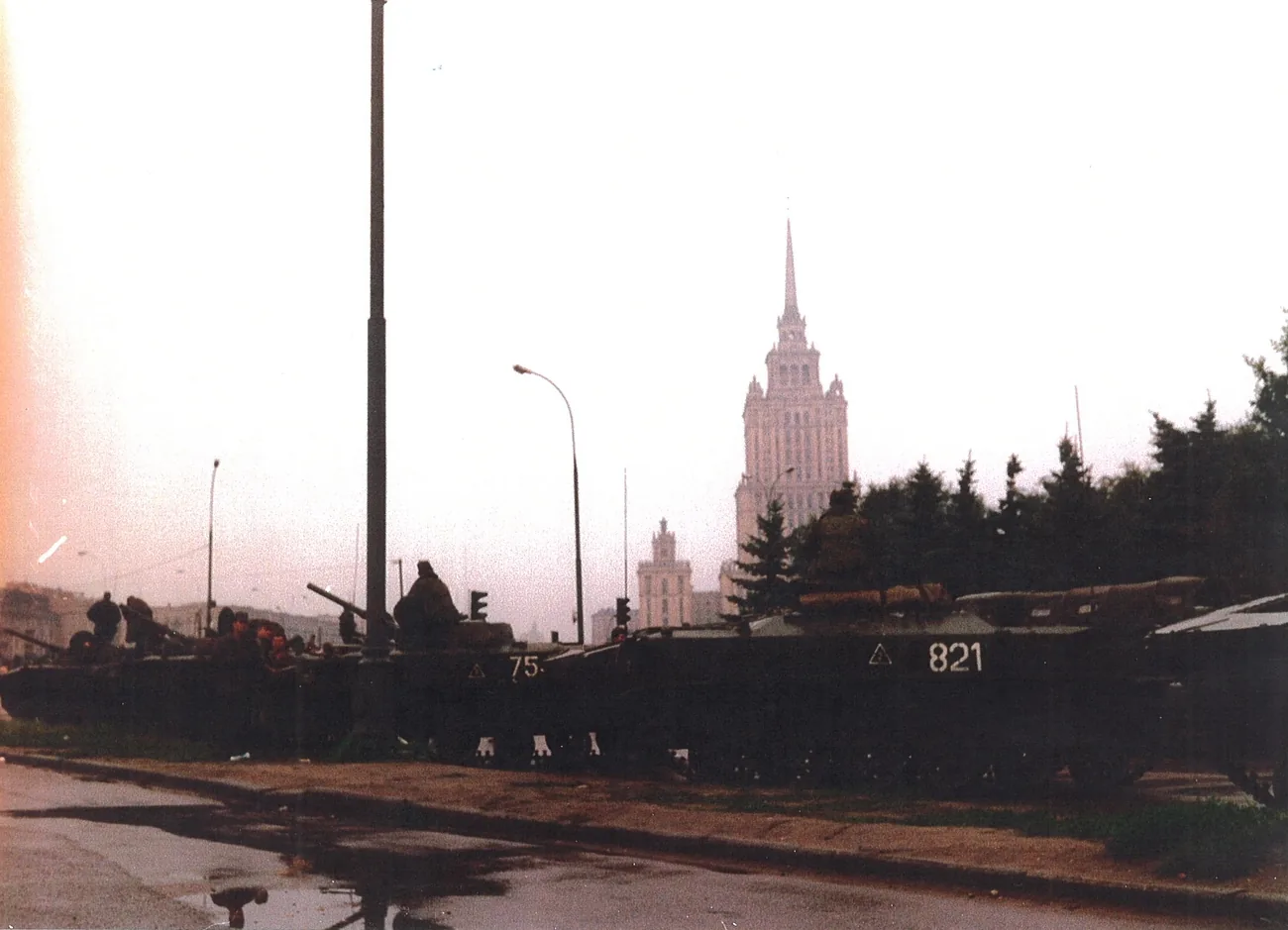
The hardliners saw it coming and tried to stop it. On August 19, 1991, eight of the most powerful men in the country, the KGB chief, the defense minister, the prime minister, announced that Gorbachev was ill and that they were taking over. They had every instrument of Soviet power in their hands. They lost in about sixty hours.
They failed because they were incompetent, and because the system underneath them had rotted. They did not arrest Boris Yeltsin, the elected leader of the Russian republic, who drove to the parliament building, climbed onto one of their own tanks, and read out a statement calling the coup illegal. The image went around the world that night. The plotters did not cut the phone lines or the broadcasts. Tank crews sent to intimidate the crowd ended up chatting with it. The apparatus that had rolled tanks into Budapest in 1956 and Prague in 1968 simply would not move for Moscow in 1991. The formal power was all still there. The human willingness to use it was gone.
Three men in a hunting lodge
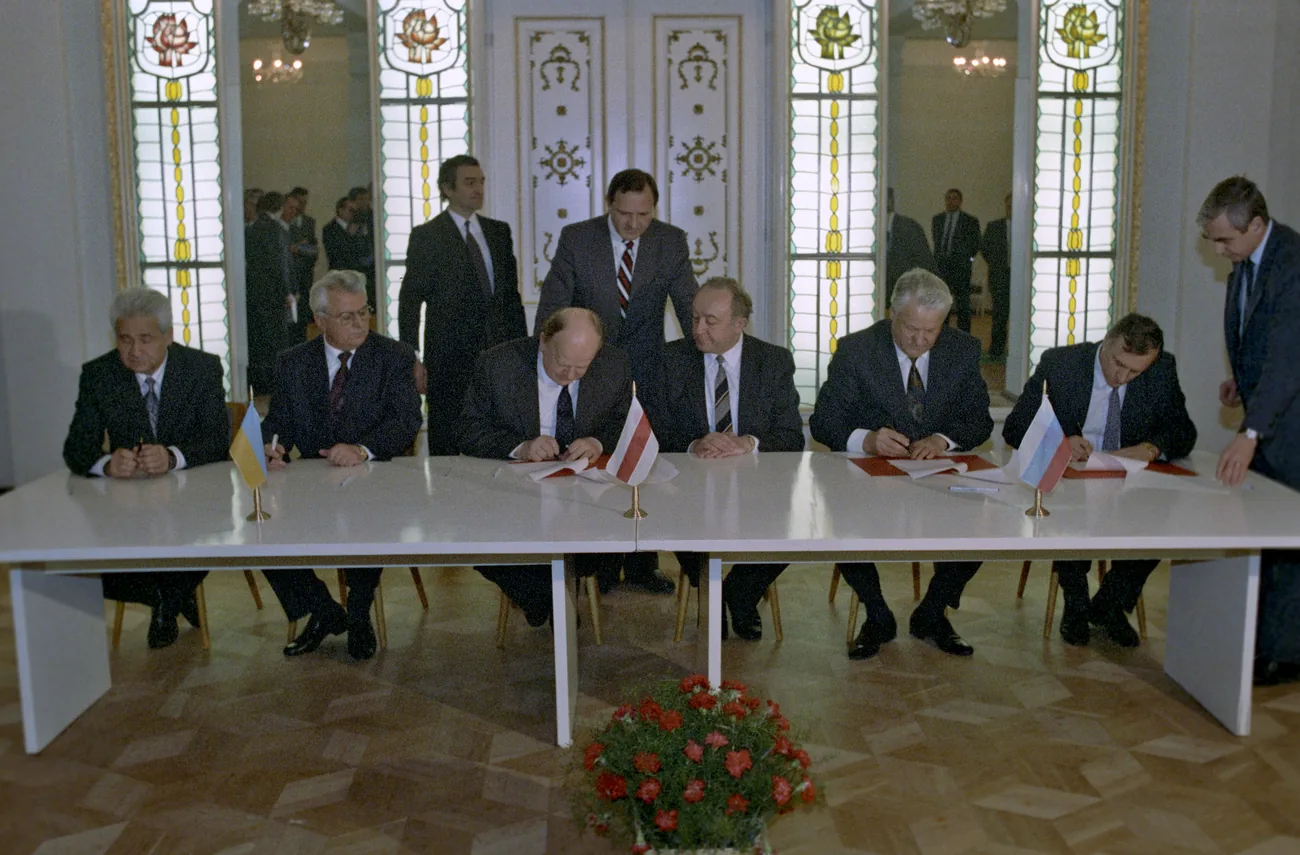
The coup was the last time anyone tried to hold the union together by force. What finished it was a signature. On December 8, 1991, Yeltsin of Russia, Leonid Kravchuk of Ukraine, and Stanislav Shushkevich of Belarus met at a hunting lodge in the Belavezha Forest and declared that the Soviet Union had ceased to exist, replaced by a loose Commonwealth of Independent States. They did not ask Gorbachev. They informed him afterward, and called the American president before they called their own. Two weeks later, eleven republics ratified the arrangement.
Gorbachev was now president of a country that its founding members had just voted out of existence. On Christmas Day he resigned on television. "The old system collapsed," he said, "before the new one had time to begin working." Twenty-two minutes later, the flag came down.
Why a flag change still shapes 2026
The tidy Western story is that clever strategy in Washington won the Cold War. The evidence points elsewhere: the Soviet Union fell for Soviet reasons, a broken economy, an oil shock, a reformer who set loose forces he could not control, and a coercive apparatus that lost the will to coerce. The West mattered at the margins. The decisive choices were made in Moscow.
That is exactly why the collapse is not settled history. Vladimir Putin, a KGB officer stationed in East Germany when the wall opened, called the Soviet breakup "the greatest geopolitical catastrophe" of the twentieth century in 2005. His project since has been to reverse its verdict: Chechnya, Georgia in 2008, the seizure of Crimea in 2014, and the full invasion of Ukraine in 2022, the very republic whose 1991 vote made the union impossible. The nuclear warheads that were spread across those republics became their own crisis, one that shaped Ukraine's fateful decision to give up the world's third-largest nuclear arsenal. A superpower can dissolve in an afternoon. The argument over what its dissolution meant can run for generations, and in Ukraine it is being settled by force.
Test what you learned
5 quick questions on this article. No signup, just you against the text.