Joseph Stalin
Joseph Stalin was the Soviet dictator who industrialized the USSR through forced labor and famine and led it through World War II.
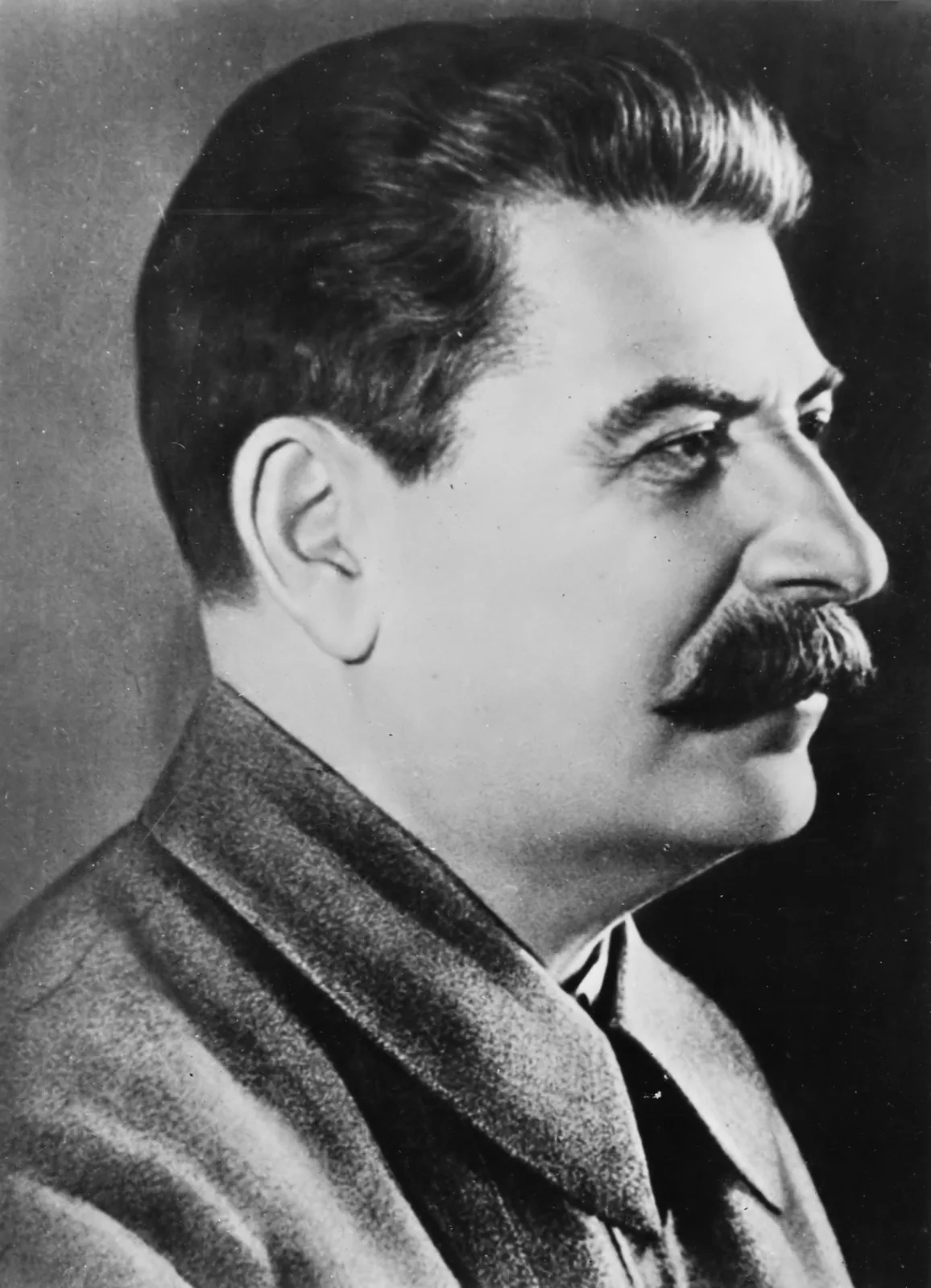
Joseph Stalin ruled the Soviet Union as its dictator from the late 1920s until his death in 1953. He was born Ioseb Jughashvili in 1878 in Georgia, the son of a cobbler. He forced the country through rapid industrialization at the cost of millions of lives, collectivized agriculture in a program that caused mass famine, and ran a system of terror that executed or imprisoned anyone he considered a threat. He also led the Soviet Union through World War II, in which the country lost about 27 million people but emerged as one of the world's two superpowers.
How Stalin took control of the Soviet Union
Stalin was not the man most Bolsheviks expected to lead the country after Lenin. He had trained for the priesthood at a seminary in Tbilisi before dropping out to become a revolutionary. His rivals, above all Leon Trotsky, were charismatic writers and speakers. Stalin was a quiet organizer. He held the post of General Secretary, a role that sounded bureaucratic but controlled who joined the Communist Party and who rose within it. He used that power to fill the party with his own supporters. By about 1929 he had pushed Trotsky into exile and removed every serious rival. He would rule unchallenged for the next twenty-four years.
How Stalin industrialized the Soviet Union
Stalin believed the country had to industrialize quickly or be destroyed. In 1931 he told a gathering of industrial managers that the Soviet Union was fifty to a hundred years behind the West and had ten years to close the gap, or it would be crushed. Starting in 1928, the Five-Year Plans pushed the building of factories, dams, and entire new cities. Some of the work was done by forced laborers.
At the same time, Stalin collectivized farming, removing peasants from their private land and placing them on collective farms. People who resisted were labeled "kulaks" and deported, imprisoned, or killed. The state took grain from villages even as people in those villages went hungry. Famine swept the Soviet Union in 1932 and 1933, killing millions, including roughly four million in Ukraine in a catastrophe known as the Holodomor. Many governments now recognize the Holodomor as a genocide.
In 1937 and 1938, Stalin turned repression on his own regime in what became known as the Great Terror. Government ministers, military commanders, factory managers, and ordinary people were arrested by quota. In Moscow, rigged show trials made old Bolsheviks confess to invented charges, after which they were shot. The regime executed about 700,000 people during this period. Hundreds of thousands more were sent to the Gulag, a network of forced-labor camps across Siberia and the Soviet north.
Stalin and World War II
In August 1939, Stalin made a nonaggression pact with Adolf Hitler that divided Poland between Germany and the Soviet Union. Germany invaded the Soviet Union on June 22, 1941. Stalin was reportedly so stunned that he withdrew from leadership for several days. The early months of the war cost the Soviet Union millions of prisoners and vast stretches of territory.
The country took the initial blow, reversed the war at the Battle of Stalingrad in the winter of 1942-1943, and fought its way to Berlin. Soviet deaths in the war totaled about 27 million, more than any other country lost. Victory left Stalin in control of half of Europe. Soviet troops stayed in Eastern Europe after the war, and those countries became a ring of communist states under Moscow's control. The resulting nuclear standoff with the United States lasted four decades.
How many people did Stalin kill?
The exact number is still debated. Soviet archives opened after 1991 record roughly 800,000 executions and about 1.5 to 1.7 million deaths in the Gulag between 1930 and 1953. Adding deaths from the 1932-1933 famine, deportations, and other consequences of collectivization raises the total significantly. The American historian Timothy Snyder estimated in 2011 that Stalin's policies killed between six and nine million people. Other scholars put the number higher, with estimates ranging up to twenty million when all excess deaths during his rule are counted.
How did Stalin die?
Stalin suffered a stroke at his dacha outside Moscow on March 1, 1953, after an all-night dinner with senior officials including Lavrentiy Beria and Nikita Khrushchev. His guards were afraid to disturb him and did not check on him for hours. Doctors were finally called, but Stalin never regained consciousness. He died on March 5, 1953, at the age of 74. Crowds across the Soviet Union wept openly. Within three years, Khrushchev denounced Stalin's crimes in a secret speech to the Communist Party. The system Stalin built outlasted him by nearly four decades, until the Soviet Union collapsed in 1991.