
Dead Hand (Perimeter)
Dead Hand, or Perimeter, is a Soviet nuclear command system built to guarantee retaliation even if a first strike destroys the leadership.
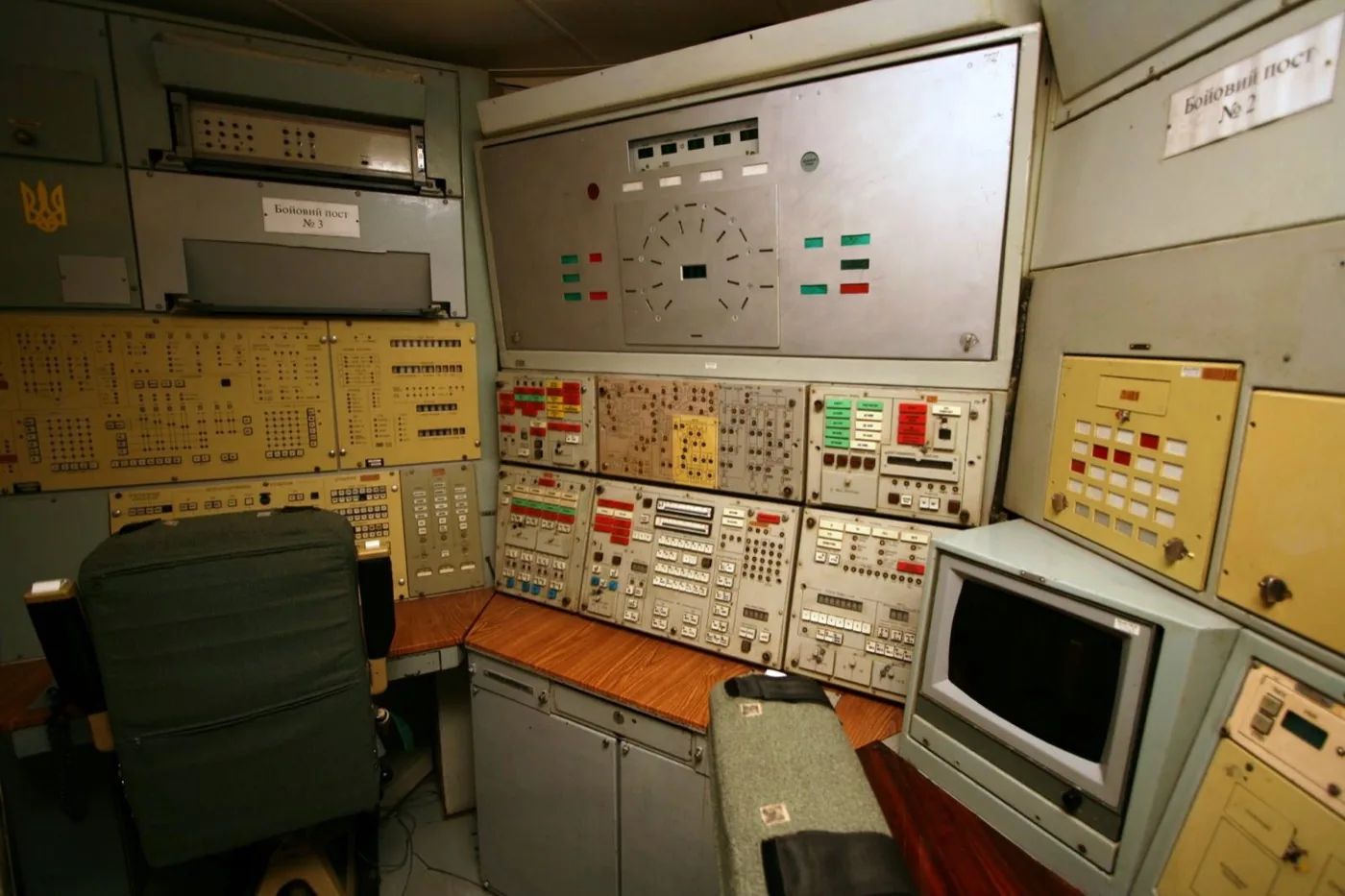
Dead Hand is the Western nickname for Perimeter, a Soviet nuclear command system designed to guarantee a retaliatory strike even if a first attack destroyed the country's leadership before it could give the order. The Soviet military put it on combat duty in January 1985. Its official designation is 15E601.
Perimeter is often described as an automatic doomsday device, but the most detailed public accounts describe something more careful. Colonel Valery Yarynich, a Soviet officer who spent nearly three decades in the Strategic Rocket Forces working on command and communications systems, described it as semi-automatic, with humans still in the chain. Much of what the public knows about the system comes from Yarynich's testimony to Western researchers, from American nuclear analyst Bruce Blair, and from David Hoffman's 2009 book "The Dead Hand," which won the Pulitzer Prize.
Why the Soviet Union built Perimeter
The problem Perimeter was meant to solve was called "launch on warning." Soviet doctrine in the early 1980s called for firing ICBMs the moment radar detected incoming American missiles, before those missiles could destroy the Soviet arsenal on the ground. The pressure to launch quickly grew as American missiles became more accurate, making it more plausible that a well-aimed first strike could knock out Soviet silos before they fired. But early-warning systems made mistakes. In September 1983, a Soviet officer named Stanislav Petrov was on duty at a monitoring center outside Moscow when his satellite system reported five American missiles heading for the Soviet Union. The alarm was false, caused by sunlight reflecting off high-altitude clouds. Petrov judged it a malfunction and did not pass it up the chain as a confirmed attack. If someone less cautious had been on duty that night, Soviet leaders would have had roughly twenty-five minutes to decide whether to launch a retaliatory strike based on a sensor glitch.
The entire logic of mutually assured destruction depended on both sides believing the other could always strike back. If one side's leadership could be destroyed before it gave the order to retaliate, deterrence would break down. Perimeter was the Soviet answer to that gap.
Perimeter offered a way out of the launch-on-warning pressure. If Soviet leaders knew that retaliation was guaranteed even after their deaths, they did not need to fire at the first radar signal. They could wait, absorb an attack if one actually came, and respond only when they were certain it was real. Yarynich spent years arguing that this made Perimeter stabilizing rather than dangerous. By guaranteeing retaliation, it gave leaders time instead of forcing them to act on incomplete information. Blair, who had served as a Minuteman ICBM launch control officer before becoming a researcher at Princeton, died in July 2020.
How does Perimeter work?
Perimeter stays dormant until a senior leader activates it during a crisis. Once switched on, it monitors a network of sensors across the country: seismic detectors, light sensors, radiation monitors, and overpressure gauges, all designed to detect nuclear detonations on Soviet territory. At the same time, it monitors its connection to the General Staff, the top military command.
If the sensors detect nuclear explosions and the link to the General Staff goes dead, the system does not launch missiles on its own. It hands the ability to launch to a crew of duty officers in a hardened underground bunker. If those officers determine that the leadership has been destroyed, they can fire command rockets. These rockets, originally the 15A11, carry no nuclear warheads. They carry powerful radio transmitters. The rockets fly high over the country and broadcast encrypted launch orders directly to ICBM silos, which then fire their missiles.
How much human judgment separates sensor readings from the firing of command rockets is still partly classified. Yarynich insisted that a human decision was always part of the design. Others who have studied the system are less sure.
Is Dead Hand still active?
Perimeter outlasted the Soviet Union. In 2011, General Sergei Karakayev, who commanded Russia's Strategic Missile Forces, publicly confirmed that the system remained on combat duty. Russian officials and state news outlets have since described upgrades, including compatibility with newer missiles like the RS-24 Yars and integration with modern early-warning radars. In July 2025, Dmitry Medvedev, the deputy chairman of Russia's Security Council, referenced the system in a Telegram post directed at the United States, signaling that Moscow still treats Perimeter as a live part of its nuclear deterrent.
Russia says just enough about the system to keep other countries uncertain about its exact capabilities. The deterrent works only if other countries believe the system is real, and the details that remain classified are probably left vague on purpose.
During the Cold War, an ICBM launched from the United States took roughly thirty minutes to reach the Soviet Union, giving leaders some time to assess whether an attack was real. Modern hypersonic missiles can arrive faster, compressing the decision window. Perimeter's original purpose, giving leaders the confidence to wait rather than launch at the first warning, matters more when the time available to decide is shorter.