
Stanislav Petrov
Stanislav Petrov was a Soviet officer who in 1983 judged a satellite warning of a US nuclear attack a false alarm, likely preventing nuclear war.
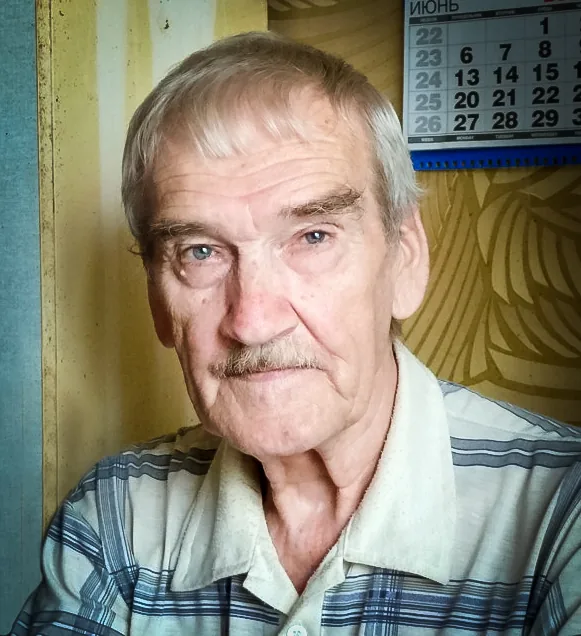
Stanislav Petrov was a lieutenant colonel in the Soviet Air Defense Forces who, on September 26, 1983, decided that a satellite warning of an American nuclear attack was a false alarm. He was right. The Soviet Union's new early-warning system had mistaken sunlight reflecting off high-altitude clouds for missile launches. If Petrov had followed standard procedure and reported the warning as a confirmed attack, Soviet leaders could have ordered a retaliatory nuclear strike against the United States within minutes. Instead, Petrov trusted his own judgment and reported a system malfunction. No one outside the Soviet military learned what had happened for almost a decade. When the story became public, Petrov became known as "the man who saved the world," a title he spent the rest of his life refusing.
Stanislav Petrov and the 1983 nuclear false alarm
The false alarm came at one of the most dangerous moments of the Cold War. On September 1, just over three weeks before, a Soviet interceptor had destroyed Korean Air Lines Flight 007 when the civilian jet drifted into Soviet airspace near Sakhalin Island. All 269 people on board died, including Larry McDonald, a congressman from Georgia. The United States called it murder. The Soviet Union insisted the plane had been on a spy mission. Relations between the two countries were near their lowest point in decades, and senior Soviet officials genuinely believed that NATO might be preparing a surprise nuclear attack.
Petrov, born in 1939 near Vladivostok, was an engineer by training. His post that night was Serpukhov-15, a military installation south of Moscow. The facility housed Oko, a satellite network the Soviet military had built to detect American intercontinental ballistic missile launches by spotting the infrared flash of their engines within seconds of liftoff. The system had been placed on full combat duty only the year before, and Petrov knew its technology was not yet fully proven.
Shortly after midnight, a launch warning appeared on the screens at Serpukhov-15. Within minutes, the system flagged four more. The system's confidence level was listed as the highest possible. Standard protocol required the duty officer to report a confirmed launch up the chain of command without delay. A report from Serpukhov-15 could have reached Soviet leaders authorized to order a retaliatory strike within minutes.
Petrov did not follow protocol. He reasoned that a real American first strike would involve hundreds of missiles launched at once to destroy the Soviet nuclear arsenal before it could fire back. Five missiles made no sense as an opening attack. Ground-based radar, which would have detected incoming warheads as they crossed the horizon, showed nothing. Petrov reported a system malfunction.
He later told the Associated Press that he had not been certain at the time. "I realized that I had to make some kind of decision, and I was only 50/50," he said.
Investigators afterward confirmed he was right. The cause was sunlight bouncing off cloud tops at high altitude. The autumn equinox had put the sun at an angle that the Oko satellites, flying in high elliptical Molniya orbits, could not distinguish from the heat signature of a missile launch.
What happened to Stanislav Petrov after 1983?
The Soviet military did not treat Petrov as a hero. He was neither formally punished nor rewarded for what he had done. His superiors questioned him about the incident, and he was quietly reassigned. He took early retirement and settled in Fryazino, a small town outside Moscow.
The outside world did not learn what had happened until the 1990s. In 1993, Yuri Votintsev, a retired general who had commanded Soviet missile defense forces, described Petrov's actions in a published memoir. Western media later picked up the story, and Petrov became known internationally as "the man who saved the world." He rejected the title for the rest of his life. He said he had simply been on shift that night.
International recognition came late and mostly from outside Russia. The Association of World Citizens honored Petrov at the United Nations in New York in 2006. He received the Dresden Peace Prize in Germany in 2013. A 2014 documentary, "The Man Who Saved the World," brought a film crew to his apartment in Fryazino.
Petrov's wife had died of cancer in 1997. He lived alone on a military pension for the last two decades of his life. He died in Fryazino on May 19, 2017, at the age of 77. His death was not reported publicly for months. Karl Schumacher, a German activist who had befriended Petrov, called on what would have been Petrov's 78th birthday in September 2017. Petrov's son told him that Petrov had died months earlier.
Petrov is often compared to Vasili Arkhipov, a Soviet naval officer who in 1962 stopped his submarine from launching a nuclear weapon during the Cuban Missile Crisis. The two incidents are among the best-known cases of a single officer's decision preventing what could have become a nuclear war.