
Gavrilo Princip
Gavrilo Princip was a Bosnian Serb who assassinated Archduke Franz Ferdinand in 1914, helping to start the First World War.
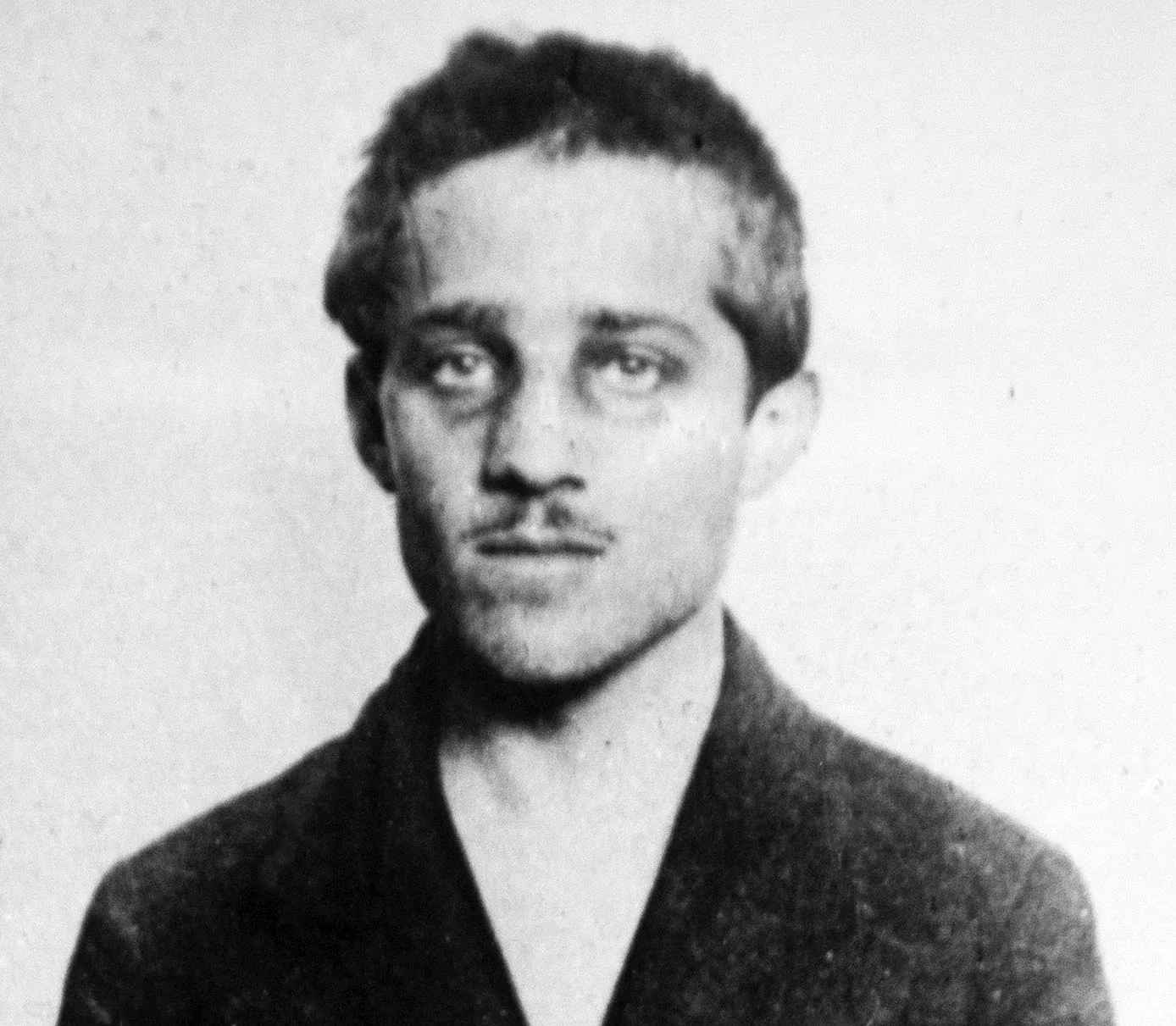
Gavrilo Princip was a nineteen-year-old Bosnian Serb who assassinated Archduke Franz Ferdinand of Austria-Hungary and his wife, Sophie, in Sarajevo on June 28, 1914. The two pistol shots Princip fired set off a chain of alliances and ultimatums that, within five weeks, became the First World War. Princip was born into a poor peasant family in a remote village in Bosnia. He joined a student movement that wanted to end Habsburg rule over the South Slavs, and he received his weapons from officers in the Serbian military. That connection to Serbia gave Austria-Hungary the reason it needed to treat the assassination as an act of war rather than an isolated crime. Princip was too young to be executed under Austrian law. He died of tuberculosis in a Bohemian prison in 1918, six months before Austria-Hungary fell apart.
How Princip became a revolutionary
Princip was born on July 25, 1894, in the village of Obljaj in western Bosnia, then ruled by Austria-Hungary. His father, Petar, farmed four acres of land and carried mail between villages in winter to support the family. Six of Princip's eight siblings died in infancy. At thirteen, Princip left home for school in Sarajevo. He later moved to Belgrade, the capital of neighboring Serbia.
Princip was small and thin. When the Balkan Wars broke out in 1912, he tried to volunteer for the Serbian army. The recruiters turned him away because he was too small.
In Belgrade, Princip joined a circle of Bosnian Serb students who believed the South Slavs of Austria-Hungary, Serbs, Croats, and Bosnians, should be free of Habsburg rule and united in their own state. Their movement, Young Bosnia, was loose and informal, more a shared conviction than an organization. In the spring of 1914, Princip and two friends, Nedeljko Cabrinovic and Trifko Grabez, obtained four pistols and six grenades through a Bosnian Serb named Milan Ciganovic who had connections to the Black Hand. The Black Hand, officially called Ujedinjenje ili Smrt (Union or Death), was a secret society led by Colonel Dragutin Dimitrijevic, the head of Serbian military intelligence. Dimitrijevic used the code name Apis. His involvement meant the assassination was not just the work of a few students. Serbian officers had armed and trained them.
The assassination of Archduke Franz Ferdinand
On the morning of June 28, 1914, six young men waited along the Archduke's motorcade route through Sarajevo, armed with pistols and grenades. June 28 was the anniversary of the 1389 Battle of Kosovo, a date with deep meaning for Serbs.
The first attempt went wrong. Cabrinovic threw a grenade at the Archduke's open car, but it bounced off the folded-back convertible top and exploded under the car behind, wounding about twenty people. Cabrinovic took a cyanide capsule, which only made him vomit, and jumped into the Miljacka River, which turned out to be only a few inches deep. Police pulled him out and arrested him. The other conspirators along the route either lost their nerve or could not get a clear shot as the motorcade sped past.
The motorcade reached the city hall. Afterward, the Archduke decided to visit the wounded at the hospital. His driver, Leopold Lojka, had not been told that the route had changed. Lojka turned off the main road, the Appel Quay, onto Franz Joseph Street, following the original plan. General Oskar Potiorek, the military governor riding in the car, shouted that this was the wrong way. Lojka stopped and tried to reverse, but the engine stalled. The open car sat motionless only a few feet from where Princip was standing on the sidewalk.
Princip stepped forward and fired twice with an FN Model 1910 pistol. One bullet hit Franz Ferdinand in the neck. The other hit Sophie in the abdomen. Both were dead within minutes. Princip tried to turn the gun on himself, but bystanders grabbed him and beat him before police took him away.
How did Gavrilo Princip die?
Princip and the other conspirators were tried in October 1914. Under Austrian law, a defendant who was under twenty at the time of the crime could not be sentenced to death. Princip had been nineteen on June 28, twenty-seven days before his twentieth birthday. The court gave him the maximum: twenty years in prison.
Princip was sent to the fortress prison at Terezin (Theresienstadt) in Bohemia. He was kept in a small, damp cell, often in chains, and not allowed visitors. He developed tuberculosis. The disease spread to his bones, and doctors amputated his right arm to try to stop it. Princip died on April 28, 1918. He was twenty-three years old, and the war his shots had helped start was still being fought. Austria-Hungary broke apart six months later, and the South Slav state Princip had dreamed of, the Kingdom of Serbs, Croats, and Slovenes, came into existence that December. Princip did not live to see either.
How Gavrilo Princip is remembered
In much of the West, Princip is remembered as the assassin who started a war that killed roughly seventeen million people. Among many Serbs, he is regarded as a freedom fighter who gave his life resisting foreign rule. Monuments to Princip still stand in Belgrade and in Sarajevo, where a museum marks the corner where he fired.
At his trial, Princip said he did not feel like a criminal because he had removed someone who was doing evil. He expressed no regret for killing the Archduke. Whether Princip was a patriot or a terrorist depends largely on where you stand, and the disagreement has continued for more than a century.