
Greco-Persian Wars
The Greco-Persian Wars were a series of conflicts between Greek city-states and the Persian Empire, fought from 499 to 449 BC.
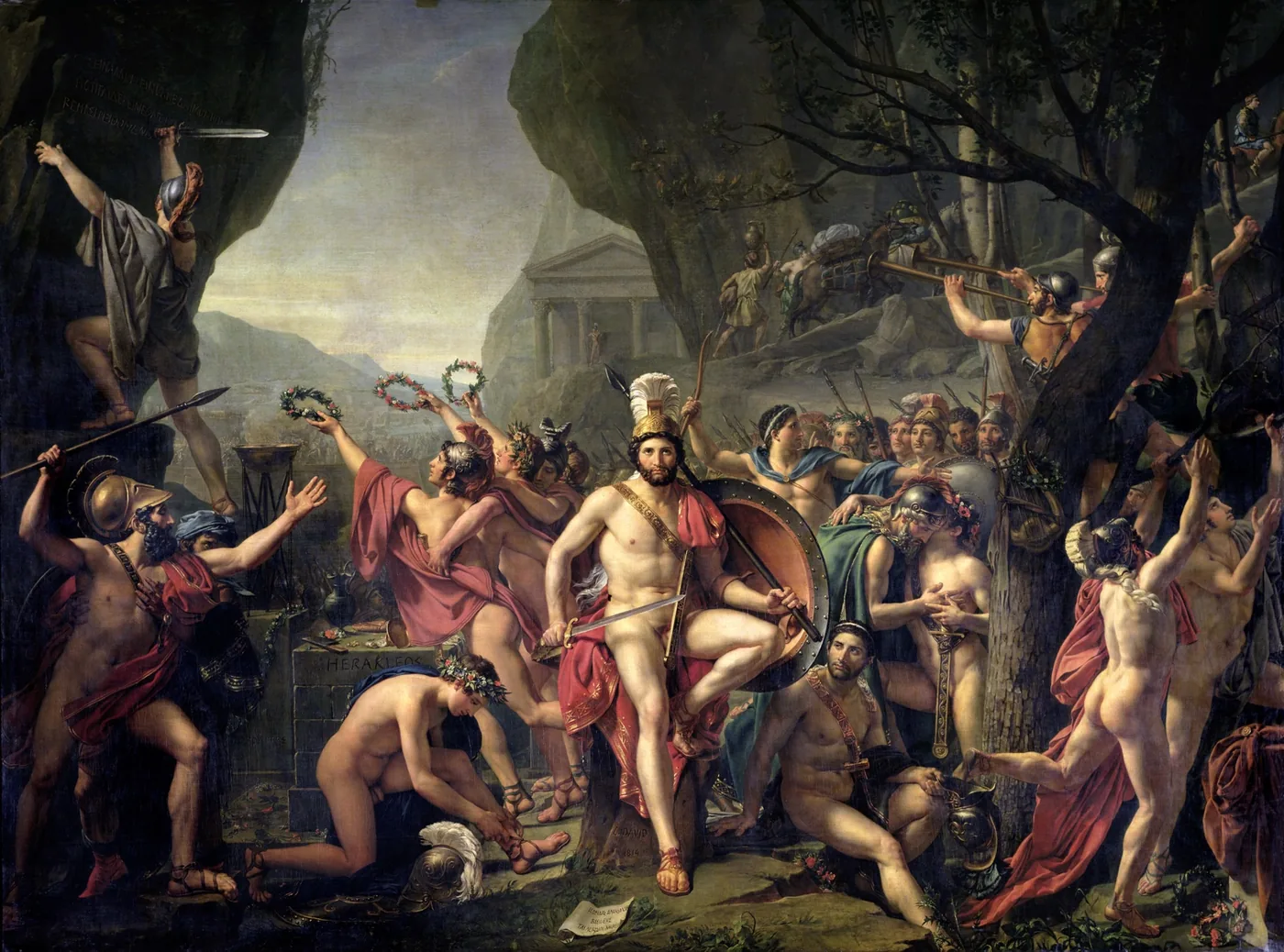
The Greco-Persian Wars were a half-century of conflict between the Greek city-states and the Achaemenid Persian Empire, fought from 499 to 449 BC. The wars produced three of the most famous battles in ancient history: Marathon, Thermopylae, and Salamis. A collection of small, often quarreling Greek cities defeated the largest empire the world had yet seen, and the victory protected the conditions in which classical Greek culture flourished. Nearly everything we know about the wars comes from one man, the historian Herodotus of Halicarnassus. He wrote about them a generation after they happened and earned the title "father of history."
How the Greco-Persian Wars started
The wars grew out of a rebellion on the far side of the Aegean. Around 499 BC, Greek-speaking cities along the western coast of modern Turkey, a region called Ionia, rose up against Persian rule. Athens sent twenty warships to support the rebels, and Athenian soldiers took part in burning Sardis, the seat of Persian government in the region. Persia put down the uprising by 494 BC. Darius I, the Persian king, did not forget that Athens had intervened.
In 490 BC, Darius sent a military force across the Aegean Sea to punish Athens. The Persians landed at Marathon, about 40 kilometers from the city. An Athenian army of roughly 10,000 soldiers, joined by 1,000 men from the small city of Plataea, marched out to meet a Persian force two to three times its size. The Athenian general Miltiades thinned his center and strengthened his wings, then ordered his men to charge at a run. The Persians broke through the center but were crushed on both flanks and driven back to their ships. According to Herodotus, the Persians lost 6,400 men at Marathon. The Athenians lost 192.
The legend of a runner who raced from Marathon to Athens with word of the victory became the inspiration for the modern marathon. The story was first told more than a century after the battle and does not appear in Herodotus.
Darius died in 486 BC before he could avenge the defeat.
How Greece defeated Xerxes
Darius's son Xerxes took up his father's cause on a far larger scale. In 480 BC, he bridged the Hellespont with boats to march his army from Asia into Europe. Herodotus numbered the force in the millions, though modern historians estimate it at roughly 100,000 to 300,000 soldiers. Xerxes also brought a fleet of several hundred warships.
At Thermopylae, a narrow coastal pass, Sparta's King Leonidas led a force of about 7,000 Greeks to block the Persian advance. For two days they held the pass. Then a local man named Ephialtes showed the Persians a mountain path around the Greek position. Leonidas sent most of his troops away and stayed with his 300 Spartans and several hundred Thespians to cover the retreat. All of them were killed.
After Thermopylae, the Persians marched south and burned Athens. The city's population had already been evacuated. The war now turned on the Greek navy. The Athenian general Themistocles, who had spent years building up Athens's fleet, sent a false message to Xerxes claiming that the Greek ships were about to scatter. Xerxes ordered his fleet into the narrow strait between the island of Salamis and the mainland, where the larger Persian fleet could not maneuver. The heavier Greek ships rammed and sank them. Xerxes watched the defeat from a throne on the shore and then left Greece with most of his remaining army.
In 479 BC, a combined Greek army met and defeated the remaining Persian troops at the Battle of Plataea. The invasion was over. Fighting continued in the Aegean and along the coast of Asia Minor for another thirty years, until a peace around 449 BC ended the wars. For a fuller account of why Persia lost, see Why did the Persian Empire fail to conquer Greece?
Herodotus and the Histories
Nearly all surviving knowledge of the wars comes from one source. Herodotus of Halicarnassus, born around the time of the battles, spent years traveling the Greek world and the Persian Empire, interviewing people who remembered the wars. He gathered what he found into a work called the Histories, the first known attempt to explain why a war happened rather than simply record that it did.
Herodotus mixed genuine research with folklore and exaggerated figures. Critics gave him a second nickname: "father of lies." Modern historians read his numbers for army sizes with deep doubt, but the basic outline of his narrative has held up. Without him, the wars would be almost entirely lost.
The legacy of the Greco-Persian Wars
For centuries after the wars, Greeks and then Europeans told the story as one of free citizens standing against an empire, a founding moment for what they called Western civilization. The idea has been repeated for 2,500 years. It also simplifies what actually happened. The Achaemenid Empire was large, organized, and in many ways tolerant of its subjects. Greeks in large numbers fought for Persia, not against it. Sparta, often held up as a champion of freedom, ran a society built on the labor of enslaved people called helots.
The Greek victory was real, and it mattered. It protected the city-states in which Greek philosophy, drama, and democratic government developed. The war that followed it, the Peloponnesian War between Athens and Sparta, showed how quickly the victors turned on each other.