
Imagined Communities
Imagined Communities is Benedict Anderson's 1983 book arguing that nations are modern creations held together by shared belief, not ancient inheritances.
Imagined Communities is a 1983 book by the political scientist Benedict Anderson. It argues that a nation is not an ancient inheritance but a modern creation, held together by the shared belief of millions of strangers that they belong to the same group. Anderson called this an "imagined community." Most citizens of any country will never meet one another, yet they feel a deep connection, pay taxes for each other, obey shared laws, and sometimes kill or die for one another. Anderson was a scholar of Indonesian politics at Cornell University, but the book's argument reached far beyond Southeast Asia. The phrase "imagined community" is now one of the most widely used concepts in nationalism scholarship, because it treats the nation not as a natural fact but as something people had to construct.
How Anderson explained the birth of nations
Benedict Anderson was born in 1936 in Kunming, China, where his Anglo-Irish father worked for the Chinese Maritime Customs Service. His family moved to California during World War II and then to Ireland. Anderson studied classics at Cambridge, earned a doctorate in government at Cornell University, and spent the rest of his career there as a professor of government and Asian studies. He focused on the politics of Indonesia and Southeast Asia, and he wrote Imagined Communities partly to explain how nationalism worked in that part of the world. Anderson died in 2015 in Batu, a small city in East Java, in the country he had spent his life studying.
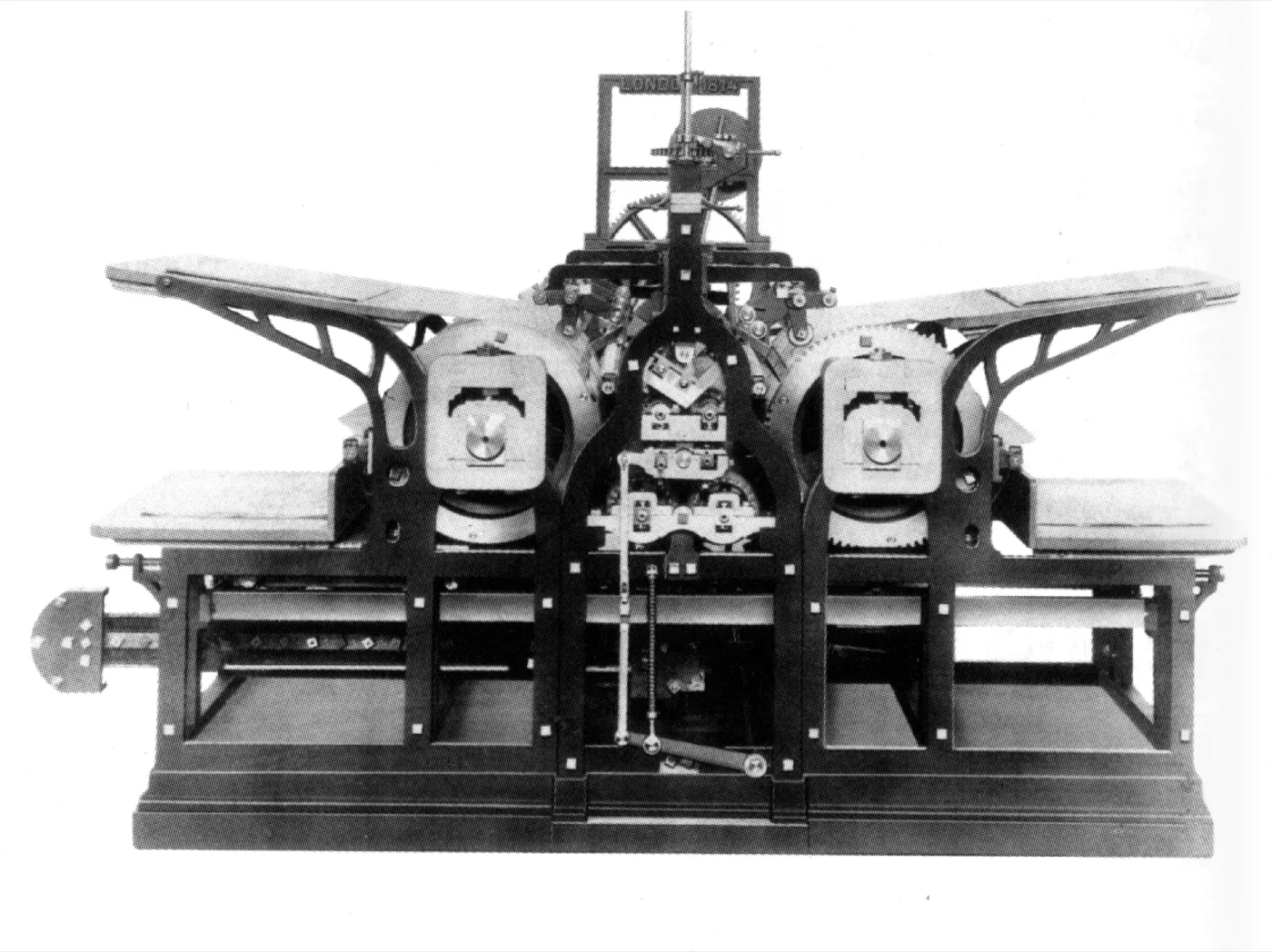
The key mechanism in the book is what Anderson called "print-capitalism," the commercial use of the printing press. Before mass printing, most written communication in Europe happened in Latin, a language ordinary people did not read. When publishers began printing newspapers and books in ordinary spoken languages, they made it possible for thousands of strangers to encounter the same text on the same morning. Someone picking up a newspaper knew that people across the country, none of whom they would ever meet, were looking at the same pages at the same hour. Anderson called this shared but private experience a "mass ceremony."
Through newspapers and novels, people who had never met began to think of themselves as part of the same community. Language groups became the basis for national groups. Anderson borrowed a phrase from the philosopher Walter Benjamin, "homogeneous, empty time," to describe how print let strangers feel they were moving through the same present together, even though each person read alone. Anderson argued that this process first took shape in the Americas and in Europe, and that the model of the nation was then adopted by movements around the world.
In Anderson's account, nationalism is not something ancient that awoke. It is a modern artifact. It needed the printing press and commercial publishing to exist, and it appeared at a specific moment in history, around the time that the Enlightenment and political revolutions were replacing divinely chosen monarchs with self-governing citizens.
What Anderson meant by "imagined community"
The most common misreading of Anderson is that he meant nations are made up. He was careful to distinguish "imagined" from "imaginary." The nation is real in its effects: people live and die for it. What Anderson meant is that the bond between citizens exists in their minds, because the vast majority of them will never meet.
In the book, Anderson gave the nation a specific definition. He called it "an imagined political community," one that is "inherently limited and sovereign." Each word carried weight. "Limited" means that every nation has borders, and no nation imagines itself as including all of humanity. "Sovereign" means that nations arose as divine-right monarchy was losing its hold, so nations imagined themselves as free and self-governing. "Community" means that despite real inequality within any nation, its members picture it as a group of equals, bound by a horizontal connection rather than by hierarchy.
This definition gave scholars a way to study nationalism without accepting nationalist claims at face value. If the nation is something people imagine into being, the important questions become who does the imagining, how, and whom they leave out.
Criticisms of Imagined Communities
Anderson's argument drew two main responses. The sociologist Anthony Smith argued that modern nations grow from much older ethnic roots: shared myths, symbols, and memories that go back centuries. In Smith's view, Anderson underestimated the deep past. Nations may be modern in their political form, but the feelings and stories that hold them together are old.
The scholar Partha Chatterjee raised a different problem. Chatterjee argued that Anderson made European nationalism the original model and left colonized peoples only "modular" forms to copy, which denied them credit for their own imaginative work. If all nationalism follows a template first created in Europe and the Americas, Chatterjee asked, what did colonized societies have left to imagine on their own? In Chatterjee's view, anti-colonial nationalism in places like India had developed its own forms of community and belonging that did not follow the European pattern.
Both criticisms remain active in the field. But most scholars who study nationalism still work on the ground Anderson laid. The concept of the imagined community turned the nation from something people assumed was natural into something that requires explanation.