
Legalism
Legalism is a Chinese philosophy that says government should rely on strict law and centralized power, not the moral virtue of rulers.
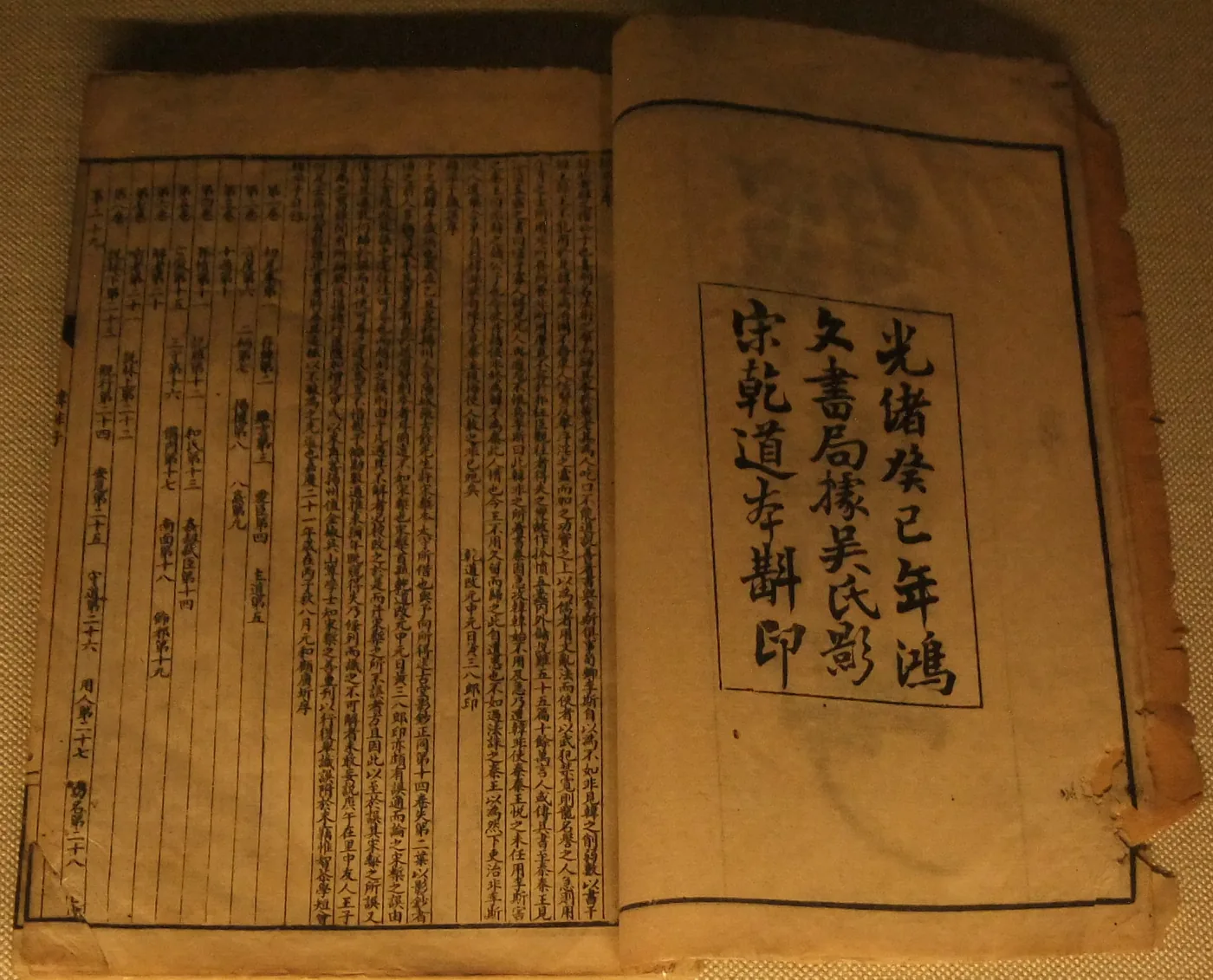
Legalism, known in Chinese as Fajia, is a political philosophy that developed in China during the Warring States period in the 4th and 3rd centuries BC. Its central argument is that people are selfish, so government cannot rely on people choosing to be good. Instead, a state needs clear written law, predictable punishment, and power concentrated in the ruler's hands. Where Confucius taught that virtuous rulers would lead society by moral example, the Legalists said virtue was not enough.
Legalism was the philosophy that built the Chinese empire. The state of Qin used Legalist methods to defeat every rival state and bring China under one government in 221 BC, led by the First Emperor, Qin Shi Huang. But Qin ruled so harshly that Legalism became synonymous with cruelty. For the next two thousand years, no Chinese dynasty openly claimed to follow it. They kept its methods anyway.
How Shang Yang transformed the state of Qin
Shang Yang was born around 390 BC, a minor prince from the small state of Wey. He left his homeland and entered the service of Duke Xiao of Qin, a frontier state that the older kingdoms considered backward. Starting in 356 BC, Shang Yang carried out reforms that reshaped Qin's government and society.
He registered the entire population into groups of households bound by collective punishment. If one member of a group committed a crime, the others were punished too unless they reported it. He replaced aristocratic privileges with a system that rewarded grain production and military service. A farmer who grew more grain earned rank. A soldier who brought back enemy heads in battle earned land. Noble birth no longer guaranteed status.
Shang Yang believed that good laws fit the circumstances of the present. He dismissed the Confucian habit of looking to ancient sage-kings as models. His reforms made Qin the best-organized fighting and farming state of its time, but they also made him enemies among the old nobility. When Duke Xiao died in 338 BC, Shang Yang lost his protector. He was charged with treason and executed by being tied to chariots that pulled his body apart. Qin kept every reform he had put in place.
Han Feizi and the unification of China
Han Feizi, born around 280 BC, came from the ruling family of the state of Han, one of Qin's rivals. He had a severe stutter that made him a poor speaker at court, so he expressed his ideas in writing instead. He studied under the Confucian philosopher Xunzi alongside a classmate named Li Si. Li Si later admitted that Han Feizi was the more talented of the two.
Han Feizi pulled together the ideas of earlier Legalist thinkers into one system with three parts. The first was fa, or law: a code published for all to see, binding on peasant and noble alike, with penalties severe enough that breaking the law was never worth the risk. He described rewards and penalties as the two levers a ruler must never let go of. The second was shu, or method: the practice of managing officials by assigning them specific duties, measuring what they deliver, and punishing the gap between promises and results. The third was shi, or positional power: authority comes from the position a person holds, not from their character or reputation. A mediocre ruler sitting in a powerful office, Han Feizi argued, will always outperform a brilliant man who holds no position at all.
Han Feizi's writings reached Ying Zheng, the young king of Qin who would later become the First Emperor Qin Shi Huang. The king admired them so much that he brought Han Feizi to his court. But Li Si, now one of the king's ministers, saw his old classmate as a rival. Li Si had Han Feizi imprisoned on false charges and pressured him into drinking poison. Han Feizi was dead in a Qin cell by 233 BC. Twelve years later, Qin conquered the last of the rival states and unified China under Legalist administration.
The unified Qin state enforced its laws harshly: book burnings, collective punishments, and heavy forced-labor levies to build roads, walls, and the emperor's tomb. These measures provoked revolts across the country. The Qin dynasty collapsed in 206 BC, about fifteen years after unification.
What are the main beliefs of Legalism?
Legalism starts from the idea that human beings act out of self-interest, not moral feeling. Because people will pursue their own benefit, the state must create a system of incentives and penalties that makes obeying the law more attractive than breaking it.
The core beliefs are: laws should be written down and made public so that everyone knows the rules. Punishments should be severe and applied equally regardless of social rank. Rulers should control officials through clear job descriptions and measurable results, not personal trust. Political authority belongs to the office, not to the person holding it. And the state should adapt its laws to present circumstances rather than follow the customs of the past.
Legalism rejected the Confucian belief that moral education and virtuous leadership were enough to keep order. It also rejected the idea that ancient traditions should guide present government.
Legalism in Chinese government after Qin
After the Qin dynasty fell, Legalism became so associated with tyranny that no later dynasty openly endorsed it. The Han dynasty and every major dynasty after it presented itself in Confucian terms, emphasizing moral governance, filial piety, and respect for tradition.
But those same dynasties kept the tools Legalism had introduced: a centralized bureaucracy, written legal codes, household registration systems, and the state's monopoly on organized military force. Chinese writers captured this pattern in a formula that is still widely used: "Confucian on the surface, Legalist underneath." Emperors spoke publicly about moral virtue, but ran their governments with Legalist methods.
Observers of modern Chinese governance still use this framework. The pairing of public moral rhetoric with centralized, disciplined control remains one of the most commonly cited patterns in Chinese political history.