
Martin Luther King Jr.
Martin Luther King Jr. was the Baptist minister who led the nonviolent movement that ended legal segregation in the United States.
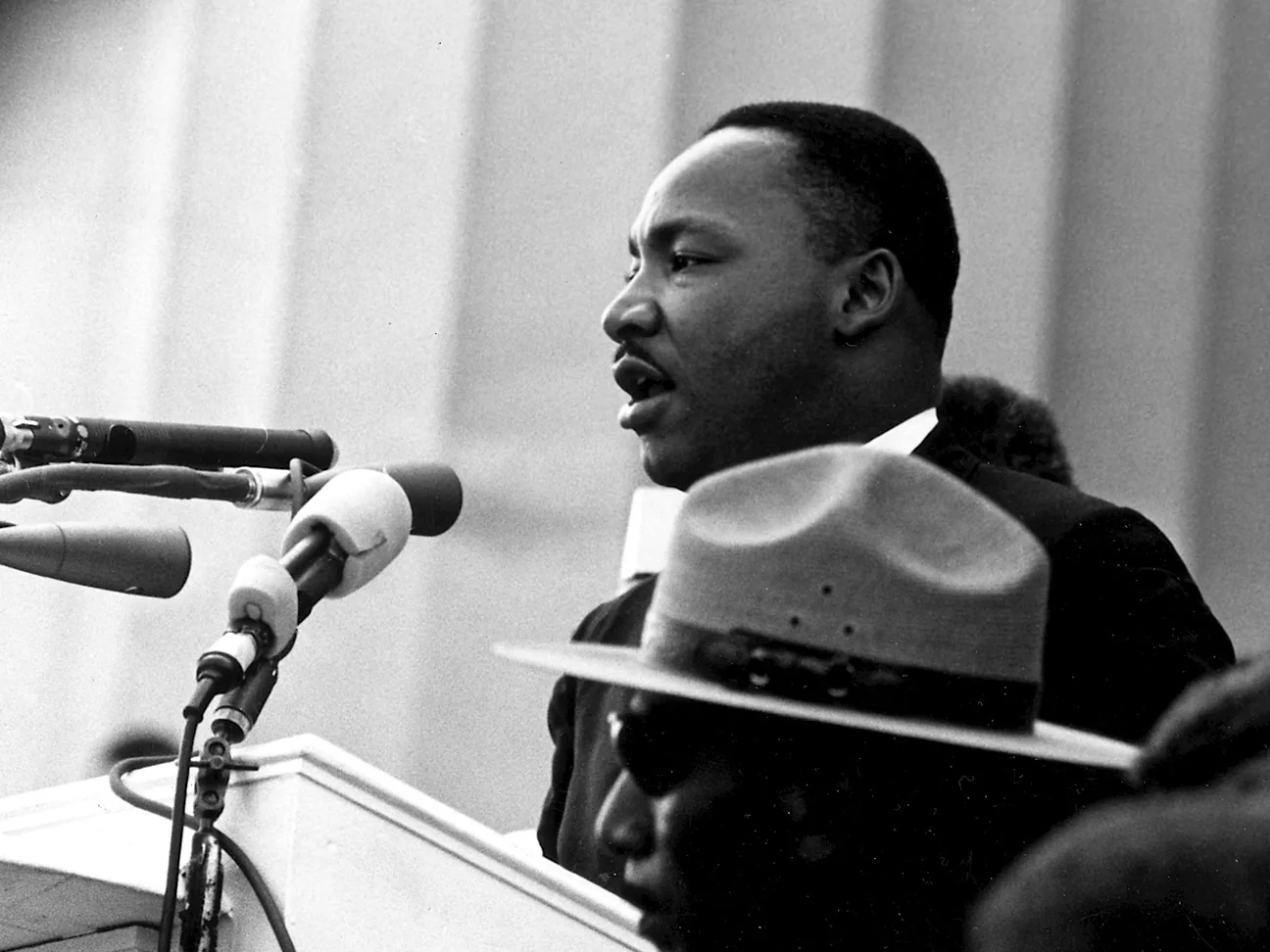
Martin Luther King Jr. was an American Baptist minister who led the civil rights movement against racial segregation in the United States from 1955 until his assassination in 1968. He was born Michael King Jr. in Atlanta, Georgia, on January 15, 1929. His father changed both their names in 1934 after visiting Germany, inspired by the religious reformer Martin Luther. King was twenty-six and had been a pastor for barely a year when the Montgomery bus boycott started in December 1955. Over the next thirteen years, he and the people who organized alongside him turned nonviolent direct action into a disciplined method. That method produced two of the most important federal laws in American history: the Civil Rights Act of 1964 and the Voting Rights Act of 1965. King won the Nobel Peace Prize at thirty-five. He was shot on the balcony of a Memphis motel on April 4, 1968. He was thirty-nine.
How King and the movement made nonviolent protest work
In December 1955, Rosa Parks was arrested for refusing to give up her seat on a bus in Montgomery, Alabama. Local Black leaders picked King to lead the resulting boycott in part because he had only recently arrived in Montgomery and had no local enemies. For 381 days, the city's Black residents refused to ride the buses. The transit system lost most of its fare revenue, and the boycott ended when the Supreme Court struck down bus segregation.
In 1957 King helped found the Southern Christian Leadership Conference. The SCLC approached nonviolent direct action as a practical technique, not only a moral position. It depended on provoking a violent overreaction that television would carry across the country, putting pressure on the federal government to step in.
Birmingham, Alabama, in 1963 was the clearest test. King and the SCLC picked Birmingham partly because Bull Connor, the city's police commissioner, was known to meet protest with force. Television cameras were there when he turned dogs and fire hoses on protesters, including children. The resulting images led directly to a federal civil rights bill.
While jailed during the campaign, King wrote a response to eight white clergymen who had urged him to be patient. He began writing in the margins of the newspaper that carried their statement, continued on scraps of paper a jail trusty supplied, and finished on a pad his lawyers were allowed to leave him. The Letter from Birmingham Jail argued that the biggest barrier to civil rights was not the outright racist but the white moderate who chose stability over justice and told Black Americans to wait.
The March on Washington and the laws that followed
In August 1963, King and other civil rights leaders organized what became known as the March on Washington. Roughly 250,000 people filled the National Mall. King spoke from a prepared text. Then gospel singer Mahalia Jackson, who had heard King speak about his vision before, called out: "Tell them about the dream, Martin." King set aside his notes and improvised. The passage became one of the most famous speeches in American history.
Congress passed the Civil Rights Act in 1964. The law banned segregation in hotels, restaurants, and other public places, and made employment discrimination illegal. That same year, the Nobel committee awarded King the Peace Prize at age thirty-five, making him the youngest recipient at the time. He donated the prize money, about $54,000, to the civil rights movement.
In 1965, marchers in Selma, Alabama, were beaten by state troopers on the Edmund Pettus Bridge. The images, again broadcast on national television, led to the Voting Rights Act. The law put federal enforcement behind a right guaranteed by the Fifteenth Amendment since 1870 but denied across the South for nearly a century.
The Cold War helped explain why the federal government finally acted when it did. Segregation in the United States had become a serious foreign policy problem. Soviet propaganda highlighted it constantly, and countries across Africa and Asia that had recently won their independence saw it firsthand. African diplomats posted to Washington were refused service at restaurants along the highway into Washington. The Justice Department went so far as to file legal briefs in desegregation cases, arguing that segregation damaged American foreign relations.
Why did Martin Luther King oppose the Vietnam War?
On April 4, 1967, exactly one year before his death, King gave a speech at Riverside Church in New York City. He accused the American government of being what he called the world's "greatest purveyor of violence." He argued that the country could not spend billions on a war abroad while neglecting poverty at home. The speech cost King much of his establishment support.
The FBI had been monitoring King for years with wiretaps and informants, and sent an anonymous letter that urged him to kill himself. After losing mainstream allies over Vietnam, King shifted his focus to poverty and began organizing a Poor People's Campaign to press the federal government for action.
He was in Memphis, Tennessee, supporting a strike by sanitation workers when he was killed. On the evening of April 3, 1968, King delivered his final speech at the Mason Temple. The next evening he was shot on the balcony of the Lorraine Motel. He was thirty-nine.
King had taken his method of nonviolent direct action from Gandhi and adapted it for the American South. After his death, the method traveled further: to the civil rights marches in Northern Ireland, to the anti-apartheid movement in South Africa, and to the revolutions that ended communist rule in Eastern Europe in 1989.