
Apartheid
Apartheid was South Africa's system of racial segregation and white-minority rule, enforced by law from 1948 until the first free election in 1994.
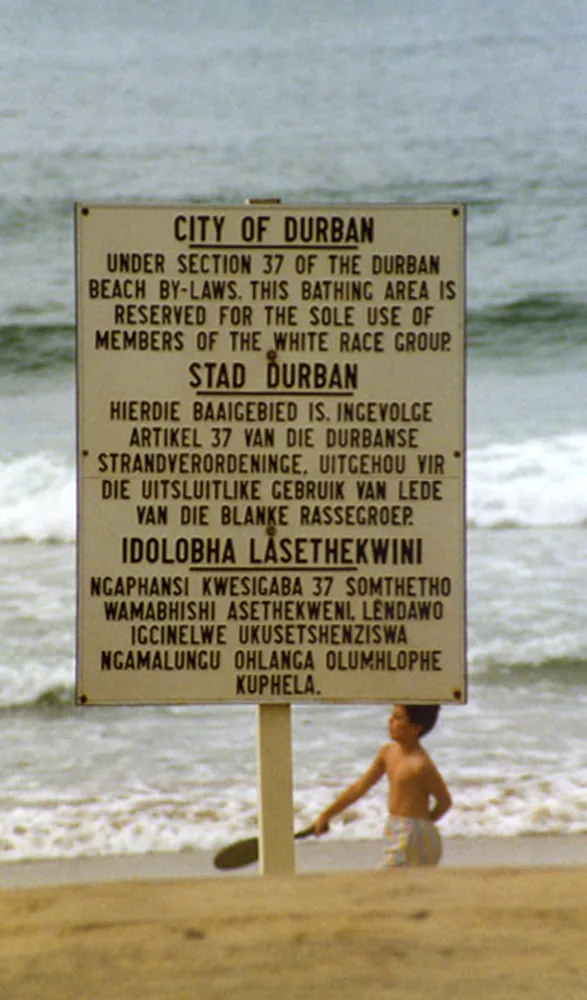
Apartheid was South Africa's legal system of racial segregation, in place from 1948 to 1994. The word is Afrikaans for "apartness." For 46 years, a white minority that made up about one-fifth of the population used the law to control where the other four-fifths could live, work, go to school, and travel. The government classified every person by race at birth, forced millions from their homes, and stripped Black South Africans of their citizenship. Apartheid ended after decades of resistance inside South Africa and growing isolation from the rest of the world. In 1994 the country held its first free election, and Nelson Mandela became president.
How apartheid controlled daily life
Racial segregation in South Africa went back to the nineteenth century, when European powers carved up the continent in the Scramble for Africa and Britain fought the Second Boer War for control of the region. But when the National Party won an almost whites-only election in 1948, it turned decades of segregation into a total legal order.
In 1950, the Population Registration Act sorted every South African into one of three racial categories: White, Black, or Coloured. Indian was later added as a fourth. Government officials decided a person's race based on appearance, sometimes using tests as crude as pushing a pencil through someone's hair to see if it stayed or fell out. That single classification determined where a person could live, what jobs they could hold, which schools they could attend, and whom they could marry. Marriage and sexual relations between white and non-white people were banned.
The Group Areas Act divided cities into racial zones. The government demolished mixed neighborhoods and forced about 3.5 million people to relocate between 1960 and 1983. Under the pass laws, Black South Africans had to carry government-issued documents proving they were allowed to be in a white area. Anyone caught without a pass could be arrested.
The government also created ten impoverished rural territories called Bantustans. It assigned Black South Africans to these territories based on ethnicity, revoked their South African citizenship and called them foreigners in the country where they were born. The Bantustans were designed to make the Black majority disappear from the white state on paper. In practice, they created a workforce with no vote and no voice in a country that ran on their labor.
How South Africans fought apartheid
The African National Congress had been organizing against racial discrimination since 1912, and it led the opposition to apartheid. For decades its members ran boycotts, strikes, and defiance campaigns. On March 21, 1960, police in the township of Sharpeville fired on a peaceful crowd protesting the pass laws, killing at least 91 people. Most were shot in the back as they ran. The government responded by banning the ANC.
After the ban, ANC leaders turned to armed resistance. Nelson Mandela was a lawyer who had cofounded South Africa's first Black-owned law firm with Oliver Tambo. He helped organize a sabotage campaign against government infrastructure. Mandela was also an amateur boxer who trained at a gym in Soweto after work, a habit he said helped him handle the pressures of the struggle. He was captured in 1962. In the 1964 Rivonia Trial, he and seven others were sentenced to life in prison. In all, Mandela spent 27 years behind bars, most of them on Robben Island.
On June 16, 1976, thousands of schoolchildren in Soweto marched against a government order that required instruction in Afrikaans, the language of the apartheid rulers. Police opened fire. A photograph of 12-year-old Hector Pieterson, shot dead and carried through the streets by another student, spread around the world. The death toll is usually given as 176, though the real number was likely several hundred. The images turned global opinion sharply against the South African government.
How did apartheid end?
By the 1980s, resistance in South Africa's townships had grown so widespread that the government declared a state of emergency that lasted until 1990. The country also faced mounting pressure from abroad. The United Nations called apartheid a crime against humanity, barred arms sales to South Africa, and suspended the country from the General Assembly. International sports boycotts shut South Africa out of the Olympics, rugby, and cricket. In 1986, the United States Congress passed the Comprehensive Anti-Apartheid Act over President Reagan's veto, the first time since 1973 that Congress had overridden a president on a major foreign policy issue. The United States had previously treated South Africa's government as a Cold War partner against communism. Now economic sanctions restricted trade and investment, and foreign capital fled the country.
On February 2, 1990, South Africa's president, F. W. de Klerk, stood before parliament and unbanned the ANC. Nine days later, on February 11, Nelson Mandela walked out of prison after 27 years. Four years of difficult negotiations followed, with township violence continuing throughout. On April 27, 1994, people of all races across South Africa cast ballots in the same election for the first time. The ANC won 62 percent of the vote, and Mandela was inaugurated as president on May 10.
Instead of prosecuting the crimes of apartheid in court, Mandela's government created the Truth and Reconciliation Commission in 1995. Archbishop Desmond Tutu chaired the commission. He had won the Nobel Peace Prize in 1984 for his opposition to apartheid. The commission gathered over 21,000 statements from victims and granted amnesty to some perpetrators who confessed fully. The idea was that the country needed the truth more than it needed punishment.
Does apartheid still affect South Africa?
South Africa is still one of the most unequal countries in the world. Its Gini coefficient, the standard measure of income inequality, is among the highest of any country. The top 10 percent of the population holds about 85 percent of the country's wealth. The boundaries that apartheid drew, between wealthy suburbs and poor townships, between productive farmland and the old homelands, still shape where people live and what opportunities they have.
The word "apartheid" itself outlived the South African system. The 1973 International Convention on the Suppression and Punishment of the Crime of Apartheid defined it as a crime against humanity, and the Rome Statute of the International Criminal Court also lists it as one. Under international law, "apartheid" now means any institutionalized regime in which one racial group systematically oppresses and dominates another.