
Monroe Doctrine
The Monroe Doctrine is a US foreign policy principle from 1823 declaring the Western Hemisphere closed to European colonization.
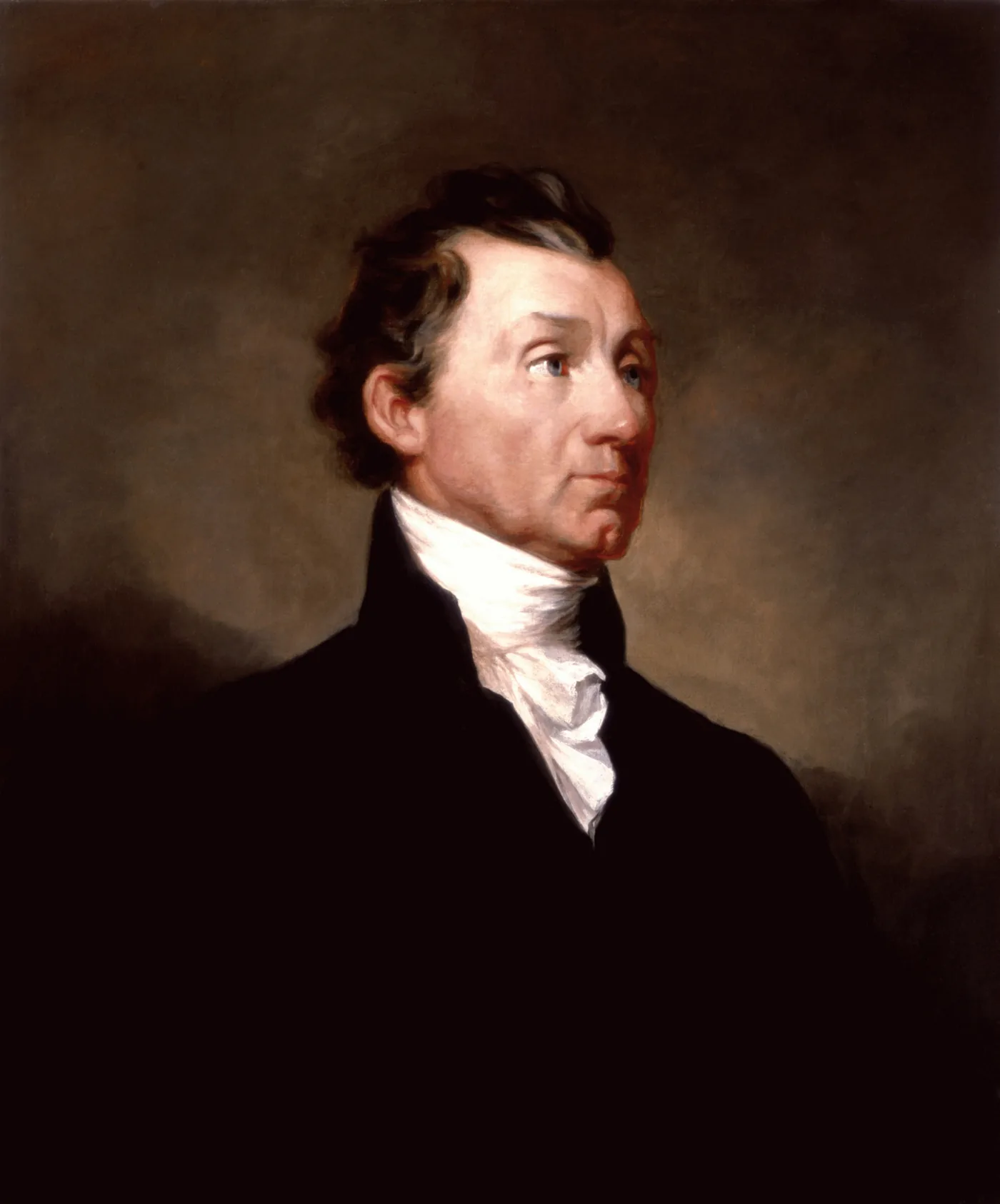
The Monroe Doctrine is a United States foreign policy principle that declared the Western Hemisphere off limits to new European colonization. President James Monroe stated it on December 2, 1823, in a routine annual message to Congress, but the text that mattered was written mainly by John Quincy Adams, Monroe's Secretary of State and the son of former President John Adams. The Doctrine made three claims. European powers could not plant new colonies in the Americas. They could not interfere with the newly independent countries of the hemisphere. As a concession, the United States promised to keep out of European wars and not disturb the colonies that European powers already held. For decades the young United States had no navy strong enough to enforce any of it. What actually kept European powers out was the British Royal Navy, which patrolled the Atlantic for its own commercial reasons.
How the Monroe Doctrine began
In the early 1820s, Spain's colonies across Latin America were winning their independence one by one. The Holy Alliance, a coalition of conservative European monarchies led by Russia, Austria, and Prussia, talked about helping Spain take them back. The prospect alarmed both Britain and the United States, though for different reasons. Britain wanted the newly open Latin American markets for its own traders. The United States, less than fifty years old, saw any European military campaign in the Americas as a threat.
Britain's foreign secretary, George Canning, proposed a joint Anglo-American statement warning Europe to stay away. Adams wanted a unilateral American statement instead. At a cabinet meeting on November 7, 1823, he compared the joint approach to coming in "as a cock-boat" trailing a British warship, and insisted the United States should state its own principles openly. He wanted the country to act as an equal power, not as Britain's junior partner.
Monroe sided with Adams. Monroe had fought in the Revolutionary War as an eighteen-year-old lieutenant and was badly wounded at the Battle of Trenton in 1776, when a musket ball struck his shoulder and nearly killed him. He went on to serve as a diplomat in Paris and London and as governor of Virginia. During the War of 1812 he held the posts of secretary of state and secretary of war at the same time. By 1823 he was in his second term as president.
On December 2, Monroe gave his seventh annual address to Congress. Buried inside a long speech about budgets and trade were three paragraphs that became the Doctrine. Monroe declared that no European power should treat the American continents as open for "future colonization." He warned that any effort by a European state to impose its political system in the Americas would be seen as a threat to American peace and safety. In exchange, the United States would not disturb existing European colonies and would keep out of Europe's wars.
How the Roosevelt Corollary changed the Monroe Doctrine
In December 1902, Britain, Germany, and Italy sent warships to blockade Venezuela after its president, Cipriano Castro, refused to repay debts owed to European creditors. They bombarded coastal forts and seized Venezuelan ships. The crisis ended in arbitration by February 1903, but it alarmed President Theodore Roosevelt. If European governments could send gunboats into the Western Hemisphere to collect debts, the Monroe Doctrine meant nothing.
Roosevelt's answer, in his December 1904 annual message to Congress, was the Roosevelt Corollary. He warned that "chronic wrongdoing" by a Western Hemisphere nation might compel the United States, "however reluctantly," to act as "an international police power." The logic reversed the original Doctrine. Monroe had told Europe to stay out. Roosevelt claimed a United States right to go in.
Over the next three decades, the United States acted on that claim. Marines occupied the Dominican Republic from 1916 to 1924, Haiti from 1915 to 1934, and Nicaragua from 1912 to 1933. American officers collected customs revenue and in some cases ran the country's government. The Doctrine that began as a warning to Europe became the standing justification for American intervention across Latin America and the Caribbean.
Is the Monroe Doctrine still in effect?
The Doctrine has been declared dead and revived more than once. In November 2013, Secretary of State John Kerry announced at the Organization of American States that "the era of the Monroe Doctrine is over." He described a future in which the United States and Latin American countries would treat each other as equal partners.
That language did not last. Later administrations invoked the Monroe Doctrine to push back against Chinese investment and Russian military ties in Latin America. In January 2026, the United States carried out Operation Absolute Resolve, a military raid on Caracas that captured Venezuelan President Nicolás Maduro and flew him to New York, where he was jailed on drug charges. Officials described the operation as consistent with the Doctrine's principle that outside powers should not control governments in the Western Hemisphere.
In much of Latin America, the Monroe Doctrine is remembered not as a warning to Europe but as the founding declaration of American dominance in the region. Two centuries later, the Doctrine is still being invoked by American presidents and still being rejected across Latin America.