
Who runs Venezuela after Maduro's capture?
Nicolás Maduro is in a New York jail, yet his party still holds Caracas. The acting president, the men with guns, and the exiled winner, explained.
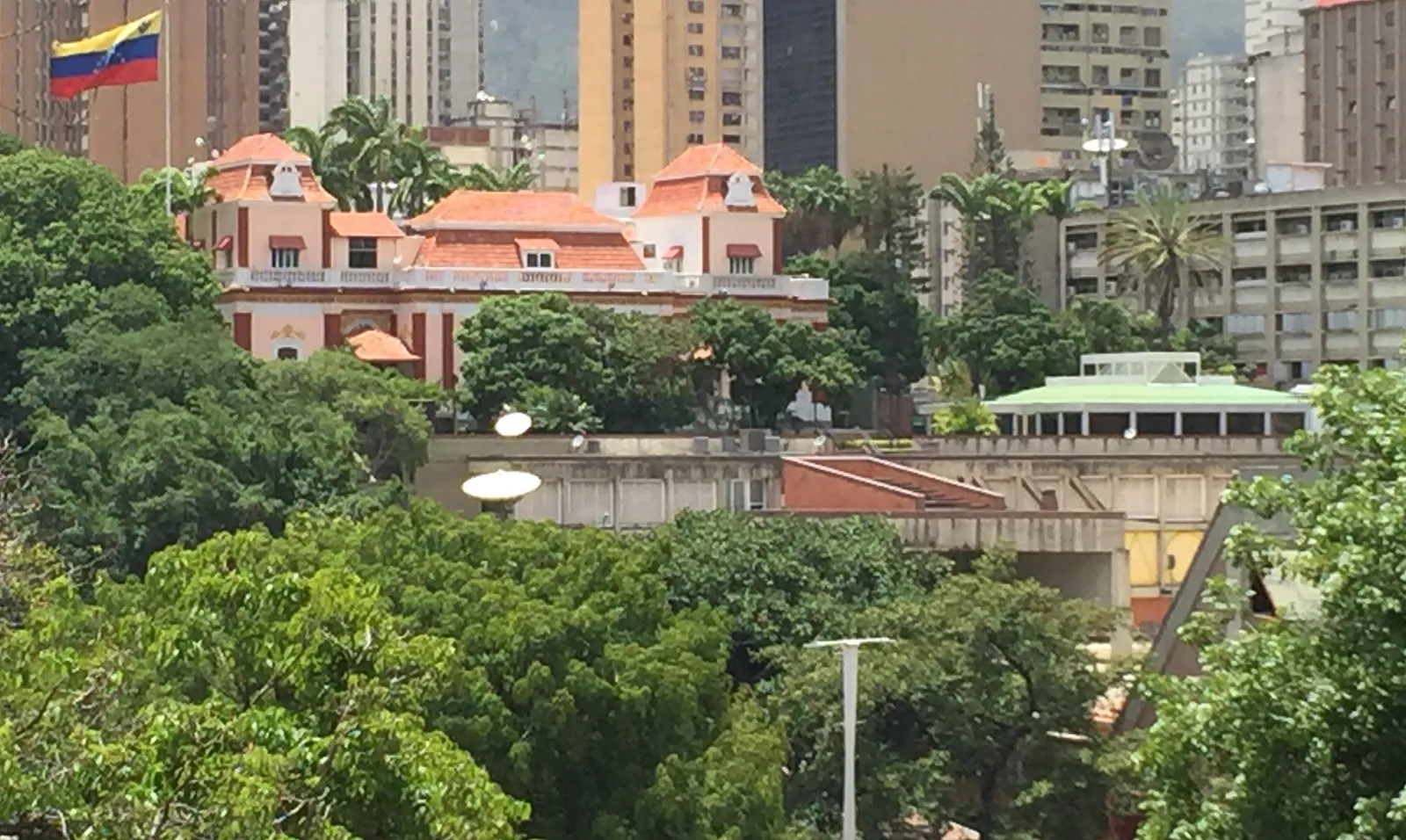
In the early hours of January 3, 2026, around 150 American aircraft struck targets across Caracas while Delta Force operators and CIA officers landed in the city and took Nicolás Maduro and his wife, Cilia Flores, out of Venezuela. Two days later, the man who had ruled the country for thirteen years stood handcuffed in a federal courtroom in Manhattan, charged with narco-terrorism and cocaine trafficking, and told the judge: "I am still president of my country."
He is not. But the question of who is has no clean answer, and that is the most important fact about Venezuela in 2026. The United States captured the president, but it did not capture the state. Seven months later, the party Maduro led still holds the government, a minister indicted alongside him still commands the security apparatus, and the man who actually won the last election is still in exile.
A quick word on how it got to this point. Hugo Chávez, a former paratrooper elected president in 1998, spent Venezuela's enormous oil wealth on a socialist project, and the movement he founded, known as chavismo, has held power ever since. Maduro was his handpicked successor. He took over when Chávez died in 2013 and presided over the worst peacetime economic collapse in modern history: the economy shrank by about 80 percent, inflation peaked above 130,000 percent, and nearly 8 million people, about a quarter of the population, left the country. Washington answered with sanctions after Maduro rigged his 2018 re-election, indicted him for drug trafficking in 2020, and by 2025 had put a $50 million bounty on his head. The January raid was the moment the United States stopped waiting for someone to collect it.
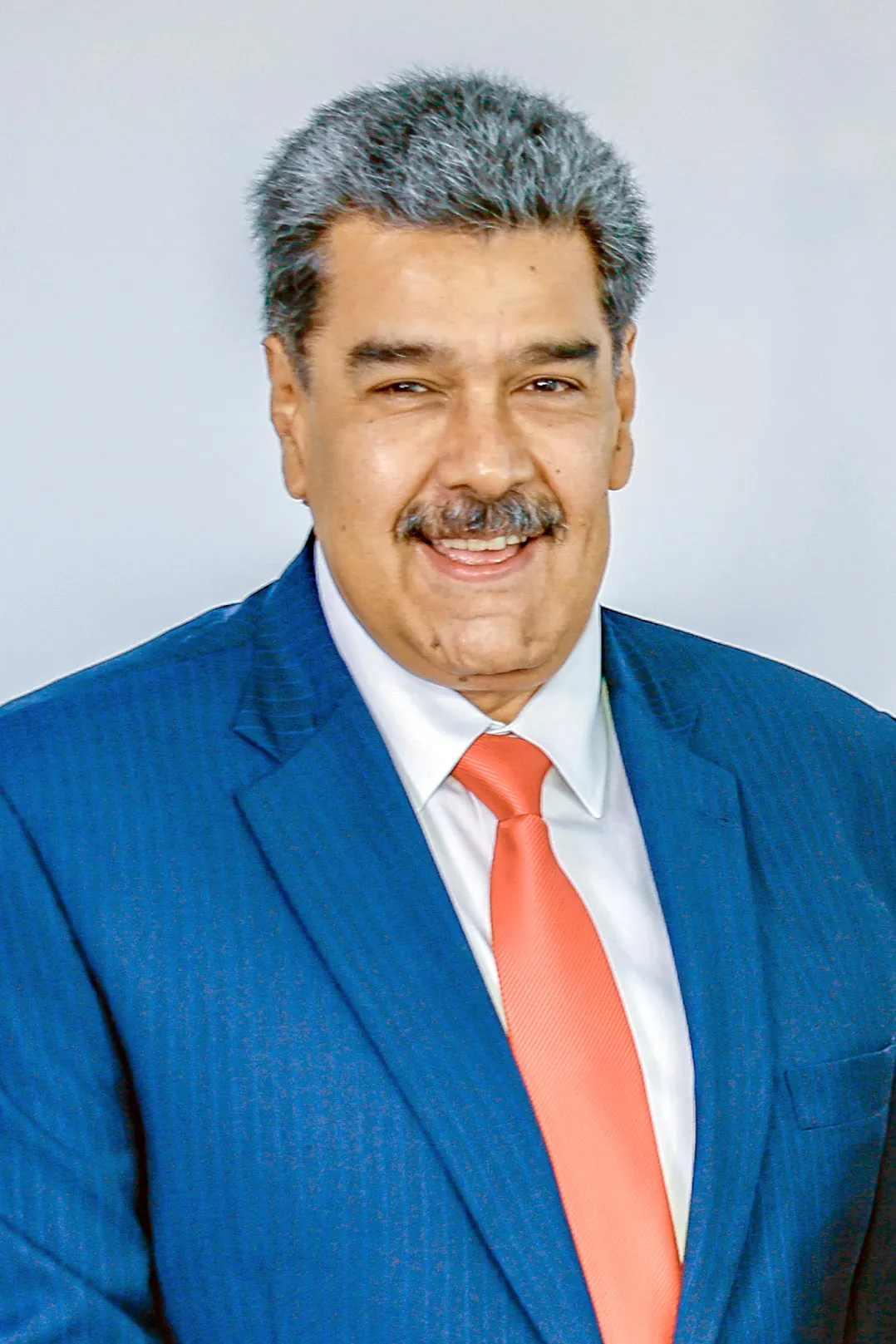
The answer on paper: Delcy Rodríguez
On January 4, Venezuela's Supreme Court, a body packed with ruling-party loyalists, declared Maduro's capture a "forced absence" and swore in his vice president, Delcy Rodríguez, as acting president. The succession looked constitutional on paper. In practice, the ruling party used its own captive court to pass power to one of its own, and Washington, to the surprise of many, accepted it.
Rodríguez is not a caretaker. She is a 57-year-old lawyer who has served as foreign minister, oil minister, and vice president, and she spent years under US sanctions for propping up Maduro's rule. Her family history explains a lot about why chavismo runs so deep. In 1976, when Delcy was seven, her father Jorge Antonio Rodríguez, a well-known socialist leader, was arrested by Venezuela's secret police and tortured to death in custody. Hugo Chávez later turned him into a martyr of the revolution. Her brother, Jorge Rodríguez, leads the National Assembly. Between the two siblings, one family now controls both the presidency and the legislature.
Since January, her government has moved fast in one direction: survival through cooperation. It has released more than 300 political prisoners, passed an amnesty law, ordered the closure of El Helicoide, the spiral-shaped former shopping mall that became the regime's most feared prison, and opened the oil industry to private investment. Every one of those steps bought goodwill in Washington. None of them required handing over power.
The men with guns are still the same men
On the night of the raid, Interior Minister Diosdado Cabello appeared on the streets of Caracas in a helmet and flak jacket, called the operation a terrorist attack, and led his forces in patriotic chants. Cabello is named in the same New York indictment as Maduro. He controls the police, the intelligence services, and his influence reaches the armed pro-government militias known as colectivos. By any legal logic, he should have been the next man on a plane to New York.
Instead, in August he is still the interior minister. The reason is simple: removing Cabello risks a fight with thousands of armed loyalists, so Washington has chosen to manage him rather than arrest him. The military tells the same story. Defense Minister Vladimir Padrino López, who vowed resistance on the night of the raid, was eased out in March. His replacement, General Gustavo González López, ran Venezuela's intelligence service for nine years and is himself under US sanctions. So far, the transition has replaced sanctioned chavistas with other sanctioned chavistas.
The UN human rights office reached the obvious conclusion in March: "structures that have sustained persecution for years have not been dismantled."
The man who won the election is not in the room
Venezuela held a presidential election in July 2024, and Maduro lost it badly. Opposition volunteers collected tally sheets from polling stations showing that Edmundo González, a retired diplomat, beat him by roughly two to one. Maduro declared victory anyway and forced González into exile in Spain, where he remains. The United States recognizes him as the election's true winner. He holds no office in Caracas.
The opposition's real leader is María Corina Machado, the woman who was banned from running in 2024 and campaigned for González instead. She won the Nobel Peace Prize in 2025 while hiding inside Venezuela, then slipped out of the country in December with American help to accept it. She is still abroad, and she has promised to return before the end of 2026 and run for president.
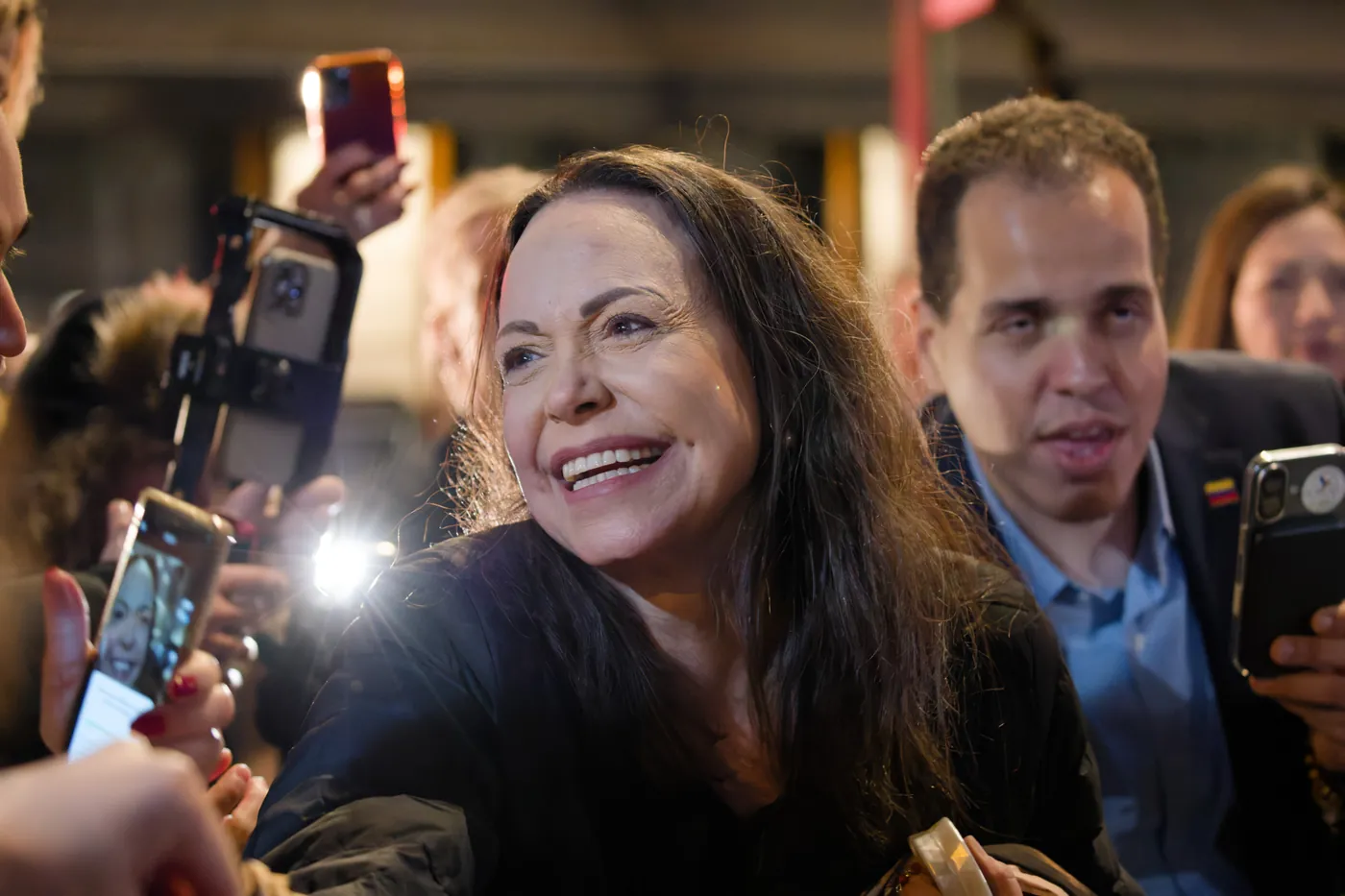
Talks between the two sides finally began in Caracas on August 6. The ruling party sent Jorge Rodríguez, the acting president's brother. The opposition sent Dinorah Figuera, a former lawmaker. Machado is not at the table, and she is pushing for elections sooner than either delegation seems to want. Polls suggest the ruling party would lose any honest vote, which gives it every incentive to stall. Secretary of State Marco Rubio insists the wait will be "not years, but months and weeks."
Washington holds the oil and the clock
Behind both camps stands the United States, in its most direct intervention in Latin America since the heyday of the Monroe Doctrine. President Trump said it plainly after the raid: the US would "run the country, until we can do a safe, proper and judicious transition." American forces have been massed in the Caribbean since August 2025, some 15,000 troops at the operation's peak, and a naval blockade on sanctioned tankers still decides which oil leaves the country.
Oil is the lever that makes everything else move. Venezuela sits on 303 billion barrels of crude, the largest proven reserves on Earth, and exports nearly doubled within a month of the raid, from 489,000 to around 800,000 barrels a day, once Washington began licensing sales. Rebuilding the industry could draw more than $100 billion in investment. Whoever controls the licenses controls the money every future Venezuelan government will need.
Then, on June 24, nature intervened. Two earthquakes of magnitude 7.5 and 7.2 struck northern Venezuela 39 seconds apart, the strongest to hit the country in more than a century, killing over 6,000 people. Reconstruction has since become the official reason not to rush an election, which suits the people currently in power very well.
So who actually runs Venezuela?
There are three honest answers, and they stack on top of each other. On paper, Delcy Rodríguez runs Venezuela. On the streets, Diosdado Cabello and the security forces do. Above both, Washington controls the oil money, the sanctions list, and the timetable. The people with the strongest democratic claim, González and Machado, hold none of those three levers. They have the votes, the Nobel Prize, and millions of exiles waiting to see if it is safe to come home.
That is the uncomfortable shape of Venezuela's transition so far: less a handover to the people who won the election than a negotiation between the people who lost it and the superpower holding the keys. The machine Chávez built has now outlived Chávez and outlasted Maduro. Capturing the president took one night. Prying his party's hands off the state is taking much longer, and it is not finished.
Test what you learned
6 questions on this article. About two minutes, no signup.