
Perpetual Peace
Perpetual Peace is Kant's 1795 essay arguing that republics would not fight each other, the intellectual root of democratic peace theory.
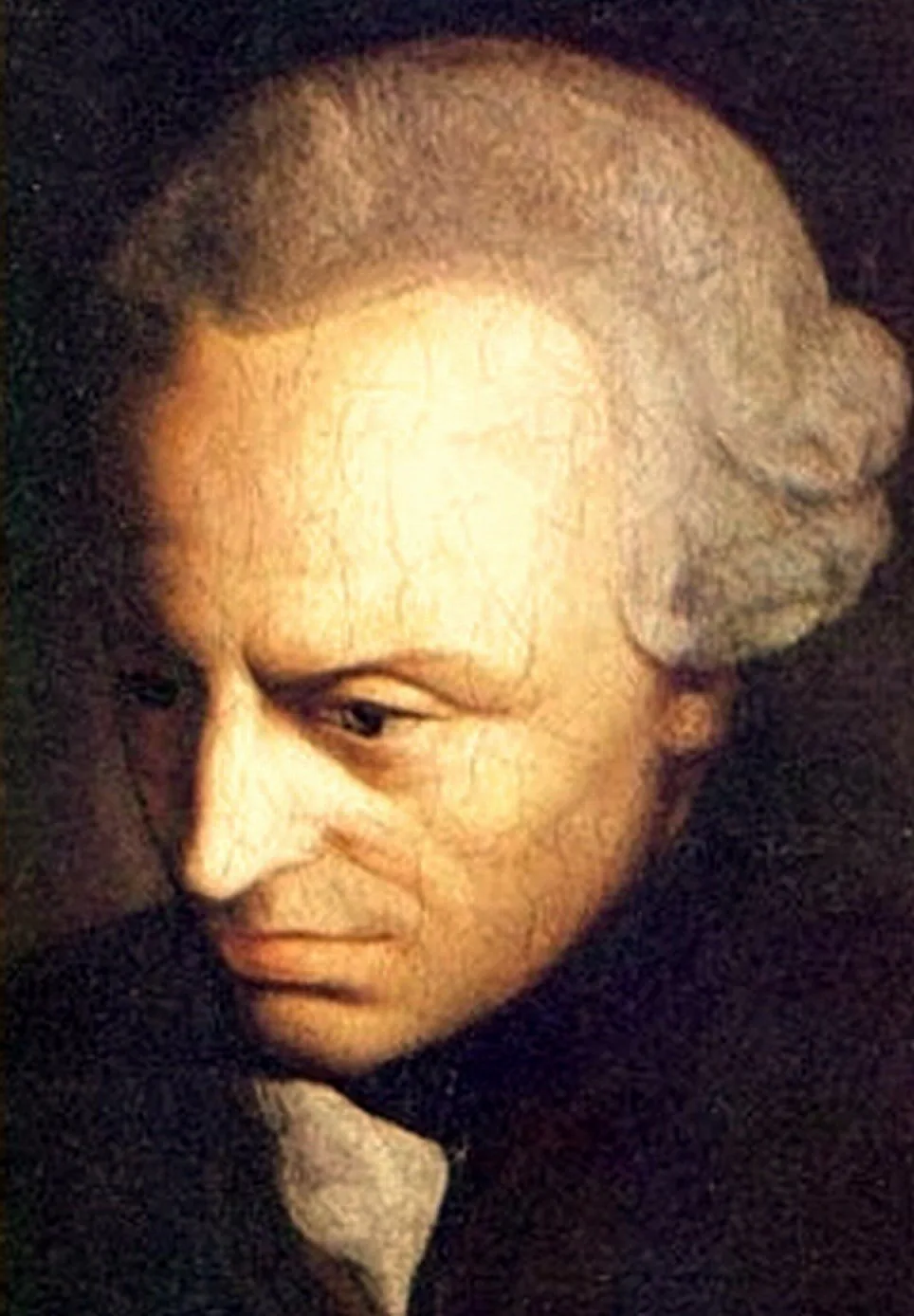
"Perpetual Peace: A Philosophical Sketch" is a 1795 essay by the Prussian philosopher Immanuel Kant. Kant argued that republics would rarely wage war against each other, because the citizens who pay for wars in blood and taxes would not vote to start them. A federation of free republican states, he claimed, could produce lasting peace without requiring a world government. The essay was short, structured as a mock peace treaty, and written by a 71-year-old professor who had never traveled more than 60 miles from his hometown of Königsberg. It became the intellectual foundation of what political scientists now call democratic peace theory, one of the most studied ideas in international relations.
Why Kant wrote Perpetual Peace
In April 1795, Prussia signed the Treaty of Basel with revolutionary France, ending its part in the War of the First Coalition. Kant dismissed treaties like it as a suspension of fighting, not a real peace. Kings made war when it suited them and stopped when it didn't. Lasting peace, he argued, required something deeper than a ruler's signature.
Kant was 71 and already the most famous philosopher in Europe. He was the son of a harness maker in Königsberg, a Prussian city on the Baltic (now Kaliningrad, Russia), and he had spent almost his entire life there. He was a central figure of the Enlightenment, best known for the Critique of Pure Reason, published in 1781. Kant was famously regular in his habits, and so consistent in his daily walks that the citizens of Königsberg reportedly set their clocks by them. He read widely about politics, geography, and foreign affairs, even though he rarely left the city. In the summer of 1795, he offered the essay to a local Königsberg publisher.
Kant's argument in Perpetual Peace
Kant structured the essay as a peace treaty, with preliminary and definitive articles. The preliminary articles laid down conditions for ending the cycle of war: abolish standing armies, take on no debts to fund wars, and never use force to change another state's government.
The core of the essay is three definitive articles.
First, every state should have a republican constitution, meaning a representative government with separated powers. Kant's logic was straightforward. A king who declares war does not fight in it or pay for it. In a republic, the citizens who bear the costs of war, in taxes and in their lives, get a say in declaring it. They will not choose war lightly.
Second, relations between nations should be governed through a voluntary league of free states. Kant did not mean a world government or an empire. He meant a compact in which independent republics agree to settle their disputes without force.
Third, there should be a right of universal hospitality. Someone arriving in a foreign country should not be met with hostility. Kant had the European colonial powers in mind. He condemned the way European traders and armies treated people in Asia, Africa, and the Americas as a violation of the basic rights that all people share.
Kant did not promise that republics would make peace certain. He claimed a tendency: states built the right way would drift toward peace, because their institutions made war costly and hard to start.
How Perpetual Peace shaped democratic peace theory
Kant's argument entered practical politics long before anyone tested it as a theory. Woodrow Wilson's campaign to make the world "safe for democracy" during World War I drew on the same logic: democratic peoples, given the chance, would choose peace over war. The League of Nations and later the United Nations were both built partly on Kant's vision of a voluntary federation of free states cooperating under shared rules.
In 1983, the American political scientist Michael Doyle took Kant's argument and tested it against the historical record. Writing in Philosophy & Public Affairs, Doyle showed that liberal democracies almost never waged war against each other, whatever their conflicts with non-democracies. The political scientist Jack Levy, writing in 1989, gave the pattern a famous verdict. Levy wrote that it "comes as close as anything we have to an empirical law in international relations." The observation became known as the democratic peace.
The finding is narrower than it sounds. Democracies avoid wars with each other, but that restraint does not extend to all their foreign dealings. They have fought many wars against non-democracies. Critics point out that democracies with close trade ties and shared defense pacts may keep the peace for reasons that have nothing to do with how their governments are structured. Others question how democratic a state must be to count, and note that the historical sample is short. If two long-established democracies went to war, the finding would be in serious trouble.
The claim survives partly because it is narrow. More than two centuries after Kant published his essay, the pattern he described has not broken. The debate among scholars is mainly about why the democratic peace exists, not whether it does. Kant's short essay remains the starting point for one of the most important arguments in the study of international relations.