
Puyi
Puyi was the last emperor of China, crowned at two years old, whose abdication at six ended more than two thousand years of imperial rule.
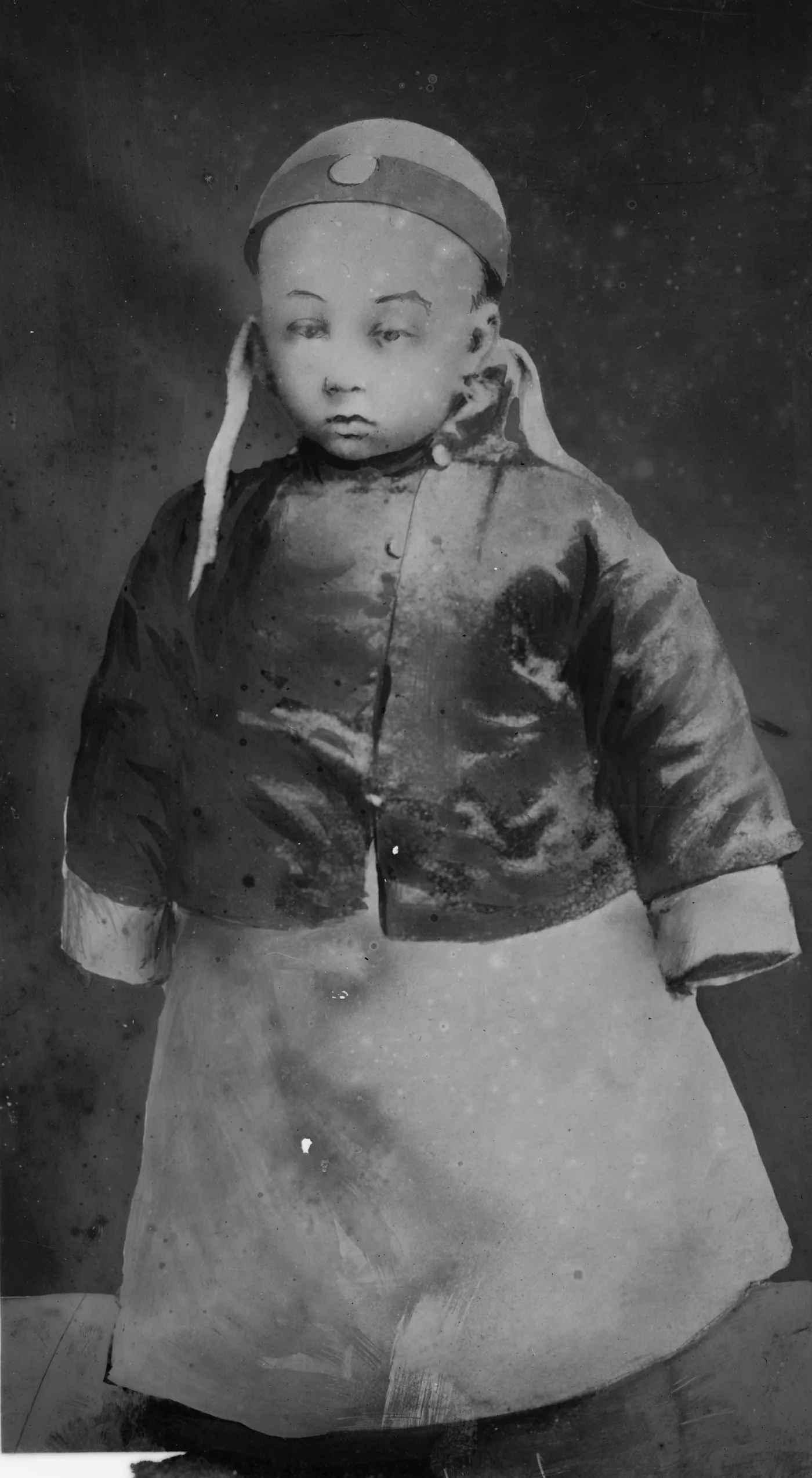
Puyi was the last emperor of China. He was put on the throne at age two and forced to abdicate at six. His abdication on February 12, 1912, ended the Qing dynasty and, with it, a tradition of imperial rule that had lasted since 221 BC, when Qin Shi Huang became the first emperor of a unified China. Puyi went on to serve as a puppet emperor for Japan, spend a decade in a Chinese re-education prison, and work as a gardener in Beijing. He died in 1967, at 61, as an ordinary citizen of the People's Republic.
How a two-year-old became emperor of China
In November 1908, the Guangxu Emperor died. The same day, Empress Dowager Cixi named Puyi, her two-year-old grandnephew, as the new emperor. Cixi herself died the following day. On December 2, 1908, Puyi was carried to the Dragon Throne in the Forbidden City. He screamed through the entire ceremony. His father told him it would be over soon.
The dynasty was already losing control of the country. Three years later, the Xinhai Revolution brought it down. On February 12, 1912, Puyi's regents signed an abdication decree on his behalf. He was six. Under the abdication agreement, Puyi kept his imperial title and his court servants. He was allowed to go on living in the Forbidden City's northern compound. He grew up as a ceremonial emperor inside the palace walls while a republic formed outside them.
A Scottish diplomat named Reginald Johnston tutored Puyi in English and told him about the world beyond the gates. Puyi rode a bicycle through courtyards that had been built for sedan chairs. In July 1917, a warlord named Zhang Xun briefly put him back on the throne, but the restoration collapsed after twelve days. Seven years later, General Feng Yuxiang seized Beijing in a coup and expelled Puyi from the Forbidden City for good. He was eighteen and had not lived outside the palace since he was two.
How Japan made Puyi a puppet emperor
After his expulsion, Puyi moved to the Japanese concession in Tianjin. When Japan seized Manchuria in 1931, its military found a use for him. In 1932, Japan installed Puyi as the head of state of Manchukuo, a Japanese-controlled state in northeast China. In 1934, he was given the title of emperor, with the reign name Kangde.
The title gave him no real power. Japanese officials made every important decision. Puyi signed the edicts they put in front of him and lived under their watch. To most Chinese, his role made him a collaborator with the country that was invading their homeland.
In August 1945, the Soviet Union invaded Manchuria as Japan neared defeat. Puyi tried to flee to Japan but was captured by Soviet troops at an airfield. He was held in the Soviet Union for five years. In August 1946, he appeared as a witness at the International Military Tribunal for the Far East in Tokyo, where over eight days of questioning he claimed the Japanese had coerced him into cooperating. In 1950, the Soviet Union handed him over to Mao Zedong's new People's Republic of China.
How Puyi went from emperor to gardener
Puyi spent nearly ten years in a re-education camp in Fushun. He had been dressed by servants his entire life. In prison, he learned to tie his own shoelaces, make his bed, and grow vegetables. The process was designed to turn him into a model convert, proof that even an emperor could become a citizen of the new China.
He was released under amnesty in December 1959. The government gave him work as a gardener at Beijing's Botanical Garden. He later took a desk job as a researcher at the Chinese People's Political Consultative Conference. He rode public buses and one day paid for a ticket to visit the Forbidden City, the palace where he had grown up. He published a government-approved memoir called "From Emperor to Citizen," which told his story as the government wanted it told: a feudal ruler transformed into a productive member of society.
Why did Zhou Enlai protect Puyi?
When the Cultural Revolution began in 1966, Red Guards attacked anyone connected to China's imperial or bourgeois past. China's premier, Zhou Enlai, placed Puyi under protection, keeping him safe from the worst abuses. Zhou was one of the few senior leaders trying to limit the Cultural Revolution's damage. He also posted guards to keep Red Guards away from the Forbidden City's collections.
Puyi died of kidney cancer on October 17, 1967, while the Cultural Revolution was still underway. He was 61 and died childless, the last of a line of emperors that had held power in China since 221 BC.