
Zhou Enlai
Zhou Enlai was the first premier of the People's Republic of China, serving from 1949 to 1976 as Mao Zedong's chief administrator and diplomat.
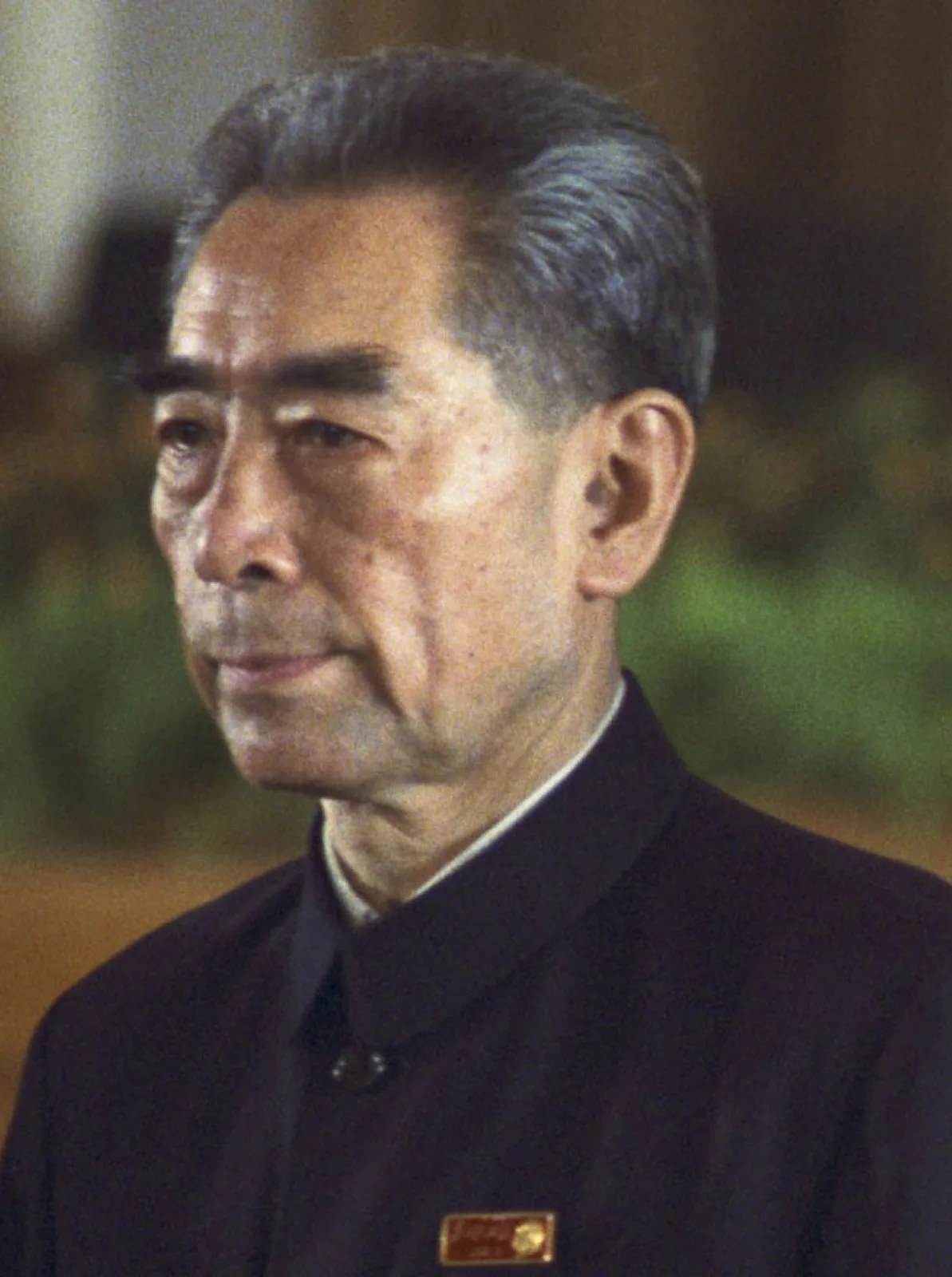
Zhou Enlai (1898–1976) was the premier of the People's Republic of China for its entire first 26 years, from 1949 to 1976. No one else held the job during that time. For the first eight years he was also foreign minister. While Mao Zedong set the direction of the revolution, Zhou ran the government: he managed the ministries, balanced the budgets, and handled China's foreign relations. He arranged the secret diplomacy that brought President Richard Nixon to Beijing in 1972, ending decades of Chinese isolation from the West. People who met him described him as charming, tireless, and one of the most skilled diplomats of the twentieth century.
How Zhou Enlai joined the Communist Party
Zhou was born on March 5, 1898, in Huai'an, Jiangsu province, into a declining gentry family. His mother died of tuberculosis when he was nine, and he was raised partly by an aunt. In 1910 he moved to Shenyang in Manchuria to live with an uncle and attend a school that taught modern subjects alongside Chinese classics.
He studied briefly in Japan starting in 1917 but failed the university entrance exams and returned to China in 1919, arriving in time for the May Fourth Movement, the wave of student protests that shaped a generation of Chinese nationalists. In late 1920 he left for France on a work-study program. He did little of either. Instead he organized Chinese students in France and Germany, joined the Chinese Communist Party when a branch formed in Paris in 1921, and returned to China in 1924 as a committed revolutionary with a reputation as a gifted organizer.
Zhou rose quickly in the party. He helped lead the Long March in 1934–1935, the grueling retreat that nearly destroyed the Communists but forged their leadership. At the Zunyi conference in January 1935, a turning point during the march, Zhou backed Mao Zedong's bid for military command. That decision tied his career to Mao's for the next four decades. From then on, Zhou was Mao's chief administrator, the person who turned revolutionary ambitions into working policy.
Zhou Enlai as China's chief diplomat
Zhou's first major appearance on the world stage came at the 1954 Geneva peace talks, where he led China's delegation in negotiations over Korea and Indochina. He pushed for a negotiated settlement in Indochina, partly because China feared the war might spill across its border, and helped broker the agreements that temporarily ended the fighting in Vietnam.
The following year, at the Bandung Conference, a gathering of recently decolonized countries from Asia and Africa, Zhou presented China as a reasonable partner rather than a revolutionary threat. He promoted the Five Principles of Peaceful Coexistence, a set of diplomatic rules that included respect for sovereignty and non-interference. The performance won China friends across the developing world.
His most important diplomatic achievement came nearly two decades later. Through secret channels, Zhou arranged for Henry Kissinger, President Nixon's national security adviser, to fly to Beijing in July 1971. The visit was kept secret even from the State Department. Zhou and Kissinger negotiated the terms for a presidential visit, and on July 15, 1971, Nixon announced on live television that he would travel to China the following year. Nixon arrived in February 1972, and the trip produced the Shanghai Communiqué, a joint statement that began the process of normalizing relations between the two countries. The opening ended China's long isolation and reshaped the Cold War.
Zhou Enlai and the Cultural Revolution
The Cultural Revolution, which Mao launched in 1966, was the greatest test of Zhou's position. Mao encouraged millions of young Red Guards to attack party officials, intellectuals, and anything they considered part of the old culture. Zhou did not oppose the campaign publicly. Instead, he used his authority to limit its damage.
In August 1966, Zhou drew up a list of senior officials who should be protected from the Red Guards, and Mao approved it. He arranged for scientists, artists, and elderly political figures to be sheltered. He also intervened to protect the Forbidden City and other cultural sites from destruction. But his protection had limits. He checked with Mao before acting, and he did not challenge the campaign itself. The government he ran continued to function while the society around it was torn apart.
Critics say he survived by never challenging Mao directly, and that by keeping the government running he helped the Cultural Revolution continue. Admirers argue that without him the damage would have been far worse, and that thousands of people owed their safety to his quiet interventions. The tension between those two views is the hardest thing about Zhou Enlai to judge.
By the early 1970s, the Gang of Four, the radical faction led by Mao's wife Jiang Qing, was working to push Zhou aside. He was diagnosed with bladder cancer in May 1972, and as his health declined the radicals gained influence.
How did Zhou Enlai die?
Zhou Enlai died of bladder cancer on January 8, 1976, at the age of 77, in a military hospital in Beijing.
The public grief was enormous. Hundreds of thousands of people lined the streets of Beijing as his funeral procession passed. In April 1976, during the Qingming Festival, the traditional day for honoring the dead, crowds gathered in Tiananmen Square to lay wreaths and poems in Zhou's memory. The displays were also a protest against the radicals who had sidelined him. When authorities removed the wreaths overnight, more than 100,000 returned the next day. The government declared the gathering counterrevolutionary and sent police and militia to clear the square.
The April 1976 Tiananmen incident showed how deeply unpopular the radical faction had become. Mao Zedong died five months later, in September 1976. Within a month the Gang of Four was arrested, and Deng Xiaoping, whom Zhou had supported as his successor, began his rise to power. The era of radical politics that Zhou had spent a decade navigating was over.
Zhou Enlai held power for 26 years without ever holding the top job. He ran the government of the world's most populous country through famine, purges, and a revolution aimed at the government itself. He is remembered in China as the leader who kept the state working through decades of upheaval, though historians still disagree about whether his loyalty to Mao was pragmatism or complicity.