
Soft Power
Soft power is the ability of a country to influence others through attraction rather than force or payment, a term coined by Joseph Nye in 1990.
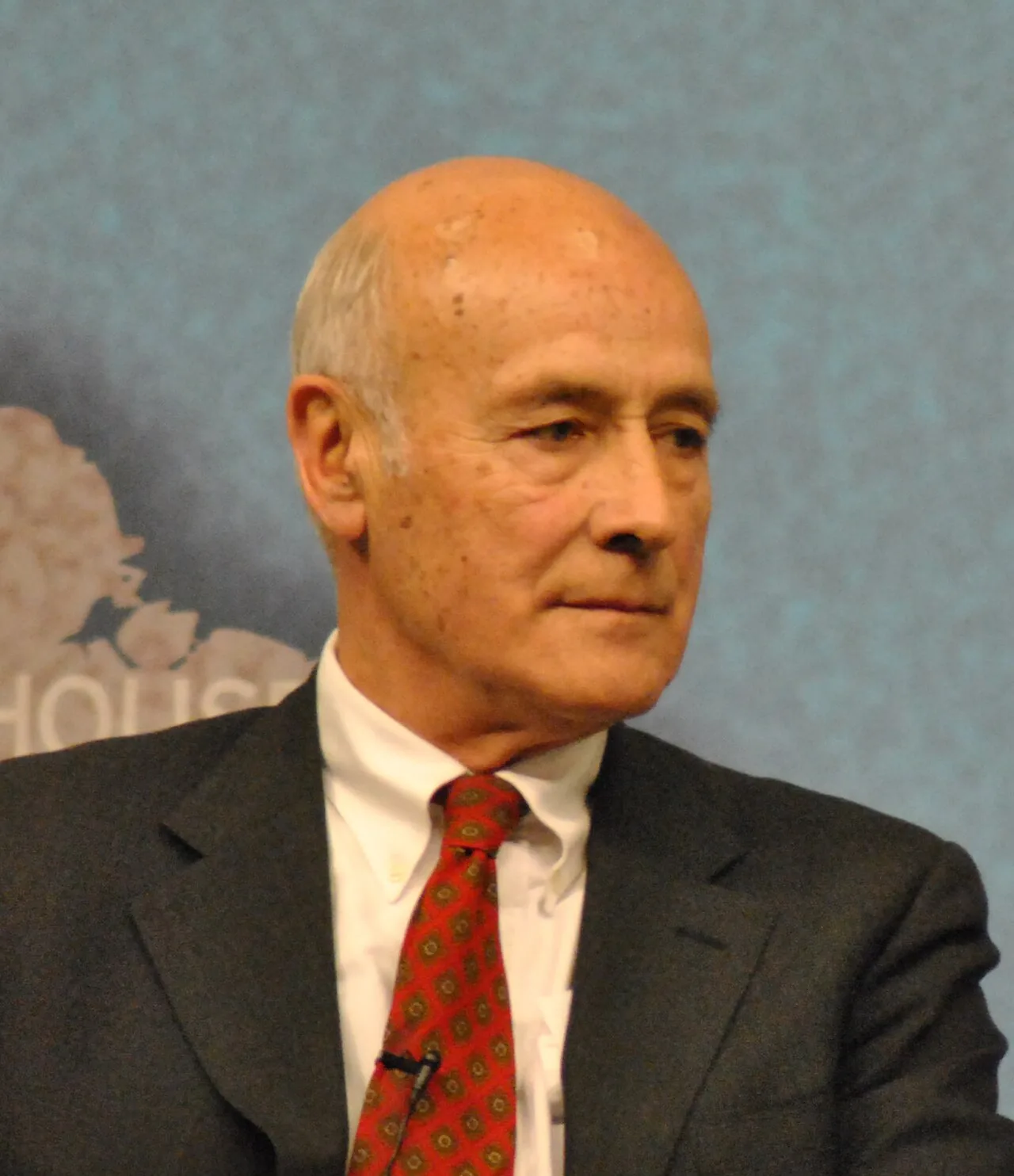
Soft power is the ability of a country to get what it wants by making others want the same thing, through attraction rather than threats or payments. The political scientist Joseph Nye coined the term in his 1990 book Bound to Lead, which argued against the popular belief at the time that American power was in decline. Nye's point was that people who measured influence by counting military bases and GDP were missing something important. Countries also compete over what looks normal, successful, and worth copying. When a country wins that competition, others cooperate willingly, and that kind of influence is cheaper than coercion and lasts longer. Nye spent the rest of his career at Harvard developing the idea. He died in May 2025 at the age of 88.
How Joseph Nye developed the idea
In the late 1980s, a popular argument held that the United States was losing its dominant position in the world. Japan's economy was booming, America's trade deficit was growing, and the historian Paul Kennedy had published a bestseller arguing that great powers always decline when they spend too much on their militaries. Nye, a Princeton graduate and Rhodes Scholar who had served in the State Department, thought they were measuring the wrong things.
In his 2004 book Soft Power he laid out three sources of soft power. The first is culture, when people in other countries find it attractive. The second is political values, when a country actually lives by the ones it preaches. The third is foreign policy, when other countries see it as legitimate and fair. Nye stressed one point above all others: most of a country's soft power comes from things the government does not control. Films, music, universities, companies, and the way citizens behave abroad all shape how the world sees a country. A government can support those things, but it cannot manufacture them. Trying to fake attraction usually looks like propaganda, and propaganda is not soft power.
Soft power during the Cold War
During the Cold War, the United States ran government broadcasting operations like Radio Free Europe and Voice of America. But Nye argued that unofficial culture did more to shape how people abroad saw the country. Jazz, Hollywood films, blue jeans, and rock music reached audiences on both sides of the Iron Curtain mostly without anyone in Washington directing them.
The most important channel was education. Over several decades, large numbers of foreign students studied at American universities and returned home with relationships, ideas, and habits of thought shaped by the experience. Many later rose to senior positions in their own governments, running finance ministries and central banks. That informal network gave the United States a kind of influence that no weapons program could have produced.
What is the difference between soft power and hard power?
Hard power is the ability to make others do what you want through force or payment. Military threats, economic sanctions, and foreign aid are all hard power. Soft power works by shaping what others want in the first place, so that coercion becomes unnecessary.
Nye never argued that soft power could replace hard power. He warned against that reading so strongly that he later coined a second term, "smart power," to describe the right combination of both. His point was that allies stay loyal longer when they respect the country leading them, and that even force works better when the target population considers the cause legitimate. A country that is only feared will face resistance the moment its attention turns elsewhere. A country that is only liked will be ignored when something important is at stake.
Does soft power actually work?
The Korean Wave is the most visible recent example. South Korea's government supported its entertainment industry with export subsidies, but the films, television shows, and music that spread across Asia and then the world succeeded because audiences genuinely liked them. By the 2020s, South Korean culture had made the country far more visible and more favorably regarded than its size or economy alone would explain.
But soft power has clear limits. When South Korea agreed to deploy an American missile defense system in 2016, China retaliated with economic sanctions and a ban on Korean entertainment that cost South Korea an estimated $10 billion. South Korean cultural popularity in China did nothing to prevent the punishment. In the 2000s, people in dozens of countries watched American films and listened to American music while strongly opposing the Iraq War. The Abu Ghraib prison abuse scandal and the detention camp at Guantanamo undercut Washington's ability to lecture other governments about legal standards, and no advertising campaign could undo the damage.
Governments have tried to build soft power deliberately. Britain, Germany, and France have run cultural agencies abroad for most of the past century. China opened hundreds of Confucius Institutes at foreign universities and invested heavily in infrastructure diplomacy, but by 2024 most Confucius Institutes in the United States and many in Europe had closed under accusations of censorship. Qatar launched Al Jazeera to project influence across the Arab world. But in Nye's sense, sponsoring a football club, hosting a sports tournament, or paying for a think tank does not count as soft power when the spending is obvious and the motive is transparent.
Soft power remains hard to measure and even harder to turn into a specific policy outcome. But Nye's idea named something real: countries compete not only through threats and payments but also over what a successful society looks like. That competition shaped much of the Cold War, and it shapes much of the rivalry between the United States and China today. In the 2026 Brand Finance Global Soft Power Index, the United States ranked first and China second, separated by less than two points.