
Radio Free Europe
Radio Free Europe is a US-funded broadcaster that sent uncensored news into the Soviet bloc during the Cold War and still operates today.
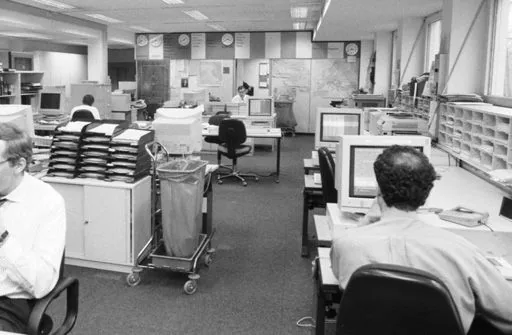
Radio Free Europe is a US-funded news organization that has broadcast uncensored news into countries with controlled media since 1950. It was secretly created and funded by the CIA during the Cold War, with the goal of reaching people living under communist rule with the news their own governments suppressed. Its approach, called "surrogate" broadcasting, set it apart from other international stations. Rather than telling the world about America, Radio Free Europe hired exiles from each country to produce news about their own homeland, in their own language, for their own people. It acted as a substitute for the independent press that communist governments had shut down. Its sister station, Radio Liberty, did the same for the Soviet Union. Together the two stations broadcast from Munich in more than twenty languages, and the Soviet government spent decades trying to jam their signal. They are still operating today, headquartered in Prague and broadcasting in 24 languages.
How Radio Free Europe started
The National Committee for a Free Europe, a CIA-backed group, was founded in New York on June 1, 1949. Its broadcasting arm, Radio Free Europe, made its first transmission on July 4, 1950, aimed at Czechoslovakia. Within a few years it was reaching Poland, Hungary, Romania, and Bulgaria as well. Radio Liberty, the companion station for audiences inside the Soviet Union, began broadcasting in March 1953.
The stations hired exile journalists from each target country. A Polish newsroom staffed by Poles reported Polish news. A Hungarian newsroom staffed by Hungarians reported Hungarian news. The journalists built up an account of what was happening inside the Soviet bloc from smuggled letters, travelers' accounts, and official newspapers published by the regimes, looking for details that state media tried to hide. This surrogate model made Radio Free Europe fundamentally different from the Voice of America, which had been the US government's own broadcast outlet since 1942, and from the BBC World Service, which spoke for Britain. Radio Free Europe claimed to be the voice of no government at all.
How Radio Free Europe broadcast through the Iron Curtain
The stations operated from a large facility near Munich's English Garden for more than four decades. Soviet and Eastern Bloc transmitters tried to jam the radio signal by flooding the frequencies with noise. The effort cost enormous sums and continued for years, which showed how seriously the communist governments took the broadcasts.
The stations' most damaging episode came in 1956. Radio Free Europe's Hungarian service covered the uprising against Soviet rule in Hungary with enthusiasm. Some listeners believed the broadcasts implied that Western military help was on the way. No help came. Soviet tanks crushed the revolt. An investigation later cleared Radio Free Europe of directly inciting the rebellion, but faulted the station for raising false hope among Hungarians. After 1956, the stations tightened their editorial rules.
On February 21, 1981, a bomb exploded at the RFE/RL headquarters in Munich, injuring four employees. The attack was carried out by a team working for the terrorist Ilich Ramirez Sanchez, known as Carlos the Jackal. Romania's government under Nicolae Ceausescu funded the operation.
Cold War-era dissidents later credited the stations with preserving independent information and a connection to the outside world that their governments tried to suppress. Poland's Lech Walesa, leader of the Solidarity trade union, was asked about Radio Free Europe's importance and answered: "Would there be an earth without the sun?"
Is Radio Free Europe still broadcasting?
Yes. The CIA's secret funding ended on June 30, 1971, after a US senator exposed the arrangement. Congress stepped in. The Board for International Broadcasting, established in 1973, took over funding and oversight, making Radio Free Europe an openly government-funded operation that answered to Congress rather than to intelligence agencies.
The Soviet bloc collapsed in 1989, and the stations outlasted the governments that tried to silence them. In 1995, at the invitation of Czech president Vaclav Havel, a former dissident who had listened to the broadcasts himself, RFE/RL moved its headquarters from Munich to Prague. Today it broadcasts in 24 languages to 18 countries. Its focus has shifted to countries where independent media is under the most pressure, including Russia, Iran, and Central Asia.
The stations nearly shut down in 2025. In March, the US Agency for Global Media cut off RFE/RL's federal funding as part of a broader effort to shut down the agency. RFE/RL furloughed staff and filed a lawsuit. A federal judge granted a temporary restraining order, and the agency rescinded the termination on March 26. European governments sent emergency funding to keep the stations on air.
RFE/RL survived, but at a smaller size. On March 31, 2026, it closed its services for Bulgaria, Romania, and North Macedonia, along with Radio Mashaal, its Pashto-language service. The closures let the network concentrate its reduced budget on Iran, Russia, and the countries facing the heaviest Russian and Chinese pressure. Its remaining operations compete against well-funded state media networks, including Russia's RT. Radio Free Europe's core mission, providing uncensored news to people in countries where the government controls the press, remains the same as it was in 1950.