
Spanish-American War
The 1898 war between the United States and Spain that ended Spanish rule in Cuba and gave the US colonies in the Caribbean and Pacific.
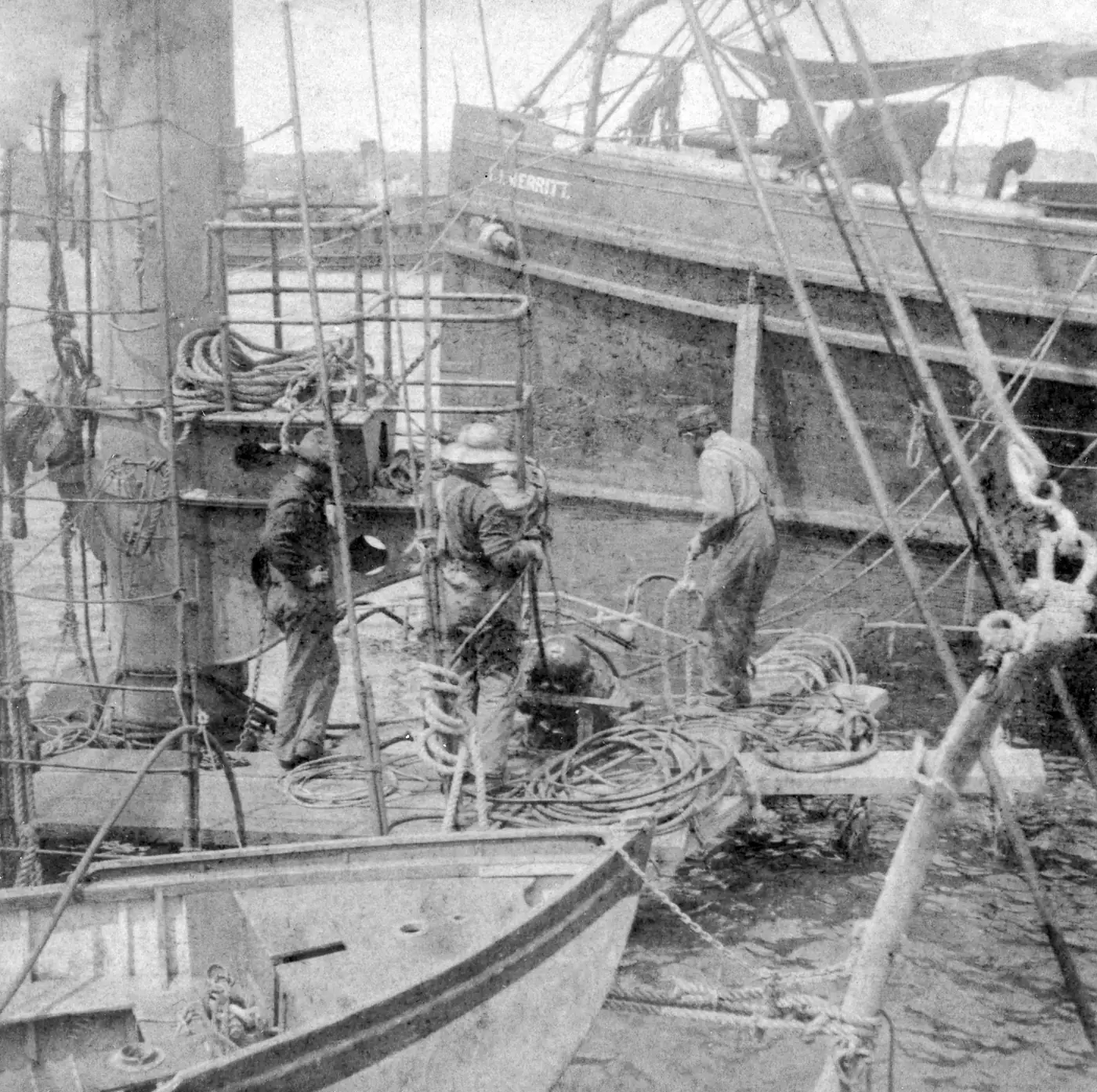
The Spanish-American War was a ten-week conflict in 1898 between the United States and Spain. It began over Cuba, where Spain was fighting a revolt, and ended with Spain losing most of what remained of its overseas empire. The United States gained Puerto Rico, Guam, and the Philippines, acquiring colonies across the Caribbean and the Pacific in a matter of months. Combat killed fewer than 400 Americans. More than 2,000 were killed by disease, mostly typhoid and yellow fever, in army camps and on transport ships. John Hay, then the U.S. ambassador to Britain, described the conflict as "a splendid little war."
What caused the Spanish-American War?
Cuba had been at war with Spain since 1895, fighting for independence. Spain's response was to round up the rural Cuban population and confine them in concentration camps. Tens of thousands of Cubans died from disease and starvation in those camps. American newspapers seized on the story. William Randolph Hearst's New York Journal and Joseph Pulitzer's New York World were locked in a circulation war, and Spanish atrocities in Cuba sold papers. For three years before the conflict, their coverage kept the crisis in front of American readers.
On the night of February 15, 1898, an explosion tore through the USS Maine, a battleship anchored in Havana harbor. The blast killed 266 sailors. A U.S. naval board of inquiry blamed a mine. A 1976 investigation led by Admiral Hyman Rickover concluded that the more likely cause was a coal bunker fire that set off an adjacent ammunition store. Similar fires had come close to doing the same on other warships of that design. The cause is still debated. In 1898, the public had already made up its mind. Hearst and Pulitzer's papers ran the slogan "Remember the Maine," and in April Congress declared war.
The ten-week war against Spain
The first American victory came not in Cuba but in the Philippines, on the other side of the world. On May 1, 1898, Commodore George Dewey destroyed the Spanish naval squadron at Manila Bay without losing a single ship.
In Cuba, an improvised American force came ashore near Santiago in June and advanced up the San Juan heights. Theodore Roosevelt, a former assistant secretary of the Navy who had resigned his post to fight, led a volunteer regiment called the Rough Riders. Roosevelt and his men received heavy newspaper coverage for their charge up nearby Kettle Hill, and the attention helped make him a national figure. After the land battle, the Spanish fleet was destroyed trying to escape Santiago harbor. Spain sued for peace.
The army's worst failures were its own supply and sanitation systems. Disease in the camps killed far more American soldiers than Spanish guns did.
What did the United States gain from the Spanish-American War?
The Treaty of Paris, signed in December 1898, ended the war and redrew the map. Cuba became independent in name. Puerto Rico and Guam went to the United States outright. Spain ceded the Philippines for twenty million dollars. That same summer, the United States also annexed Hawaii. By the end of 1898, the country held an overseas empire.
Congress had attached the Teller Amendment to its war declaration, promising not to annex Cuba. In practice, the Platt Amendment restricted Cuban sovereignty by giving the United States the right to intervene in Cuban affairs and by establishing the Guantanamo Bay naval station. The United States still holds that base. Puerto Rico remains a U.S. territory. Its residents are U.S. citizens but cannot vote for president.
The Senate approved the Treaty of Paris with exactly one vote to spare beyond the required two-thirds majority. The new possessions set off the first major debate about whether the United States should hold an empire. A group called the Anti-Imperialist League, whose members included Mark Twain, Andrew Carnegie, and labor leader Samuel Gompers, argued that governing colonial subjects contradicted the founding principle of consent. Expansionists countered with arguments about markets, naval stations, and a duty to spread civilization.
The war in the Philippines
Before the United States entered the conflict, Filipinos led by Emilio Aguinaldo had already been fighting Spain for their own independence. They expected that Spain's defeat would make the Philippines free. Instead, the Treaty of Paris handed the islands to a new colonial ruler.
Fighting between American troops and Filipino independence fighters started in February 1899, just two days before the Senate voted to ratify the treaty. The war officially lasted three years, and combat continued longer in the southern Philippines. Over 4,000 Americans died, more than in the war against Spain itself. At least 20,000 Filipino combatants died. By most estimates, 200,000 or more Filipino civilians perished from famine and disease connected to the fighting.
American troops burned villages and forced Filipino civilians into camps, the same method Spain had used in Cuba. They also used a form of torture called the "water cure" on prisoners. The U.S. Senate held hearings on these abuses.
The Spanish-American War is often remembered as a brief and decisive victory. The longer and deadlier guerrilla war that followed in the Philippines is far less well known. Together, they turned the United States into a colonial power with overseas possessions it still holds.