
Syngman Rhee
Syngman Rhee was the first president of South Korea, a US-educated anti-Communist whose authoritarian rule ended in the 1960 April Revolution.
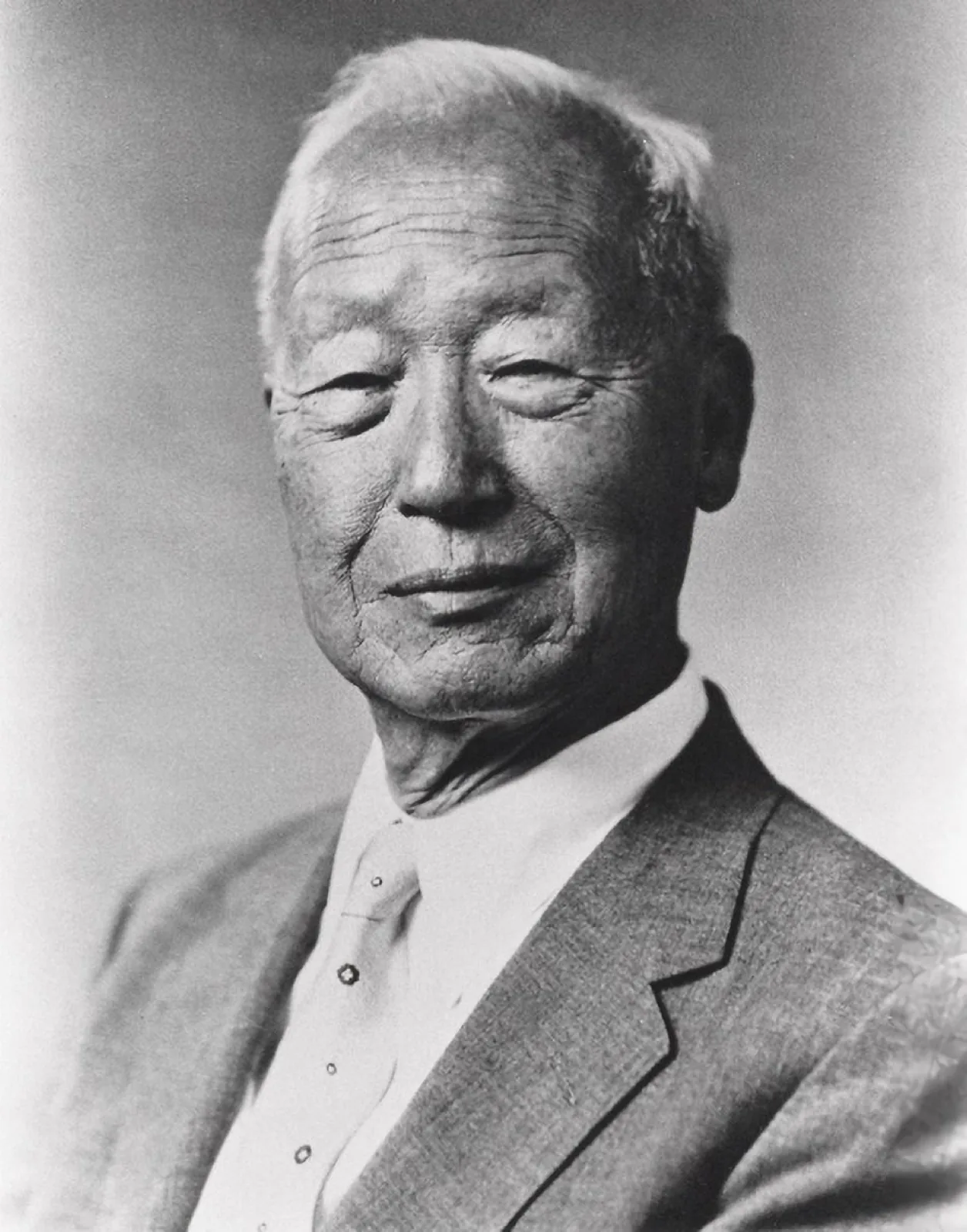
Syngman Rhee (1875–1965) was the first president of South Korea. He held office from 1948 to 1960, leading the new republic through the Korean War. Rhee was fiercely anti-Communist, fluent in English, and educated in the United States, which made him useful to the Americans who occupied southern Korea after Japan's surrender in 1945. He was also authoritarian. Over twelve years in power, he jailed opponents, rigged elections, and changed the constitution to stay in office. In April 1960, students and ordinary citizens rose against him in what Koreans call the April Revolution. He resigned, flew to Hawaii, and died in exile five years later.
How Rhee became South Korea's first president
Rhee was born in 1875 in Hwanghae Province, in what is now North Korea. His family claimed descent from a king of the Joseon dynasty, but by Rhee's generation they were poor. As a young man he joined the Independence Club, a reform movement pushing to modernize Korea and resist foreign influence. The Korean government arrested him in 1899. He spent nearly six years in prison, where he converted to Christianity.
After his release in 1904, Rhee left for the United States. He studied at George Washington University and Harvard before earning a PhD from Princeton in 1910. He was the first Korean to receive a doctorate from any American university. Princeton's dean waived his tuition because Rhee had no money.
That same year, Japan annexed Korea. Rhee would spend most of the next 35 years abroad. He settled in Hawaii and Washington, D.C., and spent three decades lobbying anyone who would listen for Korean independence. In 1919, Korean nationalists in Shanghai formed a provisional government in exile and elected Rhee its president. He was impeached in 1925 over disputes about money and strategy, but he kept pressing the cause from Hawaii and Washington, writing letters, giving speeches, and meeting officials.
When Japan surrendered in August 1945, the United States and the Soviet Union divided Korea along the 38th parallel. The American military government in the south wanted a Korean leader who was anti-Communist, spoke English, and had no connection to Japan's colonial administration. Rhee, now 70, fit every requirement. South Korea's National Assembly chose him as the country's first president in 1948.
How the April Revolution brought down Rhee
Two years after Rhee took office, North Korea invaded the South on June 25, 1950. The Korean War lasted three years and killed roughly three million people, most of them Korean civilians. Rhee led South Korea through the war but governed as an absolutist. In 1952, while the government was still operating from the temporary capital of Busan, Rhee declared martial law, had members of the National Assembly arrested, and forced through a constitutional amendment allowing the president to be elected directly by voters.
After the war ended with the 1953 armistice at Panmunjom, Rhee tightened his grip. In 1954 his party pushed through another amendment removing presidential term limits for Rhee personally. The vote fell one short of the required two-thirds majority: 135 votes out of 203 legislators. Rhee's government declared that two-thirds of 203 was 135.33, and since you cannot have a fraction of a vote, 135 was enough. Political opponents were jailed. The press was controlled. Police and paramilitary groups put down dissent.
In March 1960, Rhee ran for a fourth term. His only serious challenger, Cho Byeong-ok, had died a month before the election, so Rhee ran effectively unopposed. But his political machine also rigged the separate vice-presidential race, and protests broke out in the southern port city of Masan. On April 11, the body of a high school student named Kim Ju-yul, who had disappeared during the earlier protests, surfaced in the harbor with a tear-gas shell embedded in his skull. Photographs of the body spread across the country.
On April 19, students marched through Seoul. Police opened fire and killed scores of protesters. The shootings did not end the movement. Within a week, demonstrations had spread to every major city, and the army refused to act against the crowds. Rhee resigned on April 26, 1960. He flew to Hawaii with his Austrian-born wife, Francesca Donner, and died there on July 19, 1965, at the age of 90. He never returned to Korea.
Rhee's fall did not bring democracy to South Korea. A military coup took over the republic just over a year later. South Korea would not hold a free and fair presidential election until December 1987. But Rhee had fixed the country's basic orientation: pro-American and opposed to the North. That alignment and the American alliance it carried survived every government that followed, and it helped make possible the economic transformation that turned one of the world's poorest countries into one of its richest.
Why did Syngman Rhee try to stop the Korean War armistice?
Rhee believed the war should continue until all of Korea was unified under his government. He refused to accept any agreement that left the country divided at roughly the same line where the fighting started.
When the United States and China neared a ceasefire agreement in June 1953, Rhee tried to wreck it. On June 18, without telling the Americans, he ordered the release of roughly 27,000 anti-Communist North Korean prisoners of war. The prisoners walked out of their camps and disappeared into the South Korean population. The move infuriated Washington, delayed the armistice by weeks, and nearly collapsed the negotiations.
Rhee never signed the armistice. The agreement was signed on July 27, 1953, by the United Nations Command, North Korea, and China. South Korea was not a party to it. The country remains technically at war with North Korea, because no peace treaty ever replaced the armistice.